乐单
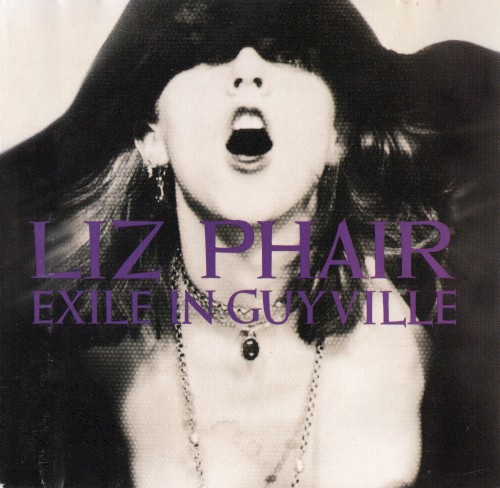
Exile in Guyville (1993)
滚石 500(2020) #56滚石 500(2003) #3281001 张专辑
- 艺人
- 莉兹·菲尔
- 发行
- 1993-06-22
- 类型
- 专辑
- 唱片公司
- 斗牛士唱片公司
- 制作人
- Brad Wood
- 版本
- MusicBrainz 上有 8 个发行版本
曲目
- 16′1″3:06
- 2Help Me Mary2:16
- 3Glory1:30
- 4Dance of the Seven Veils2:30
- 5Never Said3:16
- 6Soap Star Joe2:44
- 7Explain It to Me3:12
- 8Canary3:20
- 9Mesmerizing3:56
- 10Fuck and Run3:08
- 11Girls! Girls! Girls!2:20
- 12Divorce Song3:20
- 13Shatter5:29
- 14Flower2:03
- 15Johnny Sunshine3:28
- 16Gunshy3:15
- 17Stratford-on-Guy3:00
- 18Strange Loop3:57
18 首 · 约 56 分钟 · 依据 1993-06-22 US 发行的版本,在 MusicBrainz 看这个版本。
介绍
这个词条没有中文维基百科条目,下面是英文维基百科的原文。
Exile in Guyville is the debut studio album by the American singer-songwriter Liz Phair, released on June 22, 1993, by Matador Records. It was recorded at Idful Music Corporation in Chicago between 1992 and 1993 and produced by Phair and Brad Wood.
Exile in Guyville was certified gold in 1998. Rolling Stone included it in all three of its lists of the "500 Greatest Albums of All Time", and it was named among the best albums of the 1990s by Pitchfork and Robert Christgau.
Background
In the summer of 1991, Phair wrote and recorded songs on audio cassette tapes, which she circulated in Chicago using the moniker Girly-Sound. Initially, she sent out only two tapes, one to Tae Won Yu from the band Kicking Giant, and the other to Chris Brokaw of the bands Come and Codeine. The recipients of the Girly-Sound tapes circulated copies with other early fans.
Packaging
In 2008, Phair stated the cover was originally "an orgy of Barbies floating in a pool", a concept that Matador rejected, stating that such artwork would not sell. The final cover design is a photo of Phair topless in a photo booth, taken and cropped by Nash Kato of Urge Overkill. The interior artwork is based on that of Lopez Tejera's 1952 album The Joys and Sorrows of Andalusia. The booklet also features a collage of several Polaroid photos of Phair, Wood, guitarist Casey Rice (and various other people), with a paraphrase from lines from the movie Dirty Harry.
Meaning
The term Guyville comes from a song of the same name by Urge Overkill. Liz Phair explained the concept of the album in a Billboard article, stating that "For me, Guyville is a concept that combines the smalltown mentality of a 500-person Knawbone, KY.-type town with the Wicker Park indie music scene in Chicago, plus the isolation of every place I've lived in, from Cincinnati to Winnetka". When asked during an interview with Noah Adams on his radio show All Things Considered about the concept, she elaborated: "It was a state of mind and / or neighborhood that I was living in. Guyville, because it was definitely their sensibilities that held the aesthetic, you know what I mean? It was sort of guy things - comic books with really disfigured, screwed-up people in them, this sort of like constant love of social aberration. You know what I mean? This kind of guy mentality, you know, where men are men and women are learning." Asked about what she sees in Guyville, Phair said that "All the guys have short, cropped hair, John Lennon glasses, flannel shirts, unpretentiously worn, not as a grunge statement. Work boots."
Phair has also stated that most songs on the album were not about her. She commented, "That stuff didn't happen to me, and that's what made writing it interesting. I wasn't connecting with my friends. I wasn't connecting with relationships. I was in love with people who couldn't care less about me. I was yearning to be part of a scene. I was in a posing kind of mode, yearning to have things happen for me that weren't happening. So I wanted to make it seem real and convincing. I wrote the whole album for a couple people to see and know me."
Phair commented in interviews that the album was a song-by-song reply to the Rolling Stones' 1972 album Exile on Main St. Some critics contend that the album is not a clear or obvious song-by-song response, although Phair sequenced her compositions in an attempt to match the songlist and pacing of the Rolling Stones album.
Reception
Exile in Guyville received universal acclaim. It was the No. 1 album in the year-end critics poll in Spin and the Village Voice Pazz & Jop critics poll.
It was also a moderate commercial success. The videos for "Never Said" and "Stratford-On-Guy" received airplay on MTV. By mid-1994, it had sold over 200,000 copies, reaching number 196 on the Billboard 200, and was Matador's most successful release at the time. In 1998, it was certified gold.
Phair said: "I don't really get what happened with Guyville. It was so normal, from my side of things. It was nothing remarkable, other than the fact that I'd completed a big project, but I'd done that before... Being emotionally forthright was the most radical thing I did. And that was taken to mean something bigger in terms of women's roles in society and women's roles in music... I just wanted people who thought I was not worth talking to, to listen to me." The sudden success of the album also generated a somewhat negative response from Chicago's indie music scene. Phair commented, "It's odd... Guyville was such a part of indie. But at the same time... I was kind of at war with indie when I made that record." Another problem that arose from her success was also dealing with her stage fright.
正文摘自英文维基百科「Exile in Guyville」,按 CC BY-SA 4.0 使用;删去了参考文献、外部链接、表格和图片;篇幅所限只节选了前面一部分,全文见原条目。
资料卡
- 作品性质
- 音乐专辑
- 表演者
- 莉兹·菲尔
- 发行日期
- 1993 年
- 流派
- 独立摇滚
- 语言
- 英语
- 唱片公司
- 斗牛士唱片公司
- 制作人
- Brad Wood
- 上一部
- Girly Sound
- 下一部
- Whip-Smart
资料来自 Wikidata Q821216(CC0)。
制作名单
- 厂牌
- Matador(目录号 OLE 051-2)
制作
- 助理工程师
- Casey Rice
- 工程师
- Brad Wood
- 制作人
- 莉兹·菲尔、Brad Wood
演奏与演唱
- 演唱
- 莉兹·菲尔
- 吉他
- 莉兹·菲尔(其中 17 首)、Brad Wood(第 2、13、16 首)、Casey Rice(第 5、9、12 首)
- 鼓
- Brad Wood(其中 7 首)
- 贝斯
- Brad Wood(第 1、5、12、18 首)、Tony Marlotti(第 15 首)
- 和声
- Brad Wood(第 1、10、15 首)、Casey Rice(第 2 首)、Tutti Jackson(第 6 首)
- 风琴
- Brad Wood(第 3、9 首)
- 口琴
- John Casey(第 6、12 首)
- 打击乐
- Brad Wood(第 1 首)
- 军鼓
- Casey Rice(第 6 首)、Brad Wood(第 6 首)
- 邦戈鼓
- Brad Wood(第 7 首)
- 合成器
- Brad Wood(第 7 首)
- 钢琴
- 莉兹·菲尔(第 8 首)
- 拍手
- 莉兹·菲尔(第 9 首)、Casey Rice(第 9 首)、Brad Wood(第 9 首)
- 沙锤
- Brad Wood(第 9 首)
- 演出
- Casey Rice(第 9 首)
- 镲
- Casey Rice(第 13 首)
词曲与编曲
- 编曲
- 莉兹·菲尔
- 词曲
- 莉兹·菲尔
包装与设计
- 设计
- Mark Ohe、莉兹·菲尔
- 摄影
- Nate Kato、Mark Schime
名单来自 MusicBrainz(CC0)这一发行版本的关系数据,由志愿者录入,不一定齐全。
更多资料与乐评
在哪听
莉兹·菲尔 的其他专辑
艺人页 ›


相似的专辑


同在 1993 年发行