乐单
曲目
- 1Bathtub1:51
- 2G Funk Intro2:25
- 3Gin and Juice3:31
- 4W Balls0:37
- 5Tha Shiznit4:04
- 6Domino Intro0:37
- 7Lodi Dodi4:24
- 8Murder Was the Case (DeathAfterVisualizingEternity)3:38
- 9Serial Killa3:36
- 10Who Am I (What’s My Name)?4:07
- 11For All My Niggaz & Bitches4:42
- 12Ain’t No Fun (If the Homies Can’t Have None)4:06
- 13Chronic Relief Intro0:36
- 14Doggy Dogg World5:05
- 15Class Room Intro0:44
- 16Gz and Hustlas3:52
- 17Checkin’0:56
- 18Pump Pump3:44
18 首 · 约 53 分钟 · 依据 1993-11-23 US 发行的版本,在 MusicBrainz 看这个版本。
介绍
这个词条没有中文维基百科条目,下面是英文维基百科的原文。
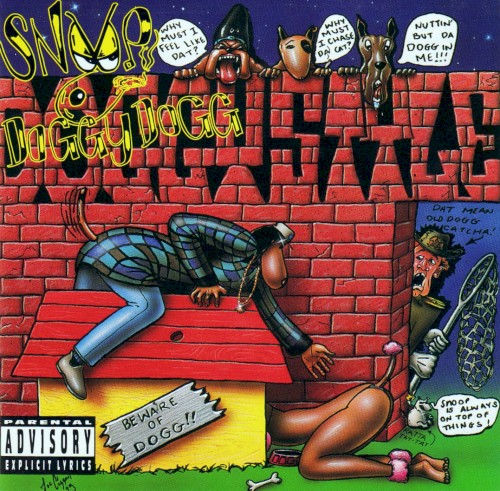
Doggystyle is the debut studio album by American rapper Snoop Doggy Dogg. It was released on November 23, 1993, by Death Row and Interscope Records. The album was recorded and produced following Snoop Doggy Dogg's appearances on Dr. Dre's debut solo album The Chronic (1992), to which Snoop contributed significantly. The West Coast style in hip-hop that he developed from Dre's first album continued on Doggystyle. Critics have praised Snoop Dogg for the lyrical "realism" that he delivers on the album and for his distinctive vocal flow.
Despite some mixed criticism of the album initially upon its release, Doggystyle earned recognition from many music critics as one of the most significant albums of the 1990s, as well as one of the most important hip-hop albums ever released. Much like The Chronic, the distinctive sounds of Doggystyle helped introduce the hip-hop subgenre of g-funk to a mainstream audience, bringing forward West Coast hip-hop as a dominant force in the early-mid 1990s.
Doggystyle debuted at number one on the Billboard 200, selling 806,858 copies in its first week alone in the United States, which was the record for a debuting artist and the fastest-selling hip-hop album ever at the time. Doggystyle was included on The Source magazine's list of the 100 Best Rap Albums, as well as Rolling Stone magazine's list of Essential Recordings of the '90s. About.com placed the album in No. 17 of the greatest hip hop/rap albums of all time. The album was certified 4× Platinum by the Recording Industry Association of America (RIAA). By November 2015, the album had sold 7 million copies in the United States, and over 11 million copies worldwide.
Conception
Background
In 1992, Snoop Dogg came to attention of the music industry through his vocal contributions on Dr. Dre's The Chronic. That album is considered to have "transformed the entire sound of West Coast rap" by its development of what later became known as the "G-funk" sound. The Chronic expanded gangsta rap with profanity, anti-authoritarian lyrics and multi-layered samples taken from 1970's P-Funk records. Snoop Doggy Dogg contributed vocals to Dre's solo single, "Deep Cover", which led to a high degree of anticipation among hip hop for the release of his own solo album.
Doggystyle and The Chronic are associated with each other mainly because each prominently featured Snoop Dogg and because both contain G-funk style production from Dr. Dre. The two releases are linked by the high number of vocal contributions from Death Row Records artists, including Tha Dogg Pound, RBX and the Lady of Rage, while both contain a high density of misogyny and profanity in their lyrics. In addition, the two albums are each viewed by critics as early "G-funk classics", and have been described as "joined at the hip". 'Doggystyle' also marked the debut of Death Row vocalist, Nanci Fletcher—the daughter of jazz legend Sam Fletcher.
Gangsta rap has been criticized for its extreme lyrics, which are often accused of glamorizing gang violence and black-on-black crime. The rappers responded that they were simply describing the realities of life in Compton and Long Beach, California. Describing Doggystyle in 1993, Snoop Doggy Dogg likewise points to the album's realism, and the extent to which it is based on his personal experience. He said, "I can't rap about something I don't know. You'll never hear me rapping about no bachelor's degree. It's only what I know and that's that street life. It's all everyday life, reality." Explaining his intentions, Snoop Doggy Dogg claims he feels he is a role model to many young black men, and that his songs are designed to relate to their concerns. "For little kids growing up in the ghettos," he said, "it's easy to get into the wrong types of things, especially gangbanging and selling drugs. I've seen what that was like, and I don't glorify it, but I don't preach. I bring it to them rather than have them go find out about it for themselves." He further explained the "dream" that he would pursue after making the album: "I'm going to try to eliminate the gang violence. I'll be on a mission for peace. I know I have a lot of power. I know if I say, 'Don't kill', niggas won't kill".
正文摘自英文维基百科「Doggystyle」,按 CC BY-SA 4.0 使用;删去了参考文献、外部链接、表格和图片;篇幅所限只节选了前面一部分,全文见原条目。
资料卡
- 作品性质
- 音乐专辑
- 表演者
- 史努比狗狗
- 发行日期
- 1993 年 11 月 23 日
- 时长
- 53 分 17 秒
- 流派
- 匪帮说唱、匪帮放克、西海岸嘻哈
- 语言
- 英语
- 唱片公司
- Death Row唱片公司
- 制作人
- 德瑞医生
- 获奖
- Soul Train Music Award for Best Rap Album(1995)
资料来自 Wikidata Q753494(CC0)。
制作名单
- 厂牌
- Death Row Records(目录号 7 92279-2)、Interscope Records(目录号 7 92279-2)、Death Row Records(目录号 92279-2)、Interscope Records(目录号 92279-2)
制作
- 制作人
- 德瑞医生
- 执行制作人
- Suge Knight
演奏与演唱
- 主唱
- 史努比狗狗(其中 11 首)、愤怒的女士(第 2 首)、Daz Dillinger(第 9 首)、酷鲁特(第 9 首)、RBX(第 9 首)
- 念白
- 史努比狗狗(第 1、13 首)、沃伦·G(第 1 首)、乔治·克林顿(第 2 首)、Ricky Harris(第 4 首)、Daz Dillinger(第 6 首)、德瑞医生(第 6 首)、鲍沃(第 15 首)
- 演唱
- Nancy Fletcher(第 7、14 首)、Daz Dillinger(第 3 首)、德瑞医生(第 10 首)、Tony Green(第 10 首)、Jewell(第 10 首)、酷鲁特(第 12 首)、奈特·道格(第 12 首)、沃伦·G(第 12 首)、The Dramatics(第 14 首)
- 和声
- Nancy Fletcher(第 8、16 首)、愤怒的女士(第 8 首)
- 人声
- 德瑞医生(第 2 首)、史努比狗狗(第 2 首)、Nancy Fletcher(第 4 首)、The Queen of Funk(第 4 首)、Daz Dillinger(第 8 首)、崔西·林恩·柯瑞(第 9 首)
词曲与编曲
- 词曲
- Calvin Broadus(第 3、7、8、12 首)、德瑞医生(第 3、8、12 首)、Harry Wayne Casey(第 3 首)、Richard Finch(第 3 首)、中村八大(第 7 首)、Eli Pennington(第 7 首)、Daz Dillinger(第 8 首)、Mista Grimm(第 8 首)、史努比狗狗(第 10 首)、酷鲁特(第 12 首)、奈特·道格(第 12 首)、沃伦·G(第 12 首)
名单来自 MusicBrainz(CC0)这一发行版本的关系数据,由志愿者录入,不一定齐全。
更多资料与乐评
在哪听
相似的专辑
同在 1993 年发行