乐单
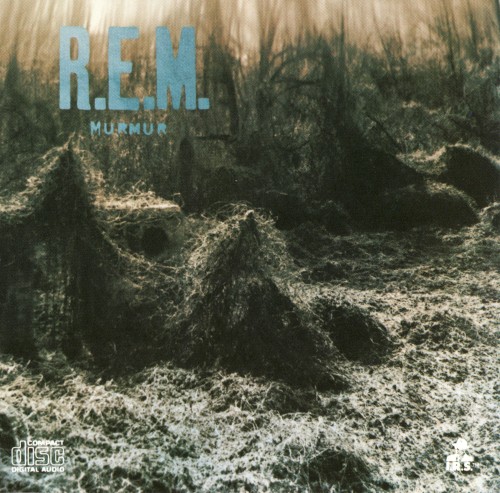
Murmur (1983)
滚石 500(2020) #165滚石 500(2003) #1971001 张专辑
- 艺人
- R.E.M.
- 发行
- 1983-04-11
- 类型
- 专辑
- 唱片公司
- I.R.S.唱片
- 制作人
- Mitch Easter
- 版本
- MusicBrainz 上有 29 个发行版本
曲目
- 1Radio Free Europe4:06
- 2Pilgrimage4:30
- 3Laughing3:59
- 4Talk About the Passion3:24
- 5Moral Kiosk3:32
- 6Perfect Circle3:31
- 7Catapult3:57
- 8Sitting Still3:18
- 99–93:05
- 10Shaking Through4:30
- 11We Walk3:02
- 12West of the Fields3:19
12 首 · 约 44 分钟 · 依据 1983 US 发行的版本,在 MusicBrainz 看这个版本。
介绍
这个词条没有中文维基百科条目,下面是英文维基百科的原文。
Murmur is the debut studio album by the American alternative rock band R.E.M., released on April 12, 1983, by I.R.S. Records. The album was recorded in the winter of 1983 at Reflection Sound Studios in Charlotte, North Carolina, with musicians Don Dixon and Mitch Easter serving as producers. Murmur received critical acclaim upon release for its unconventional sound, defined by lead singer Michael Stipe's cryptic lyrics, guitarist Peter Buck's jangly playing, and Mike Mills' melodic basslines. In 2003, the album was ranked number 197 in Rolling Stone magazine's list of the "500 Greatest Albums of All Time". It retained the position in the 2012 list and was raised to number 165 in the 2020 revision.
Background and recording
R.E.M. started preparing for their debut album in December 1982. I.R.S. paired R.E.M. with producer Stephen Hague, who had a higher profile than the band's previous producer Mitch Easter. Hague's emphasis on technical perfection did not suit the band; the producer made the group perform multiple takes of the song "Catapult", which demoralized drummer Bill Berry. Hague then took the completed track to Syncro Sound studios in Boston and added keyboard parts without the band's permission and to their dismay. Unsatisfied, the band members asked the label to let them record with Easter. I.R.S. agreed to a "tryout" session, allowing the band to travel to North Carolina and record the song "Pilgrimage" with Easter and producing partner Don Dixon. After hearing the track, I.R.S. permitted the group to record the album with Dixon and Easter.
On January 6, 1983, R.E.M. entered Reflection Studios in Charlotte, North Carolina, to begin recording sessions with Easter and Dixon. Much of the band's material for the album had been tested on preceding tours. Because of their bad experience with Hague, the band recorded the album via a process of negation, refusing to incorporate rock music clichés such as guitar solos or then-popular synthesizers to give it a timeless feel. Berry specifically was resistant to "odd" musical suggestions, insisting that his drums be recorded in a drummer's booth, a practice that was considered antiquated at the time. Dixon and Easter took a hands-off approach to much of the recording process. The pair would only fix up a vocal track or ask lead singer Michael Stipe to re-record a vocal if it was very substandard. "Being both musicians, our approach was to leave as little imprint as possible," Dixon recalled in 1994. "We felt like our job was to, as cheaply as possible, reproduce what appeared to be just them playing live."
Due to Buck's Fender Twin Reverb amplifier being "dead", every song except 'Pilgrimage' instead featured Easter's Ampeg Gemini II. Mills's Dan Armstrong bass guitar was set aside in favor of a Rickenbacker 4001 owned by Easter's girlfriend.
In a rare instance of R.E.M. co-writing, Stipe asked friend Neil Bogan to contribute lyrics to "West of the Fields".
Recording was completed on February 23, 1983.
Composition and music
On Murmur, R.E.M.'s sound is "firmly" rooted in American folk rock, post-punk, and garage rock. According to Stephen Thomas Erlewine of AllMusic, the band abandoned the "garagey jangle pop" of their previous releases, instead opting for "a strangely subdued variation of their trademark sound." He explained, "Heightening the enigmatic tendencies of Chronic Town by de-emphasizing the backbeat and accentuating the ambience of the ringing guitar, R.E.M. created a distinctive sound for the album -- one that sounds eerily timeless. [...] Murmur sounds as if it appeared out of nowhere, without any ties to the past, present, or future. [...] The songs on Murmur sound as if they've existed forever, yet they subvert folk and pop conventions by taking unpredictable twists and turns into melodic, evocative territory." The album's production has been described as "atmospheric." The album also incorporates piano.
R.E.M. guitarist Peter Buck took stylistic cues from the Byrds, Television, and the Feelies. Vocalist Michael Stipe has been said to have "elevated mumbled vocals to an art form." The album's rhythm section is heavily influenced by British post-punk, though with less of the funk influence associated with the style.
正文摘自英文维基百科「Murmur (album)」,按 CC BY-SA 4.0 使用;删去了参考文献、外部链接、表格和图片;篇幅所限只节选了前面一部分,全文见原条目。
资料卡
- 作品性质
- 音乐专辑
- 表演者
- R.E.M.
- 发行日期
- 1983 年 4 月 11 日
- 时长
- 44 分 11 秒
- 流派
- 另类摇滚、噪响流行、后朋克、民谣摇滚
- 语言
- 英语
- 唱片公司
- I.R.S.唱片
- 制作人
- Mitch Easter
- 上一部
- Chronic Town
资料来自 Wikidata Q904480(CC0)。
制作名单
- 厂牌
- I.R.S. Records(目录号 CD 70014)、I.R.S. Records(目录号 DIDX 000161)、I.R.S. Records(目录号 DIDY 161)
- 录音室
- 录音:Reflection Sound Studios(Charlotte)
制作
- 工程师
- Don Dixon、Mitch Easter
- 混音
- Mitch Easter
- 制作人
- Don Dixon、Mitch Easter、R.E.M.(第 1 首)
演奏与演唱
- 鼓
- Bill Berry(第 1 首)
- 吉他
- Peter Buck(第 1 首)
- 贝斯
- Mike Mills(第 1 首)
- 演唱
- Michael Stipe(第 1 首)
- 颤音琴
- Mike Mills(第 2 首)
词曲与编曲
- 作曲
- Bill Berry(其中 11 首)、Peter Buck(其中 11 首)、Mike Mills(其中 11 首)、Michael Stipe(其中 11 首)
- 作词
- Bill Berry(其中 11 首)、Peter Buck(其中 11 首)、Mike Mills(其中 11 首)、Michael Stipe(其中 11 首)、Neil Bogan(第 12 首)
- 词曲
- Bill Berry(第 9 首)、Peter Buck(第 9 首)、Mike Mills(第 9 首)、Michael Stipe(第 9 首)
名单来自 MusicBrainz(CC0)这一发行版本的关系数据,由志愿者录入,不一定齐全。
更多资料与乐评
在哪听
R.E.M. 的其他专辑
艺人页 ›



相似的专辑
同在 1983 年发行