乐单
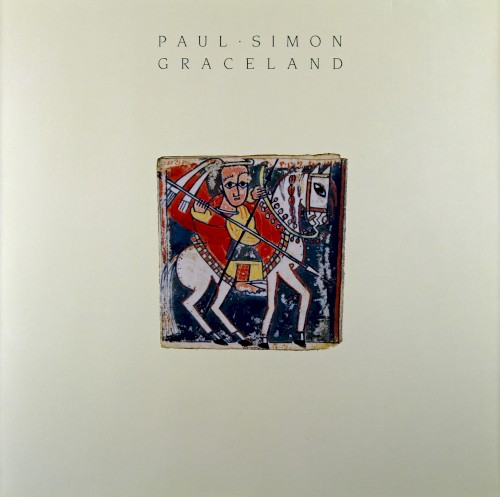
优雅庄园 (1986)
滚石 500(2020) #46滚石 500(2003) #811001 张专辑格莱美奖 · 年度专辑 1987
- 艺人
- 保罗·西蒙
- 发行
- 1986-08-29
- 类型
- 专辑
- 唱片公司
- 华纳兄弟唱片公司
- 制作人
- 保罗·西蒙
- 版本
- MusicBrainz 上有 46 个发行版本
曲目
- 1The Boy in the Bubble3:59
- 2Graceland4:51
- 3I Know What I Know3:13
- 4Gumboots2:45
- 5Diamonds on the Soles of Her Shoes5:48
- 6You Can Call Me Al4:40
- 7Under African Skies3:37
- 8Homeless3:48
- 9Crazy Love, Vol. II4:19
- 10That Was Your Mother2:53
- 11All Around the World or The Myth of Fingerprints3:15
11 首 · 约 43 分钟 · 依据 1986-08-29 US 发行的版本,在 MusicBrainz 看这个版本。
介绍
这个词条没有中文维基百科条目,下面是英文维基百科的原文。
Graceland is the seventh solo studio album by the American singer-songwriter Paul Simon. It was produced by Simon, engineered by Roy Halee, and released on August 25, 1986, by Warner Bros. Records. It incorporates multiple genres, including pop, rock, a cappella, zydeco, and South African styles such as isicathamiya and mbaqanga.
In the early 1980s, Simon's relationship with his former musical partner Art Garfunkel had deteriorated, his marriage to the actress Carrie Fisher had collapsed, and his previous record, Hearts and Bones (1983), had been a commercial failure. In 1984, after a period of depression, Simon became fascinated by a bootleg cassette of mbaqanga, South African street music. He and Halee spent two weeks in Johannesburg recording with South African musicians. Further recordings were held in the US with American musicians, including Linda Ronstadt, the Everly Brothers, Rockin' Dopsie and the Twisters, and Los Lobos. Simon toured with South African musicians, performing their music and songs from Graceland.
Graceland became Simon's most successful album and his highest-charting album in over a decade, with estimated sales of more than 16 million copies worldwide. It won the 1987 Grammy for Album of the Year and is frequently cited as one of the best albums in history. In 2006, it was added to the US National Recording Registry as "culturally, historically, or aesthetically important".
Organizations such as Artists United Against Apartheid criticized Simon for breaking the cultural boycott on South Africa imposed for its policy of apartheid, while others accused him of appropriating the music of another culture. Simon responded that Graceland was a political statement that showcased collaboration between black and white people and raised international awareness of apartheid. Some praised him for helping popularize African music in the West.
Background
Following a series of hit records released in the 1970s, Simon's career declined. His relationship with his former musical partner Art Garfunkel had again deteriorated; his sixth solo studio album, Hearts and Bones (1983), achieved the lowest sales of his career; and his marriage to the actress Carrie Fisher collapsed. He recalled: "I had a personal blow, a career setback, and the combination of the two put me into a tailspin".
In 1984, Simon agreed to produce an album by the Norwegian multi-instrumentalist Heidi Berg, who had played in the house band for Saturday Night Live and been the bandleader for the short-lived TV series The New Show. Berg was drawn to the cheerful accordion sound in mbaqanga, the Black African street music from Johannesburg's Soweto township, and wanted to fuse Western and African music. Without hearing the music, Simon advised Berg to travel to South Africa and contact local musicians. Berg had been inspired by a bootleg cassette mixtape of obscure South African songs, and lent the cassette to Simon. Berg stipulated that Simon return the tape in a week, as it was a continual source of ideas for her, but Simon kept it. He first listened to it on a drive to Montauk, New York, where he was having a summer home built. He called the tape "very good summer music, happy music" that reminded him of 1950s rhythm and blues. He began improvising melodies over it as he listened in his car, and decided to use it to make his own album.
Simon asked his contacts at his label, Warner, to identify the artists on the tape. Through the South African record producer Hilton Rosenthal, Warner confirmed that the music was South African and played by the Boyoyo Boys. Simon considered buying the rights to his favorite song on the tape, "Gumboots", and using it to write his own song, as he had with the song "El Condor Pasa" in the 1960s. Instead, Rosenthal suggested that Simon record an album of South African music, and sent him dozens of records from South African artists.
In the 1980s, recording in South Africa was dangerous, and the United Nations had imposed a cultural boycott for its policy of apartheid, or forced racial segregation. The boycott forced states to "prevent all cultural, academic, sporting and other exchanges" with South Africa, and ordered writers, artists, musicians and "other personalities" to boycott it. Simon later told The New York Times: "I knew I would be criticized if I went, even though I wasn't going to record for the government ... or to perform for segregated audiences. I was following my musical instincts in wanting to work with people whose music I greatly admired."
正文摘自英文维基百科「Graceland (album)」,按 CC BY-SA 4.0 使用;删去了参考文献、外部链接、表格和图片;篇幅所限只节选了前面一部分,全文见原条目。
资料卡
- 作品性质
- 音乐专辑
- 表演者
- 保罗·西蒙
- 发行日期
- 1986 年 8 月 25 日
- 时长
- 43 分 18 秒
- 流派
- 摇滚乐、mbaqanga、世界音乐、世界性音乐、流行音乐
- 语言
- 英语
- 唱片公司
- 华纳兄弟唱片公司
- 制作人
- 保罗·西蒙
- 获奖
- 格莱美名人堂(2011)、格莱美年度专辑奖(1986)、全美音乐奖最佳流行/摇滚专辑(1988)
资料来自 Wikidata Q1027822(CC0)。
制作名单
- 厂牌
- Warner Bros. Records(目录号 925 447-2)
- 录音室
- 混音:The Hit Factory(Manhattan);录音:Ovation Studios(Johannesburg);录音:The Hit Factory(Manhattan);录音:Amigo Studios(North Hollywood);录音:Abbey Road Studios(St John's Wood);录音:Master-Trak Enterprises(Crowley)
制作
- 工程师
- Roy Halee
- 制作人
- 保罗·西蒙
- 助理工程师
- Mark Cobrin(其中 9 首)、Peter Thwaites(第 1、2、3、4、9 首)、Steven Strassman(第 2、7、11 首)
演奏与演唱
- 演唱
- 保罗·西蒙(其中 10 首)、埃弗里兄弟(第 2 首)
- 贝斯
- Bakithi Kumalo(第 1、2、5、6、7 首)
- 和声
- 保罗·西蒙(第 1、2、4、6、9 首)、Michelle Cobbs(第 4 首)、Diane Garisto(第 4 首)
- 吉他
- Chikapa “Ray” Phiri(第 2、5、6、7、9 首)、保罗·西蒙(第 5、7 首)、Daniel Xilakazi(第 4 首)
- 打击乐
- Ralph MacDonald(第 4、6、7、11 首)、Makhaya Mahlangu(第 1、2 首)、Babacar Faye(第 5 首)、尤苏·恩多尔(第 5 首)、Assane Tham(第 5 首)
- 鼓
- Isaac Mtshali(第 5、6、7、9 首)、Vusi Khumalo(第 1、2 首)、Petrus Manile(第 4 首)
- 吉他合成器
- 艾德灵·比劳(第 1、6、9 首)
- 合成器
- Rob Mounsey(第 1、6 首)
- 原声吉他
- 保罗·西蒙(第 1、11 首)
- 演出
- Tau Ea Matsekha(第 1、2 首)、The Boyoyo Boys(第 4 首)
- Synclavier 合成器
- 保罗·西蒙(第 3、4 首)
- 合唱
- 雷村黑斧合唱团(第 5、8 首)、The Gaza Sisters(第 3 首)
- 手风琴
- Forere Motloheloa(第 1 首)、Johnson Mkhalali(第 4 首)
- 主唱
- 保罗·西蒙(第 1 首)
- 踏板钢棒吉他
- Demola Adepoju(第 2 首)
- 合唱指导
- General M. D. Shirinda(第 3 首)
- 萨克斯
- Mike Makhalemele(第 4 首)、Teaspoon Ndelu(第 4 首)、Barney Rachabane(第 4 首)
- 铃鼓
- Lulu Masilela(第 4 首)
- 中音萨克斯
- Alex Foster(第 5 首)
- 小号
- Earl Gardner(第 5 首)、Randy Brecker(第 6 首)、Jon Faddis(第 6 首)、Al Rubin(第 6 首)、Lew Soloff(第 6 首)
- 次中音萨克斯
- Lenny Pickett(第 5 首)
- 长号
- Dave Bargeron(第 6 首)、Kim Allan Cissel(第 6 首)
- 上低音萨克斯
- Ronnie Cuber(第 6 首)
- 低音萨克斯
- Ronnie Cuber(第 6 首)
- 锡哨
- Morris Goldberg(第 6 首)
- 电贝斯
- 保罗·西蒙(第 6 首)
词曲与编曲
- 作曲
- 保罗·西蒙、Forere Motloheloa(第 1 首)、General M. D. Shirinda(第 3 首)、Johnson Mkhalali(第 4 首)、Lulu Masilela(第 4 首)
- 作词
- 保罗·西蒙
- 编曲
- Chikapa “Ray” Phiri(第 6、7、9 首)
- 词曲
- Joseph Shabalala(第 5 首)
- 器乐编曲
- Rob Mounsey(第 6 首)
名单来自 MusicBrainz(CC0)这一发行版本的关系数据,由志愿者录入,不一定齐全,人数太多只列了前面一部分。
更多资料与乐评
在哪听
保罗·西蒙 的其他专辑
艺人页 ›

相似的专辑
同在 1986 年发行