乐单
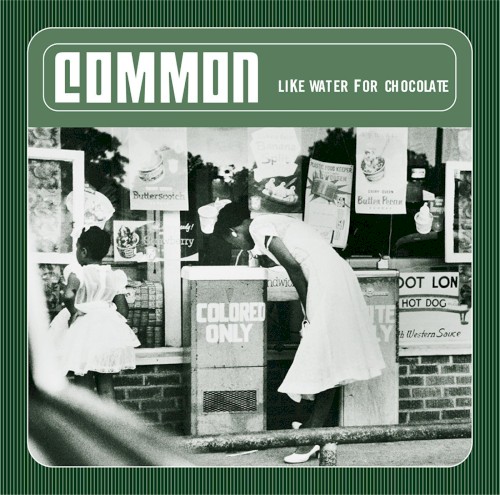
Like Water for Chocolate (2000)
- 艺人
- 朗尼·拉希德·林恩
- 发行
- 2000-03-28
- 类型
- 专辑
- 唱片公司
- 马华唱片、环球唱片
- 制作人
- DJ普雷米尔、奎斯特洛夫
- 版本
- MusicBrainz 上有 5 个发行版本
曲目
- 1Time Travelin’ (A Tribute to Fela)6:38
- 2Heat3:41
- 3Cold Blooded4:59
- 4Dooinit3:38
- 5The Light4:22
- 6Funky for You5:56
- 7The Questions4:09
- 8Time Travelin’ (reprise)1:33
- 9The 6th Sense5:19
- 10A Film Called (Pimp)6:05
- 11Nag Champa (Afrodisiac for the World)5:10
- 12Thelonius4:42
- 13Payback Is a Grandmother4:31
- 14Geto Heaven, Part Two5:18
- 15A Song for Assata6:48
- 16Pop’s Rap III… All My Children5:09
- 17Geto Heaven (Remix T.S.O.I. - The Sound of Illadelph)5:02
17 首 · 约 83 分钟 · 依据 2000-03-28 XW 发行的版本,在 MusicBrainz 看这个版本。
介绍
这个词条没有中文维基百科条目,下面是英文维基百科的原文。
Like Water for Chocolate is the fourth studio album by American rapper Common, released on March 28, 2000, through MCA Records. It was Common's first major label album and was both a critical and commercial breakthrough, receiving widespread acclaim from major magazine publications and selling 70,000 copies in its first week. The album was certified Gold on August 11, 2000, by the Recording Industry Association of America. According to Nielsen SoundScan, the album had sold 748,000 copies by March 2005. The video for "The Light" was frequently shown on MTV, adding to Common's exposure. The album also formally marked the formation of the Soulquarians, a collective composed of Questlove (of The Roots), J Dilla (formerly of Slum Village), keyboardist James Poyser, soul artist D'Angelo and bassist Pino Palladino, among numerous other collaborators. This group of musicians would also be featured on Common's next album, Electric Circus.
The album's cover photo, 1956 Alabama by Gordon Parks, is a photo of a young black woman in Alabama, dressed for church, and drinking from a "Colored Only" drinking fountain.
Conception
Background
Following 1997's One Day It'll All Make Sense, Common moved to New York City where he began collaborating with the Soulquarians at Electric Lady Studios. It was there that Ahmir Thompson (Questlove) who oversaw the album's production, introduced Common to D'Angelo. Thompson had been doing a great deal of producing there with several members of the Soulquarians, including D'Angelo. The track "Geto Heaven Part Two" was originally supposed to be a track on D'Angelo's 2000 album Voodoo, but was traded for "Chicken Grease," a track which Common had intended to include on Like Water for Chocolate. Questlove on "Chicken Grease":
By mid '99 the Soulquarians were in full swing (D, Me, Jay Dee, James Poyser) and we were working on Common's Like Water for Chocolate when we came up with this lethal jam. It was so good that D pulled me to the side and said 'I ain't no Indian giver ... but I ain't lettin Com walk off with this song..'
He called me 3 times that morning begging to ask Com for that track. Com agreed, and we named it 'Chicken Grease' after a phrase that Prince uses when he wants his guitarist to play a 9th minor chord while playing 16th notes.
Title significance
The title Like Water for Chocolate comes from the 1989 Laura Esquivel novel Like Water for Chocolate, which was adapted into the movie of the same name in 1992. The phrase "Like water for chocolate" is of Spanish origin (translated, como agua para chocolate). In many Latin American countries, hot chocolate is made with water rather than milk. The phrase refers to someone who has reached their boiling point, like water ready to be used to make chocolate. In an interview with Combustible the Poet, Common compared the main character Tita de la Garza's passion for food with his passion for music:
Actually the album is named after a movie of the same title. In the movie the main character was a really good cook. She would always be cooking for people. Whenever she would cook, she would really put a lot of emotion into it. So when people would eat her cooking, they were able to feel the same emotions she felt while cooking it. You feel me? So this is the same thing. I put all my heart, my mind and my rawness into these tracks. So I hope that people can feel that when they listen to the album.
In an interview on MTV, Common added:
I first saw the title and thought that it was real interesting, and I was like, 'Man, this is different.' It made me think, 'What does it mean?'. And it was appealing to me enough to dig into a meaning for it. So, I used "Like Water For Chocolate" to represent the water side in me, which is a Pisces, and the chocolate represents the soul, the blackness in the music.
Another popular interpretation of the album title ties in the phrase with the image on the cover of the album. Using the word 'chocolate' to symbolise people of dark skin color and the words 'like water' to describe the racially provocative concept of providing drinking water of exactly the same likeness for two different races alludes to the famous image and the themes of race that are found within the lyrical content of the album.
Music
Like Water for Chocolate is notable for its Afrocentric themes. It borrows from the Afrobeat genre on the track "Time Travelin' (A Tribute To Fela)", the Tony Allen-sampling "Heat" and the Slum Village-assisted "Thelonius". MC Lyte and Mos Def join Common for the amusing "A Film Called (Pimp)" and "The Questions," respectively. In the former, Common sends up his own "conscious" image with a skit depicting him as a hypocritical woman-beater.
Like Common's previous two albums, Like Water for Chocolate closes with spoken word recited by Common's father Lonnie "Pops" Lynn. A slightly altered version of the album was released after its success on the charts, with the Macy Gray-assisted "Geto Heaven Remix T.S.O.I. (The Sound of Illadelph)" replacing the original.
正文摘自英文维基百科「Like Water for Chocolate (album)」,按 CC BY-SA 4.0 使用;删去了参考文献、外部链接、表格和图片;篇幅所限只节选了前面一部分,全文见原条目。
资料卡
- 作品性质
- 音乐专辑
- 表演者
- 朗尼·拉希德·林恩
- 发行日期
- 2000 年 3 月 28 日
- 录音地点
- 电子淑女工作室
- 流派
- 新灵魂、意识嘻哈、嘻哈、另类嘻哈、政治嘻哈
- 唱片公司
- 马华唱片、环球唱片
- 制作人
- DJ普雷米尔、奎斯特洛夫
- 上一部
- One Day It'll All Make Sense
- 下一部
- Electric Circus
资料来自 Wikidata Q848241(CC0)。
制作名单
- 厂牌
- Geffen、UMG
制作
- 制作人
- 詹姆士·杨西(其中 11 首)、James Poyser(第 1、6、7、8、14、15 首)、丹杰洛(第 1、3、8、14 首)、?uestlove(第 1、3、8、14 首)、Kelo(第 3 首)、扎根合唱团(第 3 首)
- 混音
- Bob Power(其中 10 首)、Russell Elevado(第 1、3、8、10、14 首)、?uestlove(第 1、3、8、10、14 首)
- 录音
- Todd Fairall(其中 9 首)、Joe Pirrera(第 1、6、8 首)、Vidal Davis(第 1、8 首)、Russell Elevado(第 3、14 首)、Mike Tocci(第 12、15 首)、Kelo(第 3 首)
- 助理混音
- Steve Mandel(其中 7 首)、Mike Tocci(第 6、7、12、13、15、16 首)
- 助理录音
- Dylan Koski-Budabin(第 5、6、7、11、12、13 首)、Nick Hura(第 4、5、10、11 首)、Mike Tocci(第 6、10、13、14 首)、Dave Dar(第 1、6、8 首)、Jason Hofer(第 2 首)
演奏与演唱
- 主唱
- 朗尼·拉希德·林恩(其中 15 首)、詹姆士·杨西(第 2 首)
- 吉他
- Jef Lee Johnson(第 1、8、11、15 首)
- 唱盘
- 詹姆士·杨西(第 2、4、13 首)、Mista Sinista(第 10、13 首)
- 和声
- 比拉尔(第 6、9、10 首)、布莱克·托特(第 3 首)、拉泽尔(第 3 首)
- 键盘
- 丹杰洛(第 1、8 首)、James Poyser(第 5 首)
- 小号
- 罗伊·哈格卢夫(第 1、8 首)
- 康加鼓
- Melena(第 1、8 首)
- 演唱
- Vinia Mojica(第 1、8 首)、詹姆士·杨西(第 2、12 首)、Baatin(第 11、12 首)、T3(第 11、12 首)、费米·库蒂(第 1 首)
- 长笛
- Antonio Hart(第 10、14 首)
- 拍手
- 布莱克·托特(第 3 首)、朗尼·拉希德·林恩(第 3 首)、丹杰洛(第 3 首)、罗伊·哈格卢夫(第 3 首)、James Poyser(第 3 首)、?uestlove(第 3 首)
- 响棒
- 丹杰洛(第 3 首)
- 贝斯
- ?uestlove(第 3 首)
- 鼓
- ?uestlove(第 3 首)
词曲与编曲
- 词曲
- 朗尼·拉希德·林恩(其中 15 首)、詹姆士·杨西(其中 10 首)、James Poyser(第 1、6、7、8、14、15 首)、丹杰洛(第 1、3、8、14 首)、?uestlove(第 1、3、8、14 首)、比拉尔(第 6、9、10 首)、布莱克·托特(第 3 首)、乔治·克林顿(第 3 首)、Glen Goins(第 3 首)、Kelo(第 3 首)、拉泽尔(第 3 首)、Garry Shider(第 3 首)、博比·考德威尔(第 5 首)、Norman Harris(第 5 首)
名单来自 MusicBrainz(CC0)这一发行版本的关系数据,由志愿者录入,不一定齐全,人数太多只列了前面一部分。
更多资料与乐评
在哪听
朗尼·拉希德·林恩 的其他专辑
艺人页 ›
相似的专辑
同在 2000 年发行