 乐单
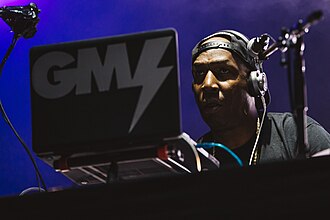
照片:Krists Luhaers,CC BY 2.0,Wikimedia Commons
闪耀大师与狂暴五人
- 成立 / 解散
- 1978 –
- 国家/地区
- 美国
- 外文名
- Grandmaster Flash and the Furious Five
- 流派
- 嘻哈音乐
- 成员
- Scorpio、闪耀大师、基夫牛仔、The Kidd Creole、梅勒·梅尔
介绍
这个词条没有中文维基百科条目,下面是英文维基百科的原文。
Grandmaster Flash and the Furious Five were an American hip-hop group formed in the South Bronx of New York City in 1978. The group's members were Grandmaster Flash, Kidd Creole (not to be confused with Kid Creole), Keef Cowboy, Melle Mel, Scorpio and Rahiem. The group's use of turntablism, breakbeat DJing and conscious lyricism were significant in the early development of hip hop music.
In the late 1970s, Grandmaster Flash and the Furious Five built their reputation and achieved local success by performing at parties and live shows. By 1980, the group had signed with Sugar Hill Records, but it was not until the release of the song "The Message" in 1982 and the album The Message that they achieved mainstream success. The song provided a political and social commentary and went on to become a driving force behind conscious hip-hop.
Grandmaster Flash and the Furious Five split into two separate groups in 1983 until a brief reunion in 1987 led to the release of the original line-up's second album On the Strength. Afterwards, they disbanded permanently. Today, the group's legacy continues as Grandmaster's Furious Five with only Melle Mel and Scorpio as remaining members.
Grandmaster Flash and the Furious Five were inducted into the Rock & Roll Hall of Fame in 2007, the first hip hop group to be inducted. They have been ranked as one of the greatest rap groups of all time by Billboard (2023). In 2002, "The Message" was one of the 50 inaugural recordings chosen by the Library of Congress to be added to the National Recording Registry. Rolling Stone ranked "The Message" number 59 on its list of the 500 Greatest Songs of All Time in 2021.
History
Formation and early years (1978–1979)
Prior to the formation of the Furious Five, Grandmaster Flash worked with the "L Brothers", which consisted of "Mean Gene" Livingston, Claudio Livingston and Grand Wizzard Theodore. Flash then recruited his friend Cowboy, Melle Mel and Kidd Creole (Nathaniel Glover). The trio called themselves the Three MC's, forming the first emcee group as it relates to rap as it is known today. Cowboy performed a "scat routine" at a party (at "The Black Door") for a friend who had just joined the U.S. Army. He began scat singing the words "hip/hop/hip/hop" in a way that mimicked the rhythmic cadence of the U.S. Army marching drill. He then worked the "hip hop" cadence into part of his performance. This led to the term "hip hoppers" being used derogatorily by the culture's early detractors, most of whom were from the disco set, to label the music used. This evolved into the term "Hip Hop" and was later adopted by the industry.
Melle Mel and Kidd Creole were the first rappers to call themselves "MCs" (Masters of Ceremonies). The 3 emcees worked with Flash, who went on to bring in Scorpio and Rahiem (Guy Todd Williams). After the formation of the Furious 5, Flash also worked with rapper Kurtis Blow doing parties in Queens. During the time Flash worked with Kurtis Blow, it was mainly due to internal disputes with the emcees, so for a short time prior to the formation of the Cold Crush Brothers in 1979, DJ Charlie Chase was the Furious 5's DJ.
Grandmaster Flash & The Furious 5 were the number one rap group on the streets of New York City before rap music was embraced by the music industry, setting the standard for all other emcee groups who came after them. The first single they released was "We Rap More Mellow", which was registered under the name The Younger Generation. The name change was made by the producer, who considered it better.
The group was popular locally, gaining recognition for their skillful raps and deejaying, but it was not until the Sugarhill Gang's "Rapper's Delight" proved that hip hop music could achieve mainstream success that they began recording. In 1979, they released their first single on Enjoy Records, "Superappin". The group went on to sign with Sylvia Robinson's Sugar Hill Records, following an agreement that they could perform over a then-popular DJ favorite.
Mainstream success and The Message (1980–1982)
In 1980, the group released their Sugarhill Records debut, "Freedom", which reached #19 on the R&B chart and sold over 50,000 copies. The follow-up, "Birthday Party" was also a hit. In 1981, Grandmaster Flash released The Adventures of Grandmaster Flash on the Wheels of Steel, which was a multi-deck, live recording of one of his routines that featured Queen's "Another One Bites the Dust" and Chic's "Good Times". The release marked the first time that scratching & turntablism were featured on a record.
正文摘自英文维基百科「Grandmaster Flash and the Furious Five」,按 CC BY-SA 4.0 使用;删去了参考文献、外部链接、表格和图片;篇幅所限只节选了前面一部分,全文见原条目。
资料卡
- 成立
- 1978 年
- 成立于
- 纽约、布朗克斯
- 来自
- 美国
- 活跃起始
- 1978 年
- 活跃结束
- 1988 年
- 流派
- 嘻哈音乐
- 唱片公司
- 艾丽卡唱片、Sugar Hill Records、Enjoy! Records
- 成员
- Scorpio、闪耀大师、基夫牛仔、The Kidd Creole、梅勒·梅尔
- 获奖
- 摇滚名人堂(2007)、格莱美终身成就奖(2021)
- 官方网站
- thefurious5.com
资料来自 Wikidata Q765409(CC0)。
本站收录的歌(1)
- The Message1982
曲库里的其他专辑(4)
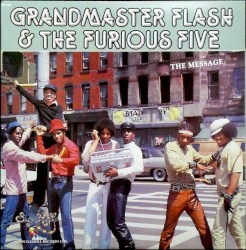
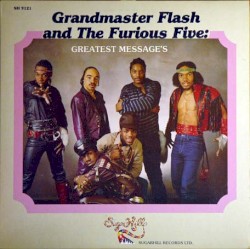
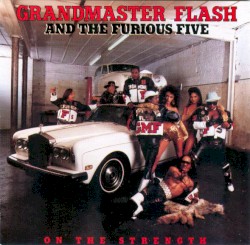
完整作品表见 MusicBrainz。
有关联的艺人
成员、所属团体、受到的影响,来自 Wikidata。
风格、年代相近的艺人
- 德瑞医生美国 · 1965– · 匪帮说唱、匪帮放克
- 杰斯美国 · 1969– · 东海岸嘻哈、黑手党说唱
- 艾斯·库伯美国 · 1969– · 西海岸嘻哈、匪帮说唱
- 野兽男孩美国 · 1981–2012 · 嘻哈音乐、说唱摇滚
- N.W.A.美国 · 1986–1991 · 西海岸嘻哈、匪帮说唱
- 全民公敌组合美国 · 1986– · 东海岸嘻哈、政治嘻哈
- 艾斯-T美国 · 1958– · 西海岸嘻哈、匪帮说唱
- LL Cool J美国 · 1968– · 东海岸嘻哈、当代节奏布鲁斯
- Run-DMC美国 · 1981– · 东海岸嘻哈、说唱摇滚
- 阿非利加·班巴塔美国 · 1957–2026 · 嘻哈音乐、电子浩室
- 探索一族合唱团美国 · 1985– · 东海岸嘻哈、另类嘻哈
- 斯塔帮美国 · 1985– · 东海岸嘻哈