 乐单

照片:The original uploader was Angular at English Wikipedia.,CC BY 2.0,Wikimedia Commons
Boards of Canada
- 成立 / 解散
- 1986 –
- 国家/地区
- 英国
- 流派
- 电子、智能舞曲、氛围科技舞曲、氛围音乐、电子民谣
- 成员
- christ.、Marcus Eoin、Michael Sandison
介绍
这个词条没有中文维基百科条目,下面是英文维基百科的原文。
Boards of Canada are a Scottish electronic music duo consisting of brothers Mike Sandison and Marcus Eoin, active since 1986. Their work is largely influenced by 1970s public broadcasting media, incorporating vintage synthesiser tones, analog equipment, samples, and hip hop-inspired beats. Critics have described their music as exploring themes related to nostalgia, childhood memory, science, spirituality, and environmental concerns.
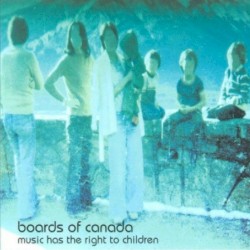
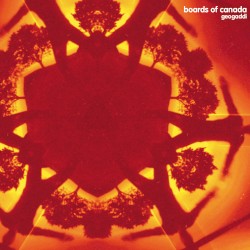
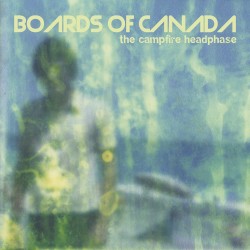
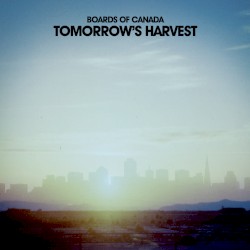
After releasing several early EPs, the group signed to Warp Records in 1998 and released their debut album Music Has the Right to Children to widespread critical acclaim; it is now considered a landmark album in electronic music. This was followed by their second studio album Geogaddi (2002), which adopted a darker tone and references to religious cults and esoteric subjects. Their third studio album The Campfire Headphase (2005), emphasized more organic instrumentation and conventional song structures. After a seven-year hiatus, the duo returned in 2013 with their fourth studio album Tomorrow's Harvest, which drew inspiration from film scores. Following another hiatus, they released their fifth studio album, Inferno, in 2026.
Boards of Canada have been regarded as "one of the best-known and best-loved electronic acts" of their era. They are credited as a pioneering group in the intelligent dance music (IDM) and hauntology movements. The duo have been described as cryptic and reclusive; they have made extensive use of subliminal messaging and unconventional promotional methods, and rarely grant interviews or appear publicly, having not performed live since 2001.
History
Early years (1986–1996)
Brothers Mike Sandison (born Michael Peter Sandison, 14 July 1971) and Marcus Eoin (born Marcus Eoin Sandison, 27 May 1973) were brought up in Cullen, Moray, on the northeast coast of Scotland. From 1979 to 1980, they lived in Calgary, Canada, while their father, who worked in construction, took part in the project to build the Saddledome. They spent their teenage years living in Balerno, right beside the Pentland Hills and attended Balerno Community High School. They attended the University of Edinburgh, where Michael studied English literature and Marcus studied artificial intelligence. Marcus dropped out before completing his degree. The duo did not reveal that they were brothers until a 2005 interview with Pitchfork, as they had wanted to avoid comparisons with another electronic sibling duo, Orbital.
Growing up in a musical family, the brothers first played instruments at a young age. They experimented with recording techniques from around the age of 10, using tape machines to layer cut-up samples of found sounds over compositions of their own. In their teens they participated in a number of amateur bands. However, it was not until 1986 when Marcus was invited to join Mike's band as a bassist that Boards of Canada was born. The band's name was inspired by the National Film Board of Canada (NFB), the government agency whose award-winning documentary films and animation they had watched as children. With frequent line-up changes, Boards of Canada eventually had comprised as many as fourteen different members.
Their first known release was Catalog 3, in 1987 on cassette tape, on the brothers' own label, Music70, while Boards of Canada was still a band (it was later re-pressed in 1997 on CD on the same label). By 1989, the band had been reduced to three core members, Mike, Marcus and Chris Horne. Later in 1989, the band released Acid Memories. Both albums have only been heard by the band's friends and family, except for a 24-second excerpt of "Duffy", released on the EHX website in the late 1990s. Acid Memories is the only early album the brothers have mentioned in interviews. With various collaborators, Mike, Marcus and Chris created their own studio. The trio began performing on occasional outdoor happenings, playing tapes of different recordings including television themes with reversed vocal messages mixed over the music, combining it with visual media, using projections, films and monitors.
From 1992 to 1994, Boards of Canada participated in different small musical and visual projects, while the band's collective "Hexagon Sun" began regular "Redmoon" nights at a ruin near their own studio in Scotland. In the summer of 1995 the band and their friends officially named their studio in the Pentland Hills “Hexagon Sun”, and the collective have continued their work on recordings, films and gatherings from this location. Since that time every year in the spring and summer Hexagon Sun hosted various small rural music gatherings.
During that time, Boards of Canada released Play By Numbers and Hooper Bay, both in 1994, which, similarly to Acid Memories, were only released to friends and family and had sub-1 minute excerpts of two songs ("Wouldn't You Like To Be Free" from Play By Numbers and "Circle" from Hooper Bay) released from both albums on the EHX website.
正文摘自英文维基百科「Boards of Canada」,按 CC BY-SA 4.0 使用;删去了参考文献、外部链接、表格和图片;篇幅所限只节选了前面一部分,全文见原条目。
资料卡
- 成立
- 1986 年
- 成立于
- 爱丁堡
- 来自
- 英国
- 活跃起始
- 1986 年
- 流派
- 电子、智能舞曲、氛围科技舞曲、氛围音乐、电子民谣、慢速电子
- 唱片公司
- Warp、Skam Records
- 成员
- christ.(1996)、Marcus Eoin、Michael Sandison
- 受到影响
- 加拿大国家电影委员会
- 官方网站
- boardsofcanada.com
资料来自 Wikidata Q722778(CC0)。
榜单和奖项里的专辑(1)
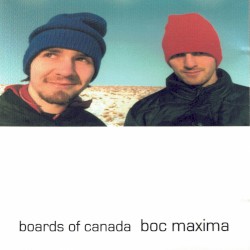
曲库里的其他专辑(8)
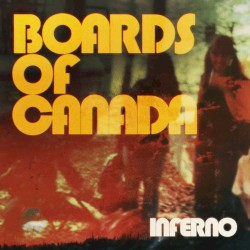
完整作品表见 MusicBrainz。
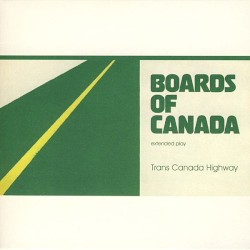
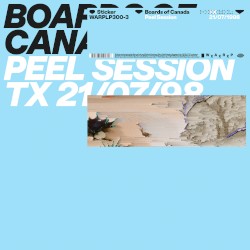
EP、单曲和其他(6)
风格、年代相近的艺人
- 赶时髦英国 · 1980– · 合成器流行乐、电子
- 奇异双胞胎乐团英国 · 1971– · 电子音乐、铁克诺音乐
- 布莱恩·伊诺英国 · 1948– · 氛围音乐、艺术流行
- 莫比美国 · 1965– · 铁克诺音乐、慢速电子
- 威廉·欧比特英国 · 1956–2026 · 电子音乐、铁克诺音乐
- 莱巴赫斯洛文尼亚 · 1980– · 流行音乐、铁克诺音乐
- 超凡乐团英国 · 1990– · 另类摇滚、铁克诺音乐
- 宠物店男孩英国 · 1981– · 合成器流行乐、新浪潮
- 席尔英国 · 1963– · 流行音乐、节奏布鲁斯
- 新秩序英国 · 1980– · 后朋克、另类舞曲
- Portishead英国 · 1991– · Trip hop、实验摇滚
- 强烈冲击英国 · 1988– · Trip hop、电子