 乐单
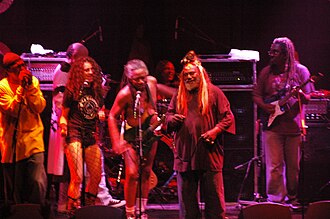
照片:Richard Anderson,CC BY-SA 2.0,Wikimedia Commons
放克疯
- 成立 / 解散
- 1968 –
- 国家/地区
- 美国
- 外文名
- Funkadelic
- 流派
- 放克
- 成员
- 乔治·克林顿
介绍
这个词条没有中文维基百科条目,下面是英文维基百科的原文。
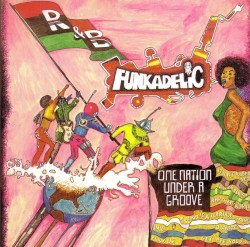
Funkadelic was an American funk rock band formed in Plainfield, New Jersey, in 1968 and active until 1982. As one of the two flagship groups of George Clinton's P-Funk collective, they helped pioneer the funk music culture of the 1970s. Funkadelic initially formed as a backing band for Clinton's vocal group the Parliaments (later the full-fledged band Parliament), but eventually pursued a heavier, psychedelic rock-oriented sound in their own recordings. They released acclaimed albums such as Maggot Brain (1971) and One Nation Under a Groove (1978).
History
Background
The group that would become Funkadelic was formed by George Clinton in 1964, as the unnamed backing section for his doo wop group the Parliaments while on tour. The band originally consisted of musicians Frankie Boyce, Richard Boyce, and Langston Booth plus the five members of the Parliaments on vocals. Boyce, Boyce, and Booth enlisted in the Army in 1966, and Clinton recruited bassist Billy Bass Nelson and guitarist Eddie Hazel in 1967, then added guitarist Tawl Ross and drummer Tiki Fulwood. The name "Funkadelic" was coined by Nelson after the band relocated to Detroit. By 1968, because of a dispute with Revilot, the record company that owned the Parliaments' name, the ensemble began playing under the name Funkadelic.
Psychedelic era
As Funkadelic, the group signed to Westbound in 1968. Around this time, the group's music evolved from soul and doo wop into a harder guitar-driven mix of psychedelic rock, soul and funk, much influenced by the popular musical (and political) movements of the time. Jimi Hendrix, Sly Stone, the MC5, and Vanilla Fudge were major inspirations. This style later evolved into a tighter guitar and horns-based funk (circa 1971–75), which subsequently, during the height of Parliament-Funkadelic success (circa 1976–81), added elements of R&B and electronic music, with fewer psychedelic rock elements. The band made their first live television performance on Say Brother on October 7, 1969. They played a jam with songs "Into My Own Thing" (Sly and the Family Stone cover), "What Is Soul?", "(I Wanna) Testify", "I Was Made to Love Her" (Stevie Wonder cover), "Friday Night, August 14th" and "Music for My Mother".
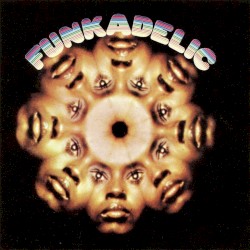
The group's self-titled debut album, Funkadelic, was released in 1970. The credits listed organist Mickey Atkins plus Clinton, Fulwood, Hazel, Nelson, and Ross. The recording also included the rest of Parliament's singers (still uncredited because of contractual concerns), several uncredited session musicians then employed by Motown, as well as Ray Monette (of Rare Earth) and future P-Funk mainstay Bernie Worrell.
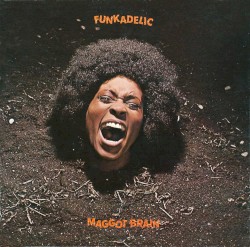
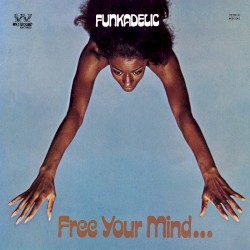
Bernie Worrell was officially credited starting with Funkadelic's second album, Free Your Mind... and Your Ass Will Follow (1970), thus beginning a long working relationship between Worrell and Clinton. The album Maggot Brain followed in 1971. The first three Funkadelic albums displayed strong psychedelic influences (not least in terms of production) and limited commercial potential, despite containing many songs that stayed in the band's setlist for several years and would influence many future funk, rock, and hip-hop artists.
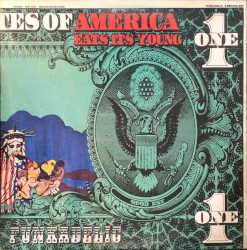
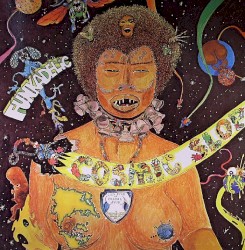
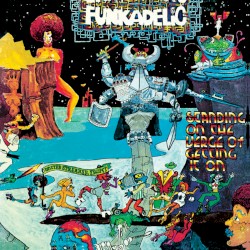
After the release of Maggot Brain, the Funkadelic lineup expanded greatly. Tawl Ross was unavailable after experiencing either a bad LSD trip or a speed overdose, while Billy Bass Nelson and Eddie Hazel quit due to financial concerns. From this point, many more musicians and singers would be added during Funkadelic's (and Parliament's) history, including the recruitment of several members of James Brown's backing band, the JB's, in 1972 – most notably Bootsy Collins and the Horny Horns. Bootsy and his brother Catfish Collins were recruited by Clinton to replace the departed Nelson and Hazel. Bootsy in particular became a major contributor to the P-Funk sound. In 1972, this new line-up released the politically charged double album America Eats Its Young. The lineup stabilized a bit with the album Cosmic Slop in 1973, featuring major contributions from recently added singer-guitarist Garry Shider. After first leaving the band, Eddie Hazel spent a year in jail after assaulting an airline flight attendant and air marshal while under the influence of PCP, then he returned to make major contributions to the album Standing on the Verge of Getting It On (1974). Hazel only contributed to P-Funk sporadically thereafter.
正文摘自英文维基百科「Funkadelic」,按 CC BY-SA 4.0 使用;删去了参考文献、外部链接、表格和图片;篇幅所限只节选了前面一部分,全文见原条目。
资料卡
- 成立
- 1968 年
- 成立于
- 普兰菲尔德
- 来自
- 美国
- 活跃起始
- 1968 年
- 流派
- 放克
- 唱片公司
- Westbound唱片
- 成员
- 乔治·克林顿
- 官方网站
- georgeclinton.com
资料来自 Wikidata Q523957(CC0)。
榜单和奖项里的专辑(2)
本站收录的歌(1)
曲库里的其他专辑(14)
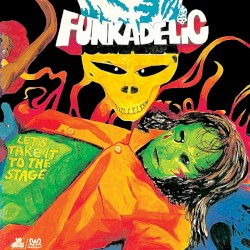
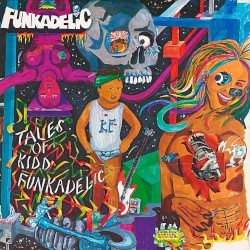
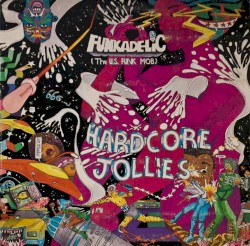
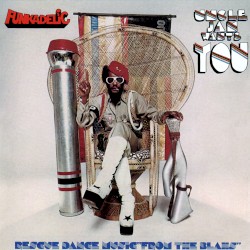
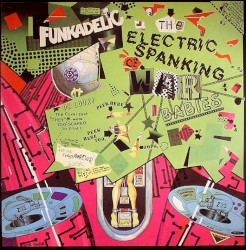
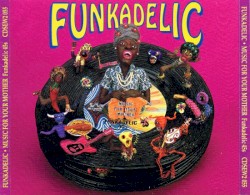
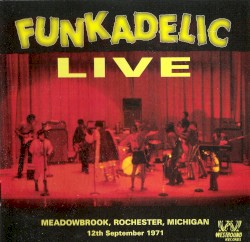
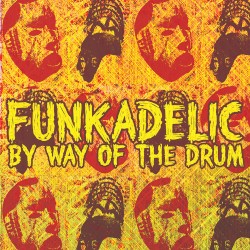
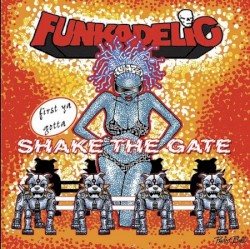
完整作品表见 MusicBrainz。
有关联的艺人
成员、所属团体、受到的影响,来自 Wikidata。
风格、年代相近的艺人
- 迈克尔·杰克逊美国 · 1958–2009 · 流行音乐、当代节奏布鲁斯
- 雪儿美国 · 1946– · 流行摇滚、浩室音乐
- 芭芭拉·琼·斯特赖桑德美国 · 1942– · 传统流行乐、爵士乐
- 史提夫·汪达美国 · 1950– · 节奏布鲁斯、灵魂乐
- 唐娜·桑默美国 · 1948–2012 · 迪斯科、摇滚乐
- 贝蒂·米勒美国 · 1945– · 流行音乐、摇滚乐
- 小莱昂纳尔·布罗克曼·里奇美国 · 1949– · 流行音乐、灵魂乐
- 葛洛莉雅·盖诺美国 · 1943– · 迪斯科、节奏布鲁斯
- 贺比·汉考克美国 · 1940– · 爵士乐、咆勃爵士乐
- 艾萨克·海耶斯美国 · 1942–2008 · 节奏布鲁斯、灵魂乐
- 积逊五人组美国 · 1964– · 节奏布鲁斯、流行音乐
- 地,风与火美国 · 1970– · 放克、节奏布鲁斯