 乐单
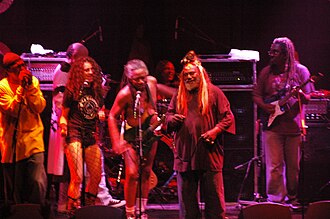
照片:Richard Anderson,CC BY-SA 2.0,Wikimedia Commons
百乐门
- 国家/地区
- 美国
- 外文名
- Parliament
- 流派
- 嘟·喔普、放克
- 成员
- 乔治·克林顿
介绍
这个词条没有中文维基百科条目,下面是英文维基百科的原文。
Parliament was an American funk band formed in 1968 by George Clinton as a flagship act of his P-Funk collective. Evolving out of an earlier vocal group, Parliament became associated with a more commercial and less rock-oriented sound than its sister act Funkadelic. Their work incorporated Afrofuturist concepts, horn arrangements, synthesizer, and outlandish theatrics. The band scored a number of Top 10 hits, including the million-selling 1976 single "Give Up the Funk (Tear the Roof off the Sucker)," and Top 40 albums such as Mothership Connection (1975).
History
Parliament was originally The Parliaments, a doo-wop vocal group based at a Plainfield, New Jersey, barbershop. The group was formed in the late 1950s and included George Clinton, Ray Davis, Fuzzy Haskins, Calvin Simon, and Grady Thomas. Clinton was the group leader and manager. The group scored a hit single in 1967 with "(I Wanna) Testify" (co-written by Clinton) on Revilot Records. To capitalize on this chart success, Clinton formed a touring band, featuring teenage barbershop employee Billy Nelson on bass and his friend Eddie Hazel on guitar, with the line-up eventually rounded out by Tawl Ross on guitar, Tiki Fulwood on drums, and Mickey Atkins on organ.
During a contractual dispute with Revilot, Clinton temporarily lost the rights to the name "The Parliaments", and signed the ensemble to Westbound Records as Funkadelic, which Clinton positioned as a funk-rock band featuring the five touring musicians with the five Parliaments singers as uncredited guests. With Funkadelic as a recording and touring entity in its own right, in 1970 Clinton relaunched the singing group, now known as Parliament, at first featuring the same ten members. Clinton was now the leader of two different acts, Parliament and Funkadelic, which featured the same members, but were marketed as creating two different types of funk.
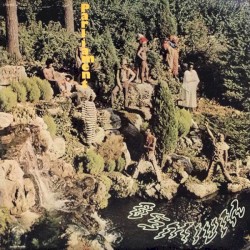
The Parliament album titled Osmium was released on Invictus Records in 1970, and was later reissued on CD with non-album tracks as both Rhenium and First Thangs. Osmium featured a mostly psychedelic soul sound that was more similar to the Funkadelic albums of the period, than to the later Parliament albums. The song "The Breakdown" was released separately as a single, and reached No. 30 on the R&B chart in 1971. Due to continuing contractual problems and the fact that Funkadelic releases were more successful at the time, Clinton temporarily abandoned the name Parliament (which he revived in 1974).
Following Osmium, the line-up of Parliament-Funkadelic began going through many changes and was expanded significantly, with the addition of important members such as keyboardist Bernie Worrell in 1970, singer/guitarist Garry Shider in 1971, and bassist Bootsy Collins (recruited from the James Brown backing band) in 1972. Dozens of singers and musicians would contribute to future Parliament-Funkadelic releases. Clinton relaunched Parliament in 1974 and signed the act to Casablanca Records. Parliament, now augmented by the Horny Horns (also recruited from James Brown's band) was positioned as a smoother R&B-based funk ensemble with intricate horn and vocal arrangements, and as a counterpoint to the guitar-based funk-rock of Funkadelic. By this point, Parliament and Funkadelic were touring as a combined entity known as Parliament-Funkadelic or simply P-Funk (which also became the catch-all term for George Clinton's rapidly growing stable of funk artists).
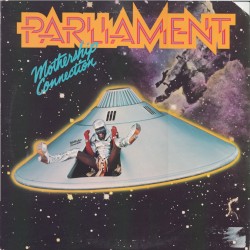
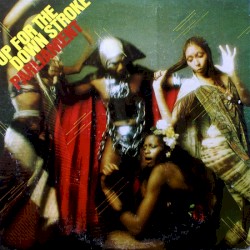
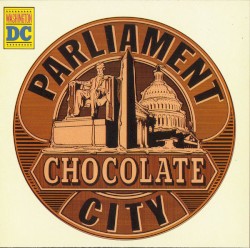
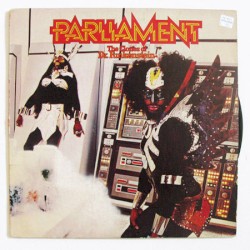
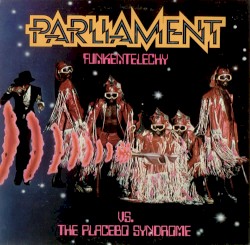
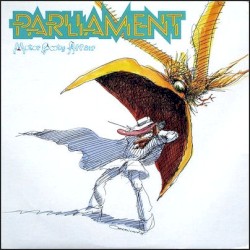
The album Up for the Down Stroke was released in 1974, with Chocolate City following in 1975. Both performed strongly on the Billboard R&B album chart and were moderately successful on the pop chart. Parliament began its period of greatest mainstream success with the concept album Mothership Connection (1975), the lyrics of which launched much of the P-Funk mythology. The subsequent albums The Clones of Dr. Funkenstein (1976), Funkentelechy vs. the Placebo Syndrome (1977), and Motor Booty Affair (1978) all reached high on both the R&B and Pop charts, while Funkadelic was also experiencing significant mainstream success. Parliament scored the No. 1 R&B singles "Flash Light" in 1977 and "Aqua Boogie" in 1978.
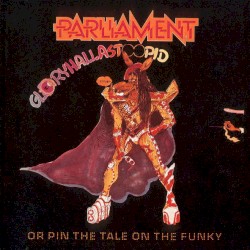
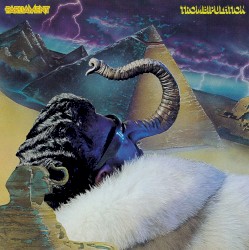
The rapidly expanding ensemble of musicians and singers in the Parliament-Funkadelic enterprise, as well as Clinton's problematic management practices, began to take their toll by the late 1970s. Original Parliaments members Fuzzy Haskins, Calvin Simon, and Grady Thomas, who had been with Clinton since the barbershop days in the late 1950s, departed acrimoniously in 1977, after disputes over Clinton's management. Other important group members like singer/guitarist Glenn Goins and drummer Jerome Brailey left Parliament-Funkadelic in 1978 after disputes over Clinton's management. Two further Parliament albums, Gloryhallastoopid (1979) and Trombipulation (1980) were less successful than the albums from the group's prime 1975-1978 period.
正文摘自英文维基百科「Parliament (band)」,按 CC BY-SA 4.0 使用;删去了参考文献、外部链接、表格和图片;篇幅所限只节选了前面一部分,全文见原条目。
资料卡
- 成立于
- 普兰菲尔德
- 来自
- 美国
- 活跃起始
- 1968 年
- 流派
- 嘟·喔普、放克
- 唱片公司
- 卡萨布兰卡唱片
- 成员
- 乔治·克林顿
资料来自 Wikidata Q1892425(CC0)。
榜单和奖项里的专辑(1)
本站收录的歌(1)
- Flash Light1978
曲库里的其他专辑(11)
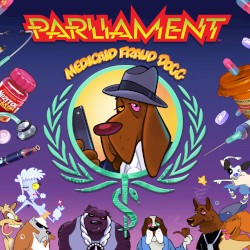
完整作品表见 MusicBrainz。
有关联的艺人
成员、所属团体、受到的影响,来自 Wikidata。
风格、年代相近的艺人
- 迈克尔·杰克逊美国 · 1958–2009 · 流行音乐、当代节奏布鲁斯
- 雪儿美国 · 1946– · 流行摇滚、浩室音乐
- 芭芭拉·琼·斯特赖桑德美国 · 1942– · 传统流行乐、爵士乐
- 史提夫·汪达美国 · 1950– · 节奏布鲁斯、灵魂乐
- 唐娜·桑默美国 · 1948–2012 · 迪斯科、摇滚乐
- 贝蒂·米勒美国 · 1945– · 流行音乐、摇滚乐
- 小莱昂纳尔·布罗克曼·里奇美国 · 1949– · 流行音乐、灵魂乐
- 葛洛莉雅·盖诺美国 · 1943– · 迪斯科、节奏布鲁斯
- 贺比·汉考克美国 · 1940– · 爵士乐、咆勃爵士乐
- 艾萨克·海耶斯美国 · 1942–2008 · 节奏布鲁斯、灵魂乐
- 积逊五人组美国 · 1964– · 节奏布鲁斯、流行音乐
- 地,风与火美国 · 1970– · 放克、节奏布鲁斯