乐单
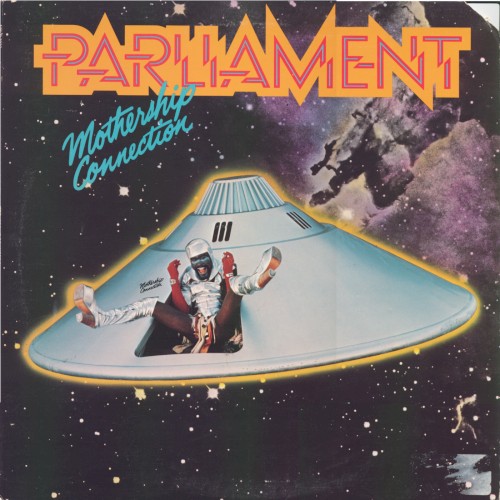
Mothership Connection (1975)
滚石 500(2020) #363滚石 500(2003) #2741001 张专辑
- 艺人
- 百乐门
- 发行
- 1975-12-15
- 类型
- 专辑
- 唱片公司
- 卡萨布兰卡唱片
- 制作人
- 乔治·克林顿
- 版本
- MusicBrainz 上有 4 个发行版本
曲目
- A1P. Funk (Wants to Get Funked Up)7:41
- A2Mothership Connection (Star Child)6:13
- A3Unfunky UFO4:24
- B1Supergroovalisticprosifunkstication5:05
- B2Handcuffs4:04
- B3Give Up the Funk (Tear the Roof Off the Sucker)5:48
- B4Night of the Thumpasorus Peoples5:10
7 首 · 约 38 分钟 · 依据 1975 US 发行的版本,在 MusicBrainz 看这个版本。
介绍
这个词条没有中文维基百科条目,下面是英文维基百科的原文。
Mothership Connection is the fourth album by the American funk band Parliament, released on December 15, 1975, on Casablanca Records. This concept album is often rated among the best Parliament-Funkadelic releases, and was the first to feature horn players Maceo Parker and Fred Wesley, previously of James Brown's backing band the J.B.'s.
Mothership Connection became Parliament's first album to be certified gold and later platinum. It was supported by the hit "Give Up the Funk (Tear the Roof off the Sucker)," the band's first million-selling single. The Library of Congress added the album to the National Recording Registry in 2011, declaring that it "has had an enormous influence on jazz, rock and dance music."
Concept
The album is held together by an outer-space theme. Describing the concept, George Clinton said "We had put black people in situations nobody ever thought they would be in, like the White House. I figured another place you wouldn't think black people would be was in outer space. I was a big fan of Star Trek, so we did a thing with a pimp sitting in a spaceship shaped like a Cadillac, and we did all these James Brown-type grooves, but with street talk and ghetto slang." The album's concept would form the backbone of P-Funk's concert performances during the 1970s, in which a large spaceship prop known as the Mothership would be lowered onto the stage.
BBC Music described the album as a pioneering work of Afrofuturism "set in a future universe where black astronauts interact with alien worlds." Journalist Frasier McAlpine stated: "As a reaction to an increasingly fraught 1970s urban environment in which African-American communities faced the end of the optimism of the civil rights era, this flamboyant imagination (and let's be frank, exceptional funkiness) was both righteous and joyful."
Reception
On release, Rolling Stone called the album a "parody of modern funk" and stated that "unlike the Ohio Players or Commodores, the group refuses to play it straight. Instead, Clinton spews his jive, conceived from some cosmic funk vision." In a positive review, Village Voice critic Robert Christgau stated that Clinton "keeps the beat going with nothing but his rap, some weird keyboard, and cymbals for stretches of side one," and described "Give Up the Funk" as "galactic."
Retrospectively, Mothership Connection has been widely acclaimed, and it is typically considered to be one of the best albums by the Parliament-Funkadelic collective. Rolling Stone's 2003 review gave the record 5 stars: "The masterpiece, the slang creator, the icon builder, the master narrative--or 'the bomb,' as Clinton succinctly put it before anyone else." Jason Birchmeier of AllMusic called it "the definitive Parliament-Funkadelic album," in which "George Clinton's revolving band lineups, differing musical approaches, and increasingly thematic album statements reached an ideal state, one that resulted in enormous commercial success as well as a timeless legacy."
Dr. Dre famously sampled "Mothership Connection (Star Child)" on "Let Me Ride" and "P. Funk (Wants to Get Funked Up)" on "The Roach (The Chronic Outro)", both from his 1992 album The Chronic.
The album has received many retrospective accolades, including being named VH1's 55th greatest album of all time. In 2012, it was ranked at number 276 on Rolling Stone's list of the 500 greatest albums of all time; it was featured again on the 2020 edition, at number 363. Vibe listed Mothership Connection in their "Essential Black Rock Recordings" list, and it was included in the 2005 book 1001 Albums You Must Hear Before You Die.
Personnel
Vocals – George Clinton (lead on "P. Funk (Wants to Get Funked Up)" and "Mothership Connection (Star Child)"), Calvin Simon, Fuzzy Haskins, Ray Davis, Grady Thomas, Gary Shider (co-lead on "Handcuffs"), Glenn Goins (lead on "Unfunky UFO" and "Handcuffs"), Bootsy Collins
- Horns – Fred Wesley, Maceo Parker, Michael Brecker, Randy Brecker, Boom, Joe Farrell
- Bass guitar – Bootsy Collins, Cordell Mosson
- Guitars – Garry Shider, Michael Hampton, Glenn Goins, Bootsy Collins
- Drums and percussion – Tiki Fulwood, Jerome Brailey, Bootsy Collins, Gary Cooper
Keyboards – Bernie Worrell (Minimoog, Wurlitzer electric piano, ARP Pro Soloist and String Ensemble, RMI Electra Piano, Hammond organ, grand piano, Fender Rhodes, Clavinet D6)
Backing vocals and handclaps – Gary Cooper, Debbie Edwards, Taka Kahn, Archie Ivy, Bryna Chimenti, Rasputin Boutte, Pam Vincent, Debra Wright, Sidney Barnes
- Production
- Produced by George Clinton
Engineered by Jim Vitti (in Detroit, Michigan), Ralph (Oops) Jim Callon (in Hollywood, California)
- Mastered by Allen Zentz
- Photography by David Alexander
Art Direction and Design by Gribbitt!
正文摘自英文维基百科「Mothership Connection」,按 CC BY-SA 4.0 使用;删去了参考文献、外部链接、表格和图片。
资料卡
- 作品性质
- 音乐专辑
- 表演者
- 百乐门
- 发行日期
- 1975 年
- 流派
- 放克、放克摇滚
- 语言
- 英语
- 唱片公司
- 卡萨布兰卡唱片
- 制作人
- 乔治·克林顿
资料来自 Wikidata Q766984(CC0)。
制作名单
- 厂牌
- Casablanca Records(目录号 NBLP 7022)
制作
- 制作人
- 乔治·克林顿
演奏与演唱
- 萨克斯
- 麦克·布雷克、马西欧·帕克
- valved brass instruments
- Randy Brecker
- 贝斯
- 布德西·柯林斯、Cordell Mosson
- 鼓
- 布德西·柯林斯
- 吉他
- 布德西·柯林斯、Glen Goins、Michael Hampton
- 木管
- Joe Farrell
- 吉他类
- Garry Shider
- 长号
- 弗雷德·韦斯利
- 键盘
- 贝尼·沃雷尔
- 合成器
- 贝尼·沃雷尔
- 演唱
- 乔治·克林顿、布德西·柯林斯、Ray Davis、Glen Goins、Fuzzy Haskins、Garry Shider、Calvin Simon、Grady Thomas
词曲与编曲
- 器乐编曲
- 弗雷德·韦斯利、贝尼·沃雷尔
- 作曲
- 乔治·克林顿、布德西·柯林斯(第 A1、A2、A3、B1、B3、B4 首)、贝尼·沃雷尔(第 A1、A2、B1 首)、Garry Shider(第 A3、B1、B4 首)、Glen Goins(第 B2 首)、Jerome Brailey(第 B3 首)
名单来自 MusicBrainz(CC0)这一发行版本的关系数据,由志愿者录入,不一定齐全。
更多资料与乐评
在哪听
百乐门 的其他专辑
艺人页 ›


相似的专辑
同在 1975 年发行