 乐单
弗雷德·尼尔
- 生卒
- 1936 – 2001
- 国家/地区
- 美国
- 外文名
- Fred Neil
- 流派
- 布鲁斯、民俗音乐
介绍
这个词条没有中文维基百科条目,下面是英文维基百科的原文。
Fred Neil (born Frederick Ralph Morlock Jr.; March 16, 1936 – July 7, 2001) was an American folk singer-songwriter active in the 1960s and early 1970s. He is mainly known through other people's recordings of his material, particularly "Everybody's Talkin'", which became a hit for Harry Nilsson after it was used in the film Midnight Cowboy in 1969. Though highly regarded by contemporary folk singers, he was reluctant to tour and spent much of the last 30 years of his life assisting with the preservation of dolphins.
Life and career
Fred Neil was born Frederick Ralph Morlock Jr., in Cleveland, Ohio, two weeks after the marriage of his parents, Frederick Ralph Morlock and Lura Camp Riggs. Neil later said that he took his stage name from his maternal grandmother, Addie Neill, the family member of whom he was fondest. While they lived in Ohio, his father installed sound systems for the Automatic Musical Instrument Distribution Company (AMI), which made player pianos and, later, jukeboxes, and then worked for the Triangle Music Company, distributor of Aireon jukeboxes. In 1942, the Morlock family moved to St. Petersburg, Florida, where young Fred started singing when he was in first grade, coached by his mother, she claimed. Around 1947, when in sixth grade, he started playing guitar. His parents had separated in 1945, divorcing in 1949, and his father returned to Cleveland.
In the late 1950s, Neil was writing songs professionally in New York City's Brill Building, a center for music industry offices and professional songwriters. While composing at the Brill Building for other artists, Neil recorded six mostly rockabilly-pop singles for different labels as a solo artist. He wrote songs that were recorded by early rock and roll artists, such as Buddy Holly ("Come Back Baby" 1958, co-credited to Holly's producer, Norman Petty) and Roy Orbison ("Candy Man" 1961, co-written with Beverly Ross).
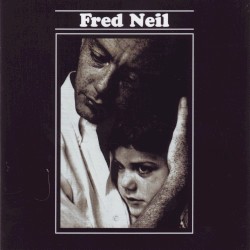
With his 12-string guitar and distinctive bass-baritone voice, Neil was considered the king of the MacDougal Street/Greenwich Village folksingers. With Lou Gossett, starting in February 1961 he co-hosted an afternoon hootenanny at Cafe Wha?. Bob Dylan recalled that when he arrived at the Village, he was advised to seek Neil there, and, when he did, Neil invited Dylan to join him on stage. Photos from July 20, 1961, depict Neil, Karen Dalton, Mark Spoelstra, and an unidentified conga player, with Dylan on harmonica. In addition to Dalton, early on Neil also performed alongside Dino Valenti. Neil met Vince Martin in 1962, and they formed a singing partnership; his first LP, Tear Down The Walls (1964) was recorded with Martin. A New Yorker, Martin had relocated to Florida in 1960, and soon settled in Coconut Grove, where Neil followed him after their initial musical meeting, and where he returned regularly for years after. During 1965 and 1966 Neil was joined on many live sets by the Seventh Sons, a trio led by Buzzy Linhart on guitar and vibes. Neil released Bleecker & MacDougal on Elektra Records in 1965, reissued in 1970 as A Little Bit of Rain. His album Fred Neil, released in 1967, relaunched in 1969 as Everybody's Talkin', was recorded during his residencies in Greenwich Village and Coconut Grove, with one session taking place in Los Angeles.
After "Everybody's Talkin'", Neil's best-known songs are "Other Side of This Life", covered by The Lovin' Spoonful on their debut album, Do You Believe in Magic and Jefferson Airplane on their live album Bless Its Pointed Little Head; and "The Dolphins", which was later recorded by several artists, including Linda Ronstadt, It's a Beautiful Day, The The, Richie Havens, Billy Bragg, Beth Orton, and Tim Buckley. In particular, Jefferson Airplane considered Neil a major influence, and he was a frequent visitor to their Haight-Ashbury house at 2400 Fulton Street in San Francisco. Neil reminded Grace Slick of Winnie the Pooh, and her nickname for him was "Poohneil". The minor Airplane hit "The Ballad of You and Me and Pooneil" was written for Neil. Sebastian's song "Coconut Grove" from the album Hums of the Lovin' Spoonful was a tribute to Neil.
Blues and folk singer Lisa Kindred credits Neil with being her mentor in the early 1960s.
Interested in dolphins since the mid-1960s, when he began visiting the Miami Seaquarium, Neil, with Ric O'Barry, founded the Dolphin Research Project in 1970, an organization dedicated to stopping the capture, trafficking and exploitation of dolphins worldwide. Increasingly involved in that pursuit, Neil progressively disappeared from the recording studio and live performance, with only occasional performances in the rest of the 1970s.
正文摘自英文维基百科「Fred Neil」,按 CC BY-SA 4.0 使用;删去了参考文献、外部链接、表格和图片;篇幅所限只节选了前面一部分,全文见原条目。
资料卡
- 本名
- Frederick Neil
- 出生
- 1936 年 3 月 16 日
- 出生地
- 克利夫兰
- 去世
- 2001 年 7 月 7 日
- 去世地
- 圣彼得斯堡
- 国籍
- 美国
- 活跃起始
- 1964 年
- 职业
- 歌手、词曲作家、音乐家
- 乐器
- 人声、吉他
- 流派
- 布鲁斯、民俗音乐
- 唱片公司
- Capitol唱片
- 使用语言
- 英语
- 官方网站
- fredneil.com
资料来自 Wikidata Q1452463(CC0)。
榜单和奖项里的专辑(1)
曲库里的其他专辑(3)
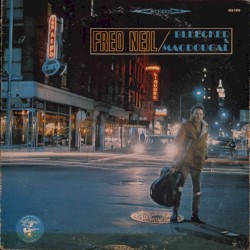
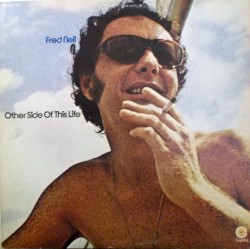
完整作品表见 MusicBrainz。
风格、年代相近的艺人
- 萝贝塔·弗莱克美国 · 1937–2025 · 灵魂乐、爵士乐
- 雷·库德美国 · 1947– · 摇滚乐、世界音乐
- 鲍勃·迪伦美国 · 1941– · 摇滚乐、布鲁斯
- 琼·贝兹美国 · 1941– · 民俗音乐、乡村音乐
- 珍妮丝·贾普林美国 · 1943–1970 · 迷幻摇滚、蓝调摇滚
- 保罗·西蒙美国 · 1941– · 摇滚乐、民谣摇滚
- 威利·尼尔森美国 · 1933– · 乡村音乐、流行音乐
- 杰弗逊飞机美国 · 1965–1972 · 摇滚乐、迷幻摇滚
- 邦妮·瑞特美国 · 1949– · 布鲁斯、美洲音乐
- 利昂·拉塞尔美国 · 1942–2016 · 乡村音乐、布鲁斯
- 蒂姆·伯克利美国 · 1947–1975 · 民俗音乐
- 汤斯·范·赞特美国 · 1944–1997 · 乡村音乐、民俗音乐