 乐单
Common People (1995)
- 演唱
- 果浆乐团
- 发行
- 1995-05-22
- 作曲
- Steve Mackey、Russell Senior、Nick Banks、Candida Doyle
- 作词
- 贾维斯·卡克
介绍
这个词条没有中文维基百科条目,下面是英文维基百科的原文。
"Common People" is a song by English alternative rock band Pulp, released in May 1995 by Island Records as the lead single from their fifth studio album, Different Class (1995). It reached No. 2 on the UK Singles Chart, becoming a defining track of the Britpop movement as well as Pulp's signature song. In 2014, BBC Radio 6 Music listeners voted it their favourite Britpop song in an online poll. In a 2015 Rolling Stone readers' poll it was voted the greatest Britpop song.
The song is a critique of the wealthy wanting to be "like common people" – ascribing glamour to poverty. This phenomenon is referred to as slumming or "class tourism". The song was written by the band members Jarvis Cocker, Nick Banks, Candida Doyle, Steve Mackey and Russell Senior. Cocker had conceived the song after meeting a Greek art student while studying at the Central Saint Martins College of Art and Design in London (the college and the student feature in the lyrics). He came up with the tune on a Casiotone keyboard he had bought in a music store in Notting Hill, west London.
Justin Myers of the Official Charts Company wrote the song "was typical Pulp – a biting satire of posh people 'roughing it' and acting like tourists by hanging with the 'common people'. Jarvis delivered his scathing putdown with glee, in an iconic music video, directed by Pedro Romhanyi, featuring actress Sadie Frost as the posh woman on the receiving end of Jarvis' acid tongue." Pulp first performed the song in public during the band's set at the Reading Festival in August 1994. A year later, they performed it at Glastonbury Festival as the headline act. The song has since been covered by various artists. In 2004, a Ben Folds-produced cover version by William Shatner brought "Common People" to new audiences outside Europe.
Inspiration
The idea for the song's lyrics came from an art student from Greece whom Pulp singer-songwriter Jarvis Cocker met while he was studying at the Central Saint Martins College of Art and Design. Cocker had enrolled in a film studies course at the college in September 1988 while taking a break from Pulp. He spoke about the song's inspiration in NME in 2013:
I'd met the girl from the song many years before, when I was at St Martin's College. I'd met her on a sculpture course, but at St Martin's you had a thing called Crossover Fortnight, where you had to do another discipline for a couple of weeks. I was studying film, and she might've been doing painting, but we both decided to do sculpture for two weeks. I don't know her name. It would've been around 1988, so it was already ancient history when I wrote about her.
In a 2012 question-and-answer session on BBC Radio 5 Live, Cocker said that he was having a conversation with the girl at the bar at college because he was attracted to her, but he found some aspects of her personality unpleasant. He remembered that at one point she had told him she "wanted to move to Hackney and live like 'the common people.'" Cocker used this phrase as the starting point for the song and embellished the situation for dramatic effect, for example reversing the situation in the song when the female character declares that "I want to sleep with common people like you" (Cocker said that in real life he had been the one wanting to sleep with the girl, and she had not been interested in him). Taking this inspiration, the narrator explains that his female acquaintance can "never be like common people" because even if she gets a flat where "roaches climb the wall" ultimately, "if [she] called [her] dad he could stop it all", in contrast to the true common people who can only "watch [their] lives slide out of view".
A BBC Three documentary failed to locate the woman, who, Cocker stated, could have been in any fine art course but that "sculpture" sounded better. The lyrics were in part a response by Cocker, who usually focused on the introspective and emotional aspects of pop, to more politically minded members of the band like Russell Senior. Furthermore, Cocker felt that 'slumming' was becoming a dominant theme in popular culture and this contributed to the single's rushed release. Cocker said "it seemed to be in the air, that kind of patronising social voyeurism...I felt that of Parklife, for example, or Natural Born Killers – there is that noble savage notion. But if you walk round a council estate, there's plenty of savagery and not much nobility going on."
正文摘自英文维基百科「Common People」,按 CC BY-SA 4.0 使用;删去了参考文献、外部链接、表格和图片;篇幅所限只节选了前面一部分,全文见原条目。
资料卡
- 作品性质
- 单曲
- 表演者
- 果浆乐团
- 发行日期
- 1995 年 5 月 22 日
- 流派
- 英伦摇滚
- 语言
- 英语
- 唱片公司
- 小岛唱片
- 作曲
- Steve Mackey、Russell Senior、Nick Banks、Candida Doyle、贾维斯·卡克
- 作词
- 贾维斯·卡克
- 制作人
- 克里斯·托马斯
- 上一部
- The Sisters EP
- 下一部
- Mis-Shapes、Sorted for E's & Wizz
资料来自 Wikidata Q11680820(CC0)。
更多资料
在哪听
果浆乐团 的专辑
艺人页 ›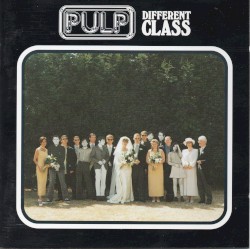

风格、年代相近的歌
- Karma Police电台司令 · 1997
- Everlong喷火战机乐队 · 1997
- 奇迹之墙绿洲乐队 · 1995
- You Oughta Know艾拉妮丝·莫莉塞特 · 1995
- 神经衰弱年轻岁月 · 1994
- Closer九吋钉乐团 · 1994
- Black Hole Sun声音花园 · 1994
- Loser贝克 · 1994
- Fade into You迷星 · 1994
- Buddy Holly威瑟乐团 · 1994
- Rid of MePJ哈维 · 1993
- CannonballThe Breeders · 1993