 乐单
介绍
这个词条没有中文维基百科条目,下面是英文维基百科的原文。
"Loser" is a single by American musician Beck. It was written by Beck and record producer Carl Stephenson, who both produced the song with Tom Rothrock. "Loser" was initially released as Beck's second single by independent record label Bong Load Custom Records on 12-inch vinyl format with catalog number BL5 on March 8, 1993.
When it was first released independently, "Loser" began receiving airplay on various modern rock stations, and the song's popularity eventually led to a major-label record deal with Geffen Records-subsidiary DGC Records. After the song's re-release under DGC, the song peaked at number 10 on the US Billboard Hot 100 in April 1994, becoming Beck's first single to hit a major chart. Internationally, the song reached number one in Norway and entered the top 10 in Australia, Austria, Canada, Iceland, New Zealand, and Sweden.
"Loser" was subsequently released on Beck's third studio album Mellow Gold, in 1994. The song's music video was directed by Steve Hanft and filmed in California on a budget of total $14,300. It received a nomination at the 1994 Billboard Music Video Awards. In 2023, Billboard magazine ranked "Loser" among the 500 best pop songs of all time.
Conception and recording
In the late 1980s and early 1990s, Beck was a homeless musician in the New York City anti-folk scene. He returned to his hometown of Los Angeles in early 1991, due to his financial struggles. Described by biographer Julian Palacios as having "no opportunities whatsoever", Beck worked low-wage jobs to survive, but still found time to perform his songs at local coffeehouses and clubs. In order to keep indifferent audiences engaged in his music, Beck would play in a spontaneous, joking manner. "I'd be banging away on a Son House tune and the whole audience would be talking, so maybe out of desperation or boredom, or the audience's boredom, I'd make up these ridiculous songs just to see if people were listening. 'Loser' was an extension of that." Tom Rothrock, co-owner of independent record label Bong Load, expressed interest in Beck's music and introduced him to Carl Stephenson, a record producer for Rap-A-Lot Records.
"Loser" was written and recorded by Beck while he was visiting Stephenson's home. Although the song was created spontaneously, Beck has claimed to have had the idea for the song since the late 1980s; he once said, "I don't think I would have been able to go in and do 'Loser' in a six-hour shot without having been somewhat prepared. It was accidental, but it was something that I'd been working toward for a long time." Beck played some of his songs for Stephenson; Stephenson enjoyed the songs, but was unimpressed by Beck's rapping. Stephenson recorded a brief guitar part from one of Beck's songs onto an 8-track, looped it, and added a drum track to it. Stephenson then added his own sitar playing and other samples. At that point, Beck began writing and improvising lyrics for the recording. For the song's vocals, Beck attempted to emulate the rapping style of Public Enemy's Chuck D. According to Beck, the line that became the song's chorus originated because "When [Stephenson] played it back, I thought, 'Man, I'm the worst rapper in the world, I'm just a loser.' So I started singing 'I'm a loser baby, so why don't you kill me.'" According to Rothrock, the song was largely finished in six and a half hours, with two minor overdubs several months later.
Composition and lyrics
Beck acknowledged the impact of folk on the song, saying "I'd realized that a lot of what folk music is about taking a tradition and reflecting your own time. I knew my folk music would take off, if I put hip-hop beats behind it." He had also perceived similarities between Delta blues and hip hop, which helped to inspire the song. The A.V. Club's Annie Zaleski opines that the song imitates abstract hip hop, while James Reed from The Boston Globe called it an alternative rock anthem, and Veronica Chambers for Vibe magazine described the song as a "folk-based hip hop song." "Loser" revolves around several recurring musical elements: a slide guitar riff, Stephenson's sitar, the bassline, and a tremolo guitar part. The song's drum track is sampled from a Johnny Jenkins cover of Dr. John's "I Walk on Guilded Splinters" from the 1970 album Ton-Ton Macoute!. During the song's break, there is a sample of a line of dialogue from the 1991 Steve Hanft-directed film Kill the Moonlight, which goes "I'm a driver/I'm a winner/Things are gonna change, I can feel it". Hanft and Beck were friends, and Hanft would go on to direct several music videos for Beck, including the video for "Loser". The song is in the key of D major with a tempo of 86 beats per minute.
正文摘自英文维基百科「Loser (Beck song)」,按 CC BY-SA 4.0 使用;删去了参考文献、外部链接、表格和图片;篇幅所限只节选了前面一部分,全文见原条目。
资料卡
- 作品性质
- 单曲
- 表演者
- 贝克
- 发行日期
- 1994 年 2 月 14 日
- 流派
- 另类摇滚
- 来自
- 美国
- 唱片公司
- Bong Load客制唱片公司、DGC唱片公司
- 上一部
- MTV Makes Me Want to Smoke Crack
- 下一部
- Pay No Mind (Snoozer)
资料来自 Wikidata Q2363966(CC0)。
更多资料
在哪听
贝克 的专辑
艺人页 ›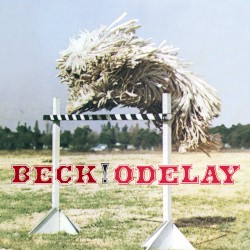
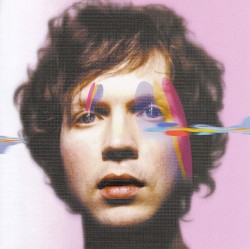
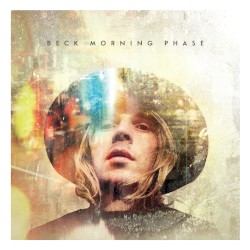

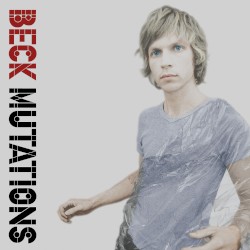
风格、年代相近的歌
- Karma Police电台司令 · 1997
- Everlong喷火战机乐队 · 1997
- Common People果浆乐团 · 1995
- 奇迹之墙绿洲乐队 · 1995
- You Oughta Know艾拉妮丝·莫莉塞特 · 1995
- 神经衰弱年轻岁月 · 1994
- Closer九吋钉乐团 · 1994
- Black Hole Sun声音花园 · 1994
- Fade into You迷星 · 1994
- Buddy Holly威瑟乐团 · 1994
- Rid of MePJ哈维 · 1993
- CannonballThe Breeders · 1993