 乐单
介绍
这个词条没有中文维基百科条目,下面是英文维基百科的原文。
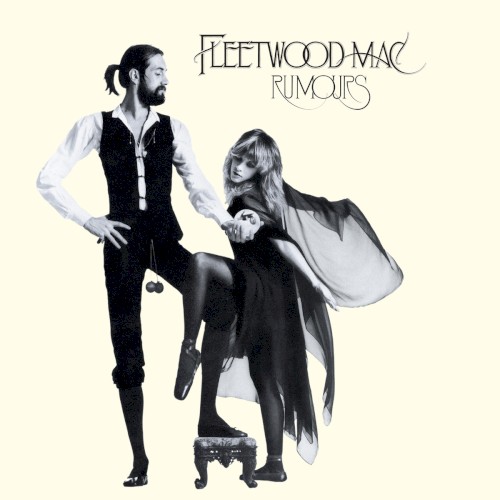
"Dreams" is a song by the British-American rock band Fleetwood Mac, written and sung by Stevie Nicks for the band's eleventh studio album, Rumours (1977). In the United States, "Dreams" was released as the second single from Rumours in March 1977, by Warner Bros., while in the United Kingdom, the song was released as the third single in June 1977. A stage performance of "Dreams" was used as the promotional music video.
In the US, "Dreams" sold more than one million copies and reached the top spot on the Billboard Hot 100, the band's only number-one single in the country. In Canada, "Dreams" also reached number one on the RPM Top 100 Singles chart.
In late 2020, the song experienced a widespread resurgence in popularity as a result of a viral TikTok video created by Nathan Apodaca, which featured the song while he was riding his skateboard to work while drinking Ocean Spray cran-raspberry juice. The song subsequently re-entered national music charts and also entered the Spotify and Apple Music charts in certain countries. "Dreams" was ranked number nine on Rolling Stone's 2021 list of the "500 Greatest Songs of All Time".
Background and composition
The members of Fleetwood Mac were experiencing emotional upheavals while recording the Rumours album. Mick Fleetwood was going through a divorce, Christine McVie and John McVie were separating, while Lindsey Buckingham and Stevie Nicks were ending their eight-year relationship. "We had to go through this elaborate exercise of denial," explained Buckingham to Blender magazine, "keeping our personal feelings in one corner of the room while trying to be professional in the other."
Stevie Nicks wrote the song in early 1976 at Record Plant studio in Sausalito, California. "One day when I wasn't required in the main studio," Nicks told Blender magazine. "I took a Fender Rhodes piano and went into another studio that was said to belong to Sly Stone, of Sly and the Family Stone. It was a black-and-red room, with a sunken pit in the middle where there was a piano, and a big black-velvet bed with Victorian drapes."
"I sat down on the bed with my keyboard in front of me," continues Nicks. "I found a drum pattern, switched my little cassette player on and wrote 'Dreams' in about 10 minutes. Right away I liked the fact that I was doing something with a dance beat, because that made it a little unusual for me."
Nicks recalled that the band was initially unsure about the merits of "Dreams" when they first heard the track. At the insistence of Nicks, the band recorded a demo of "Dreams" the following day. A basic track was recorded at Sausalito, with Nicks playing the Rhodes piano and singing. Cris Morris, who served as a recording assistant for Rumours, remembered that they retained the drum track and Stevie's live vocals from these initial sessions; the guitars and bass were recorded later in Los Angeles. Christine McVie described the song as having "just three chords and one note in the left hand" and "boring" when Nicks played a rough version on the piano. McVie changed her mind after Buckingham "fashioned three sections out of identical chords, making each section sound completely different. He created the impression that there's a thread running through the whole thing."
Recording
Producer Ken Caillat made an eight bar drum loop of Fleetwood's drumming to create "deep hypnotic effect". Caillat said of the loop that "It's funny, but when people talk about the classic rhythm section of Mick Fleetwood and John McVie and they point to this one song, I'm always amused that they're talking about a drum loop." The electric guitars were sent through four different signals: "a direct signal, a miked signal, a signal running from the output of the amp head, and another direct signal from a volume pedal". These signals were then panned in stereo, which in producer Richard Dashut's estimation, allowed for the guitars to move across the left and right channels "in a very majestic way".
When deciding on the proper equipment for the lead vocals, Caillat assembled a series of eight microphones and asked Nicks to sing into them to determine which one she preferred. Nicks ultimately selected a Sennheiser 441 microphone, which was a relatively inexpensive microphone according to Caillat. "When she got to [that] one particular mic and sang into it, she said, 'Oh my god, I love this mic! It sounds great!', and my job was done." Caillat placed a windscreen a half-inch away from the microphone and asked Nicks to sing against it so that the lower frequencies of her voice would be captured. A guide vocal sung by Nicks was used as the final take, albeit with punch-ins on a few lines, as they could not achieve a superior vocal or recapture the interplay with the drums. In total, Nicks recorded ten different lead vocal tracks.
正文摘自英文维基百科「Dreams (Fleetwood Mac song)」,按 CC BY-SA 4.0 使用;删去了参考文献、外部链接、表格和图片;篇幅所限只节选了前面一部分,全文见原条目。
资料卡
- 作品性质
- 音乐作品/乐曲
- 表演者
- 佛利伍麦克
- 发行日期
- 1977 年
- 收录于 / 属于
- 谣言
- 时长
- 4 分 14 秒
- 流派
- 软式摇滚
- 语言
- 英语
- 唱片公司
- Warner Records
- 作曲
- 史蒂薇·妮克丝
- 作词
- 史蒂薇·妮克丝
资料来自 Wikidata Q2311707(CC0)。
制作名单
- 录音室
- 混音:Producer’s Workshop(Hollywood)
- ISRC
- USRH11802580、USWB10101368、USWB10202603
制作
- 工程师
- Ken Caillat、Richard Dashut
- 助理工程师
- Chris Morris
- 制作人
- Ken Caillat、Richard Dashut、佛利伍麦克
演奏与演唱
- 吉他
- 林赛·白金汉
- 鼓
- Mick Fleetwood
- 打击乐
- Mick Fleetwood
- 键盘
- 克莉丝汀·麦克维
- 合成器
- 克莉丝汀·麦克维
- 贝斯
- John McVie
- 演唱
- 林赛·白金汉、克莉丝汀·麦克维、史蒂薇·妮克丝
词曲与编曲
- 作曲
- 史蒂薇·妮克丝
- 作词
- 史蒂薇·妮克丝
名单来自 MusicBrainz(CC0)这条录音的关系数据,由志愿者录入,不一定齐全。
更多资料
在哪听
佛利伍麦克 的专辑
艺人页 ›
佛利伍麦克 的其他歌(本站收录)
- Go Your Own Way佛利伍麦克 · 1976
风格、年代相近的歌
- Edge of Seventeen史蒂薇·妮克丝 · 1982
- 我行我素琼·杰特 · 1981
- 今晚又来了菲尔·柯林斯 · 1981
- 压力下的你我皇后乐团 · 1981
- Love Will Tear Us Apart欢乐分队 · 1980
- London Calling冲撞乐队 · 1979
- Comfortably Numb平克·弗洛伊德 · 1979
- What a Fool Believes杜比兄弟合唱团 · 1979
- 玻璃心金发美女 · 1978
- 摇滚龙虾轰炸机合唱团 · 1978
- (White Man) In Hammersmith Palais冲撞乐队 · 1978
- Surrender廉价把戏乐队 · 1978