 乐单
介绍
这个词条没有中文维基百科条目,下面是英文维基百科的原文。
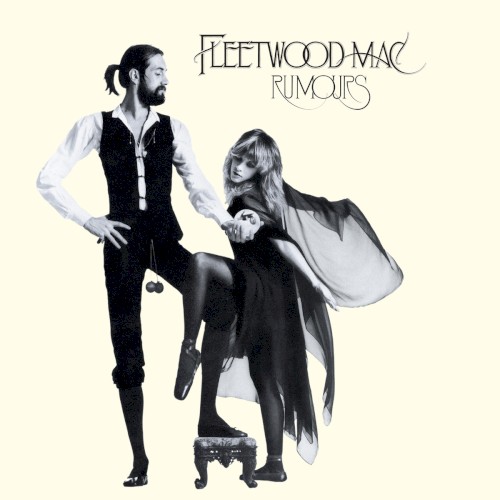
"Go Your Own Way" is a song by the British-American rock band Fleetwood Mac from their eleventh studio album, Rumours (1977). The song was released as the album's lead single on 20 December 1976 in the United States and on 11 February 1977 in the United Kingdom. Written and sung by Lindsey Buckingham, it became the band's first top-ten hit in the United States. "Go Your Own Way" has been well received by music critics and was ranked number 120 by Rolling Stone magazine on their list of 500 greatest songs of all time in 2010, and re-ranked number 401 in 2021. They also ranked the song second on their list of the 50 greatest Fleetwood Mac songs.
Recorded in three separate studios, the track was developed over a period of four months. As with most tracks on the Rumours album, none of the instruments were recorded live together; the tracks were instead completed through a series of overdubs. Lyrically, "Go Your Own Way" is about Buckingham's breakup with his bandmate Stevie Nicks.
Composition
"Go Your Own Way" was written at a house the band rented in Florida between legs of their Fleetwood Mac Tour and was the first song Buckingham presented to the band for the Rumours album. Mick Fleetwood, the band's drummer, remembered that the house had a "distinctly bad vibe to it, as if it were haunted, which did nothing to help matters". The lyrics at this stage had yet to be fleshed out, so Buckingham sang musical notes as placeholders in certain locations.
Buckingham wrote "Go Your Own Way" in what he described as "a stream of consciousness" that focused on his raw emotions. Ken Caillat, who produced Rumours, was unsure if the song had potential when Buckingham presented it to him. Buckingham had prepared a demo of "Go Your Own Way" on a cassette, which he played for Caillat and the rest of the band through room monitors in the control room. "Lindsey was beating his acoustic guitar as hard as he could and screaming his lungs out. The first time I heard it, I thought, What the heck is going on? It sounded so nonmusical. I didn’t know if anything would come from it."
Sheryl Crow, who would later work with Stevie Nicks, remarked: "When I was seventeen, I remember listening to 'Go Your Own Way' and feeling like that song was written for me."
Recording
"Go Your Own Way" was the second song that Fleetwood Mac worked on for the Rumours album. To familiarize John McVie with the song structure, Buckingham guided McVie through the chord changes in the control room. Early tracking was done with Mick Fleetwood using an eight-inch Ludwig snare in his drum kit, John McVie on a Fender bass, Christine McVie on Hammond organ, Stevie Nicks on tambourine, and Lindsey Buckingham on a 1959 Fender Stratocaster. Buckingham played an electric guitar instead of an acoustic during these sessions so he could be in the same room as the rest of the band without worrying about audio leakage. None of Nicks' tambourine parts were used for the final recording.
Buckingham was inspired by the drum feel of "Street Fighting Man" by the Rolling Stones and sought to incorporate a variation of the groove in "Go Your Own Way". Caillat took notice of Buckingham's enthusiasm as he demonstrated the drum part to Fleetwood. "I remember watching him guide Mick (Fleetwood) as to what he wanted – he'd be so animated, like a little kid, playing these air tom fills with his curly hair flying. Mick wasn't so sure he could do what Lindsey wanted, but he did a great job, and the song took off." Fleetwood ultimately came up with his own variation of the "Street Fighting Man" groove by playing across the tom-toms and hitting the bass drum on the middle beat. To achieve an open drum sound, Caillat and Richard Dashut situated the drum kit next to plywood and hard backing walls; additional plywood was also placed on the ground. Fleetwood's drum kit was miked with AKG 451s for overheads and the snare drum, an M-88 Beyerdynamic microphone for the bass drum, and a Neumann U 87 for other components of the kit.
Initially, John McVie tracked a busier and bouncier bass part that gave the song "a country feel". To prevent the verses from becoming too bloated, Buckingham asked him to play straight eighth notes. Buckingham granted McVie more artistic liberty on the choruses, which he opened up with a more melodic bass line. Overdubs of Hammond B3 organ, electric and acoustic guitars, backing vocals, and assorted percussion such as the bell of a cymbal and maracas were also added to the mix. Buckingham wanted the electric rhythm guitars to sound like one instrument, so to fulfill that objective, he played a distorted guitar with little transience and layered it over a cleaner guitar. He believed that this recording technique created a thicker guitar sound that provided "a richer landscape to work with". The song follows a cyclic I-V-IV chord progression in the verses and a vi-IV-V chord progression in the chorus.
正文摘自英文维基百科「Go Your Own Way」,按 CC BY-SA 4.0 使用;删去了参考文献、外部链接、表格和图片;篇幅所限只节选了前面一部分,全文见原条目。
资料卡
- 作品性质
- 音乐作品/乐曲
- 表演者
- 佛利伍麦克
- 发行日期
- 1976 年
- 收录于 / 属于
- 谣言
- 流派
- 摇滚乐
- 语言
- 英语
- 作曲
- 林赛·白金汉
- 作词
- 林赛·白金汉
- 上一部
- Say You Love Me
- 下一部
- Don't Stop
资料来自 Wikidata Q2387143(CC0)。
制作名单
- 录音室
- 混音:Producer’s Workshop(Hollywood)
- ISRC
- USLIC0601867、USRE11000837、USRH11802579
制作
- 工程师
- Ken Caillat、Richard Dashut
- 助理工程师
- Chris Morris
- 制作人
- Ken Caillat、Richard Dashut、佛利伍麦克
演奏与演唱
- 吉他
- 林赛·白金汉
- 鼓
- Mick Fleetwood
- 打击乐
- Mick Fleetwood
- 键盘
- 克莉丝汀·麦克维
- 合成器
- 克莉丝汀·麦克维
- 贝斯
- John McVie
- 演唱
- 林赛·白金汉、克莉丝汀·麦克维、史蒂薇·妮克丝
词曲与编曲
- 作曲
- 林赛·白金汉
- 作词
- 林赛·白金汉
名单来自 MusicBrainz(CC0)这条录音的关系数据,由志愿者录入,不一定齐全。
更多资料
在哪听
佛利伍麦克 的专辑
艺人页 ›
佛利伍麦克 的其他歌(本站收录)
- Dreams佛利伍麦克 · 1977
风格、年代相近的歌
- 我行我素琼·杰特 · 1981
- 今晚又来了菲尔·柯林斯 · 1981
- 压力下的你我皇后乐团 · 1981
- Love Will Tear Us Apart欢乐分队 · 1980
- London Calling冲撞乐队 · 1979
- Comfortably Numb平克·弗洛伊德 · 1979
- What a Fool Believes杜比兄弟合唱团 · 1979
- 玻璃心金发美女 · 1978
- 摇滚龙虾轰炸机合唱团 · 1978
- (White Man) In Hammersmith Palais冲撞乐队 · 1978
- Surrender廉价把戏乐队 · 1978
- Because the Night帕蒂·史密斯 · 1978