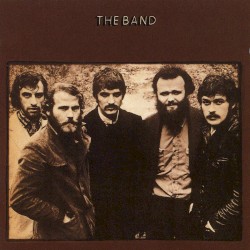
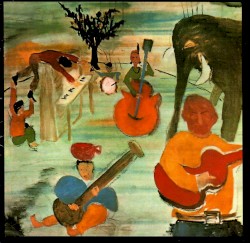
乐单
介绍
这个词条没有中文维基百科条目,下面是英文维基百科的原文。
"The Weight" is a song by Canadian-American rock band the Band that was released as a single in 1968 and on the group's debut album Music from Big Pink. It was their first release under this name, after their previous releases as Canadian Squires and Levon and the Hawks. Written by Band member Robbie Robertson, the song is about a visitor's experiences in a town mentioned in the lyric's first line as Nazareth. "The Weight" has significantly influenced American popular music, having been listed as No. 41 on Rolling Stone's 500 Greatest Songs of All Time published in 2004. Pitchfork named it the 13th best song of the 1960s, and the Rock and Roll Hall of Fame named it one of the 500 Songs that Shaped Rock and Roll. PBS, which broadcast performances of the song on Ramble at the Ryman (2011), and Austin City Limits and Quick Hits (both 2012), describes it as "a masterpiece of Biblical allusions, enigmatic lines and iconic characters" and notes its enduring popularity as "an essential part of the American songbook."
"The Weight" is one of the Band's best known songs, gaining considerable album-oriented rock airplay even though it was not a significant hit single for the group in the US, peaking at only No. 63. After it was released, the record debuted just six days later on KHJ's "'Boss 30' records" and peaked at No. 3 there three weeks later. The Band's recording also fared well in Canada and the UK, peaking at No. 35 in Canada and No. 21 in the UK in 1968. Cash Box called it a "powerhouse performance." American Songwriter and Stereogum both ranked the song number three on their lists of the Band's greatest songs. In 1968 and 1969, three cover versions were released; their arrangements appealed to a wide diversity of music audiences.
Composition
"The Weight" was written by Robbie Robertson, who found the tune by strumming idly on his guitar, a 1951 Martin D-28, when he noticed that the interior included a stamp noting that it was manufactured in Nazareth, Pennsylvania (C. F. Martin & Company is situated there), and he started crafting the lyrics as he played. The inspiration for and influences affecting the composition of "The Weight" came from the music of the American South, the life experiences of band members, particularly Levon Helm, and movies of filmmakers Ingmar Bergman and Luis Buñuel. The original members of the Band performed "The Weight" as an American Southern folk song with country music (vocals, guitars and drums) and gospel music (piano and organ) elements.
The lyrics, written in the first person, are about a traveler's arrival, visit, and departure from a town called Nazareth, in which the traveler's friend, Fanny, has asked him to look up some of her friends and send them her regards, though with each encounter, he comes away with more favors he must do, and those favors become more favors, until the weight of doing so many unexpected tasks causes him to pick up his bag and leave town altogether and return to Fanny. The singers, led by Helm, vocalize the traveler's encounters with people in the town from the perspective of a Bible Belt American Southerner, like Helm himself, a native of rural Arkansas.
The characters in "The Weight" were based on real people that members of the Band knew. According to Robertson, Fanny is based on Frances "Fanny" Steloff, the founder of a New York City bookstore where he explored scripts by Buñuel. Helm explained in his autobiography, This Wheel's on Fire that "Carmen" was from Helm's hometown, Turkey Scratch, Arkansas, "young Anna Lee" mentioned in the third verse is Helm's longtime friend Anna Lee Amsden, and, according to her, "Crazy Chester" was an eccentric resident of Fayetteville, Arkansas, who carried a cap gun. Ronnie Hawkins would tell him to "keep the peace" at his Rockwood Club when Chester arrived.
According to Robertson, "The Weight" was inspired by the surreal imagery of Buñuel's films, specifically their criticism of organized religion, particularly Catholicism. The song's lyrics and music invoke vivid imagery, the main character's perspective is influenced by the Bible, and the episodic story was inspired by the predicaments Buñuel's film characters faced that undermined their goals for maintaining or improving their moral character. Of this, Robertson once stated:
正文摘自英文维基百科「The Weight」,按 CC BY-SA 4.0 使用;删去了参考文献、外部链接、表格和图片;篇幅所限只节选了前面一部分,全文见原条目。
资料卡
- 作品性质
- 音乐作品/乐曲
- 表演者
- 乐队合唱团
- 发行日期
- 1968 年
- 流派
- 流行音乐
- 语言
- 英语
- 作曲
- 罗比·罗伯森
- 作词
- 罗比·罗伯森
资料来自 Wikidata Q2734855(CC0)。