乐单
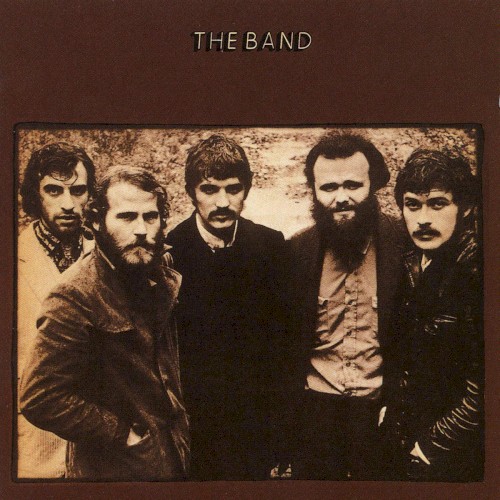
The Band (1969)
滚石 500(2020) #57滚石 500(2003) #451001 张专辑
- 艺人
- 乐队合唱团
- 发行
- 1969-09-22
- 类型
- 专辑
- 唱片公司
- Capitol唱片
- 制作人
- 约翰·赛门
- 版本
- MusicBrainz 上有 23 个发行版本
曲目
- A1Across the Great Divide2:54
- A2Rag Mama Rag3:03
- A3The Night They Drove Old Dixie Down3:33
- A4When You Awake3:14
- A5Up on Cripple Creek4:33
- A6Whispering Pines3:59
- B1Jemima Surrender3:31
- B2Rockin’ Chair3:44
- B3Look Out Cleveland3:10
- B4Jawbone4:21
- B5The Unfaithful Servant4:18
- B6King Harvest (Has Surely Come)3:36
12 首 · 约 44 分钟 · 依据 1969-09-22 US 发行的版本,在 MusicBrainz 看这个版本。
介绍
这个词条没有中文维基百科条目,下面是英文维基百科的原文。
The Band, also known as The Brown Album, is the second studio album by the Canadian-American rock band the Band, released on September 22, 1969, by Capitol Records. According to Rob Bowman's liner notes for the 2000 reissue, The Band has been viewed as a concept album, with the songs focusing on people, places and traditions associated with a traditional view of Americana. Thus, many of the songs draw on historic themes, such as "The Night They Drove Old Dixie Down", "King Harvest (Has Surely Come)" and "Jawbone" (which was composed in the unusual 6/4 time signature).
Recording
After unsuccessfully attempting sessions at a studio in New York the Band set up shop in the pool house of a home rented by the group in the Hollywood Hills located at 8850 Evanview Drive in Los Angeles, California. The home was then owned by Sammy Davis Jr. and had previously been owned by Judy Garland and Wally Cox. According to Robbie Robertson, the location was chosen to give the songs a Basement Tapes–like feel in what was termed "a clubhouse concept". The last song to be recorded at the pool house was "King Harvest (Has Surely Come)," as The Band had to leave to perform for three nights at Winterland in San Francisco. Afterwards, they recorded the final three songs to finish the album ("Up on Cripple Creek", "Whispering Pines" and "Jemima Surrender") at The Hit Factory in New York City, at the time operated by Jerry Ragavoy. Joe Zagarino would also take over most of the engineering for the final three tracks they would record, untrusting of Robertson's and Producer John Simon's engineering skills. The outtake "Get Up Jake" was also recorded during these sessions in New York. According to John Simon, Robertson took over most of the engineering for the record, "hungry for knowledge ... I showed him how to make an album from a technical point of view."
Release
The album was originally released on September 22, 1969. A 1980 "Capitol 16000 Series" budget vinyl reissue of the album omitted "When You Awake" and "King Harvest (Has Surely Come)".
After several reissues on vinyl, cassette tape, and compact disc, the album was remastered and re-released with bonus tracks in 2000, in a process overseen by Robertson.
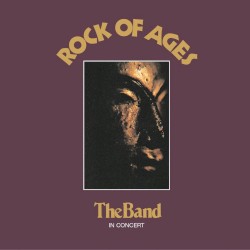
The Band was reissued in 2009 by Audio Fidelity as a limited edition gold CD. The reissue included "Get Up Jake", as a bonus track. "Get Up Jake", which also appears on the 2000 reissue, was slated for inclusion on the original album but was dropped from the lineup at the last minute, either because the band felt it was too similar to another track on the album or because there physically was not enough room on the album. It also was suggested that the underdeveloped status of the song made them decide against inclusion in the album. A reworked version of "Get Up Jake" was later included in many of the Band's live performances in the early 1970s and also on the 1972 live album Rock of Ages. A studio version was later included as the b-side to their "Ain't Got No Home" single in 1973.
In 2019, a 50th Anniversary Edition was released, with an entirely new stereo mix of the album by Bob Clearmountain, mastered by Bob Ludwig, as well as several outtake tracks and the Band's entire live set from the Woodstock festival.
The original LP back cover quotes the opening lines from Shelton Brooks's 1917 composition "Darktown Strutters' Ball".
Reception
The album includes many of the Band's best-known and critically acclaimed songs, including "The Night They Drove Old Dixie Down", which Rolling Stone named the 245th-greatest song of all time in 2004 and the 249th-greatest song of all time in 2010. In 2003, the album was ranked No. 45 on Rolling Stone's list of the 500 greatest albums of all time, maintaining the rating in a 2012 revised list. In the 2020 update of that list, it was ranked No. 57. In 1998, Q readers voted The Band the 76th greatest album of all time. Time included it in their unranked 2006 list of the 100 greatest albums. Robert Christgau, having been disappointed with the Band's debut, had expected to dislike the record and even planned a column for The Village Voice to "castigate" their follow-up. Upon hearing the record, however, he declared it better than Abbey Road, which had been released four days following, writing that the Band's LP is an "A-plus record if I've ever rated one". He ranked it as the fourth-best album of the year in his ballot for Jazz & Pop magazine's annual critics poll. The album was later included in his "Basic Record Library" of 1950s and 1960s recordings, published in Christgau's Record Guide: Rock Albums of the Seventies (1981).
It was voted No. 45 in the third edition of Colin Larkin's All Time Top 1000 Albums (2000).
正文摘自英文维基百科「The Band (album)」,按 CC BY-SA 4.0 使用;删去了参考文献、外部链接、表格和图片;篇幅所限只节选了前面一部分,全文见原条目。
资料卡
- 作品性质
- 音乐专辑
- 表演者
- 乐队合唱团
- 发行日期
- 1969 年 9 月 22 日
- 时长
- 43 分 50 秒
- 流派
- 根源摇滚
- 语言
- 英语
- 唱片公司
- Capitol唱片
- 制作人
- 约翰·赛门
资料来自 Wikidata Q926142(CC0)。
制作名单
- 厂牌
- Capitol Records(目录号 STAO-132)
制作
- 制作人
- 乐队合唱团、John Simon
演奏与演唱
- 长号
- Rick Danko
- 贝斯
- Rick Danko
- 小提琴
- Rick Danko
- 风琴
- Garth Hudson
- 钢琴
- Garth Hudson、Richard Manuel
- 克拉维琴
- Garth Hudson
- 高音萨克斯
- Garth Hudson
- 次中音萨克斯
- Garth Hudson
- 上低音萨克斯
- Garth Hudson、Richard Manuel
- 小号
- Garth Hudson
- 手风琴
- Garth Hudson
- 口簧琴
- Richard Manuel
- 鼓
- Richard Manuel
- 吉他
- 罗比·罗伯森
- 电钢琴
- John Simon
- 铜管
- John Simon
- 大号
- John Simon
- 演唱
- Rick Danko、Richard Manuel
词曲与编曲
- 作曲
- 罗比·罗伯森(其中 8 首)
- 作词
- 罗比·罗伯森(其中 8 首)
- 词曲
- 罗比·罗伯森(第 A4、A6、B1、B4 首)、Richard Manuel(第 A4、A6、B4 首)、莱文·赫尔姆(第 B1 首)
包装与设计
- 设计
- Bob Cato
- 摄影
- Elliott Landy
名单来自 MusicBrainz(CC0)这一发行版本的关系数据,由志愿者录入,不一定齐全。
更多资料与乐评
在哪听
乐队合唱团 的其他专辑
艺人页 ›
相似的专辑

同在 1969 年发行