 乐单
介绍
这个词条没有中文维基百科条目,下面是英文维基百科的原文。
"Sexual Healing" is a song recorded by American singer and songwriter Marvin Gaye. Co-written by Gaye, Odell Brown and David Ritz, it was the leading single from Gaye's sixteenth studio album, Midnight Love released in October 1982 by Columbia Records.
The song was conceived in Ostend, where Gaye had relocated to after spending over a year in London as a tax exile and struggling with his career and personal life. The lyrics were conceived after co-writer and journalist David Ritz discovered sadomasochist drawings in Gaye's Ostend apartment and told Gaye he needed "sexual healing". Gaye convinced Ritz to write lyrics to the song, which the singer later edited and arranged, along with the musical composition with Brown.
Gaye's first single since leaving Motown months prior, it produced a comeback for Gaye as the song reached number-one on the Hot R&B/Hip-Hop Songs (then Black Singles chart) in just four weeks, where it stayed for a then record-setting ten weeks, where according to Billboard, it was the fastest rising single to reach number one in five years. A huge crossover hit, it peaked at number three on the Billboard Hot 100 in January 1983 and also reached the top ten in seven territorial countries and peaked at number one in Canada and New Zealand. With sales of over four million copies worldwide, it is Gaye's most successful single and his final hit as he would die roughly 18 months after its release in April 1984. It later won Gaye two Grammy Awards and an American Music Award and was ranked the top-selling R&B single of 1983.
The song is listed at number 198 on Rolling Stone's list of 500 Greatest Songs of All Time.
Background
In January 1981, Gaye had relocated to Ostend, Belgium from London, where he had spent over a year at as a tax exile as he was being sought by the Internal Revenue Service in his native United States for failure to pay taxes as well as alimony payments to his first ex-wife Anna Gordy Gaye and his estranged second wife Jan, with whom his divorce wouldn't be finalized until November 1982.
At the same time, Gaye's longtime label Motown had hastily released his concept album, In Our Lifetime, which angered the singer to the point that he decided he would no longer record for the label after 20 years, accusing the label of betraying his creativity. Gaye's move to Ostend was orchestrated by Belgian music and sports promoter Freddy Couseart, who hoped to save Gaye from a debilitating drug addiction that had consumed him for years. Gaye began exercising and boxing at a local Ostend gym while also cutting down on his cocaine use, attending a local church and partaking in Belgian culture.
While still with Motown, Gaye had received offers from labels including I.R.S. Records, Arista Records and Elektra Records; afterward, he sought to make a deal with CBS Records after they offered him a contract. CBS agreed to sign him and help clear his financial debt, and spent a year negotiating. In the meantime, Gaye needed spending money, so Cousaert set him up with a month-long England tour between June 13 and July 1, 1981. The tour was called "A Heavy Love Affair Tour 1981", named after his song "Heavy Love Affair", from In Our Lifetime. After returning to Belgium that July, Gaye performed two shows at Ostend's Casino Kursaal on July 3 and 4, 1981.
Production and composition
At the end of the tour, two of Gaye's musicians, Gordon Banks and Odell Brown, had decided to stay in Ostend as Gaye had been planning on new musical material after being exposed to reggae music while in England. With just Gordon Banks and Odell Brown, Gaye composed a reggae-inspired instrumental. Gaye used a Roland TR-808 drum machine to create the percussion; he was drawn to the instrument because he could use it to create music without other musicians or producers.
Gaye was still working on the track when David Ritz, then a reviewer for Rolling Stone, arrived at Ostend in April 1982 to locate Gaye as the two had been working together on Gaye's planned autobiography. Couseart recalled that neither him nor Gaye wanted him around. At the time, Gaye was living at a seafront apartment at Residence Jane on the Albert-I Promenade 77 where the song had been conceived. Upon Ritz's arrival, Gaye allowed him entry and played him the instrumental he had been working on for months. It was while there that Ritz discovered sadomasochist drawings in the singer's possession and advised Gaye that he needed "sexual healing". When Ritz explained to an amused Gaye what that meant, the singer told him to "write a poem" while he came up with the melody.
正文摘自英文维基百科「Sexual Healing」,按 CC BY-SA 4.0 使用;删去了参考文献、外部链接、表格和图片;篇幅所限只节选了前面一部分,全文见原条目。
资料卡
- 作品性质
- 音乐作品/乐曲
- 表演者
- 马文·盖伊(1982)
- 发行日期
- 1982 年
- 流派
- 灵魂乐
- 语言
- 英语
- 作曲
- 马文·盖伊、Odell Brown
- 作词
- 马文·盖伊、Odell Brown、David Ritz
资料来自 Wikidata Q56088104(CC0)。
更多资料
在哪听
马文·盖伊 的专辑
艺人页 ›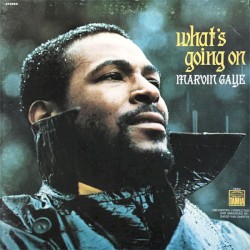
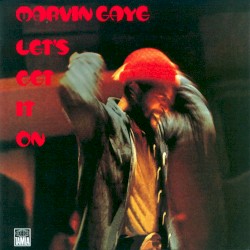
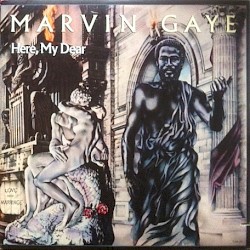
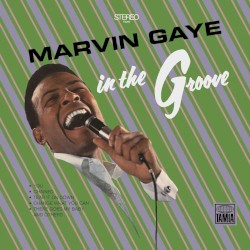
马文·盖伊 的其他歌(本站收录)
- What's Going On马文·盖伊 · 1971
- I Heard It Through the Grapevine马文·盖伊 · 1968
- Let's Get It On马文·盖伊 · 1973
风格、年代相近的歌
- Billie Jean迈克尔·杰克逊 · 1982
- I'm Coming Out戴安娜·罗斯 · 1980
- Lovely Day比尔·威瑟斯 · 1977
- Thank U, Next爱莉安娜·格兰德 · 2018
- Truth Hurts莉佐 · 2017
- 女力来袭碧昂丝 · 2016
- 热线响起德雷克 · 2015
- 放克名流马克·罗森 · 2014
- Thinkin Bout You弗兰克·奥申 · 2012
- 欢乐之屋亚伯·马坎恩·特斯法伊 · 2011
- Rolling in the Deep阿黛尔 · 2010
- 单身女郎(定情戒)碧昂丝 · 2008