乐单
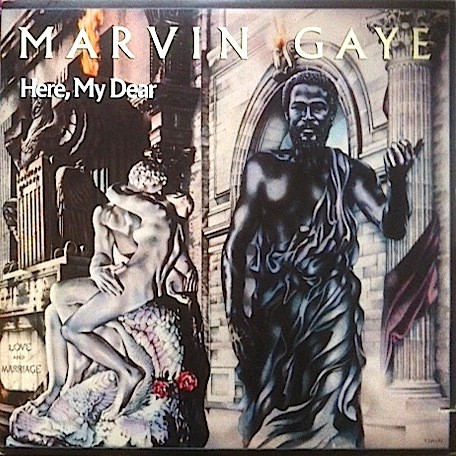
Here, My Dear (1978)
滚石 500(2020) #493滚石 500(2003) #4621001 张专辑
- 艺人
- 马文·盖伊
- 发行
- 1978-12
- 类型
- 专辑
- 唱片公司
- 摩城唱片
- 制作人
- 马文·盖伊
- 版本
- MusicBrainz 上有 9 个发行版本
曲目
第 1 张 · 12" Vinyl
- A1Here, My Dear2:48
- A2I Met a Little Girl4:58
- A3When Did You Stop Loving Me, When Did I Stop Loving You6:11
- A4Anger3:58
- D1A Funky Space Reincarnation8:12
- D2You Can Leave, but It’s Going to Cost You5:27
- D3Falling in Love Again4:36
- D4When Did You Stop Loving Me, When Did I Stop Loving You (reprise)0:40
第 2 张 · 12" Vinyl
- B1Is That Enough7:42
- B2Everybody Needs Love5:41
- B3Time to Get It Together3:51
- C1Sparrow6:06
- C2Anna’s Song5:49
- C3When Did You Stop Loving Me, When Did I Stop Loving You (instrumental)5:59
14 首 · 约 72 分钟 · 依据 1978 US 发行的版本,在 MusicBrainz 看这个版本。
介绍
这个词条没有中文维基百科条目,下面是英文维基百科的原文。
Here, My Dear is the fourteenth studio album by the American soul singer and songwriter Marvin Gaye, released as a double album on December 15, 1978, on Motown-subsidiary label Tamla Records. Recording sessions for the album took place between 1977 and 1978 at Gaye's personal studios, Marvin Gaye Studios, in Los Angeles, California. It is a concept album, notable for its subject matter focusing largely on Gaye's acrimonious divorce from his first wife, Anna Gordy Gaye.
A commercial and critical failure upon its release, it was later hailed by music critics in the years following Gaye's death as one of his best albums, and was placed at number 493 on Rolling Stone's "500 Greatest Albums of All Time" list in 2020.
Background
Marvin Gaye was going through a personal crisis in the summer of 1976. In November 1975, Gaye's estranged first wife, Anna Gordy Gaye, sued Gaye for divorce, claiming irreconcilable differences, and sought child support for their adopted son, Marvin Gaye III. Gaye later argued his spending habits were causing him to fall behind on payments. In September 1976, a warrant was issued for Gaye's arrest after he failed to pay alimony; this made him feel vulnerable during the recording sessions, causing the singer to hide from the public for several days.
Several weeks later, Gaye accepted an offer to do a tour of Europe. Between October and December 1976, Gaye performed in the United Kingdom, France, the Netherlands and Germany. Following his return, he recorded "Got to Give It Up" and released it on his album, Live at the London Palladium. The song became an international hit, reaching number one on the Billboard Hot 100.
After months of delays, in March 1977, the singer's attorney, Curtis Shaw, wanted to end divorce proceedings and convinced Gaye to give up half of the percentage of album royalties he would earn from his next Motown album to Anna. The Gayes' divorce was finalized later that month.
Recording
When Gaye was set to start production on the record, he said he figured he would just do a "quickie record—nothing heavy, nothing even good", stating, "Why should I break my neck when Anna was going to wind up with the money anyway?" But as Gaye lived with the notion of doing an album for his soon-to-be ex-wife, the more it fascinated him, stating he felt he "owed the public my best effort." Gaye stated he did the record "out of deep passion", noting he "sang and sang until I drained myself of everything I'd lived through."
Shortly after the deal was made, Gaye entered his recording studio on March 24, 1977, to record the album with only engineer Art Stewart by his side. Gaye, who usually did not write his lyrics, composed on the spot, mumbling over prerecorded tracks or to his own accompaniment. The mumblings were "embryonic melodies", which eventually evolved into lyrics after three or four takes. Gaye ended up playing all the keyboard parts of the album, saying later, "I didn't plan it that way. It just turned out to be a hands-on project."
Music
According to PopMatters journalist Mike Joseph, Here, My Dear's music was "largely midtempo funk, with elements of traditional soul, gospel, and doo-wop mixed together with a slight hint of disco". The title track opens the album, and in the album's liner notes David Ritz describes Gaye's tone in the song as "self-serving, self-justifying [and] self-pitying". "I Met a Little Girl" includes doo-wop drenched harmonies with its lyrics and music producing a "thick mixture" of sincerity and sarcasm. Considered the central melodic motif of the album, "When Did You Stop Loving Me, When Did I Stop Loving You" abandoned traditional song structure with a discursive mode, without a chorus, with its lyrics expressing "different feelings - tenderness, fear, anger, regret". Described as "straight ahead and beguiling" compared to all the other songs on the album, "Anger" is considered as "part sermon and part self-retribution", describing his movement from catharsis to escape.
"Is That Enough?" was recorded shortly after Gaye returned from a day in divorce court, humming the song's melody and some lyrics. Much like some other songs, it's told in a storyteller's point of view. "Everybody Needs Love" is described as an "attempt to empathy". "Time to Get It Together" includes a confessional that was influenced by Stevie Wonder's song, "As". "Anna's Song" is described as "the very heart" of the album. "A Funky Space Reincarnation" alluded to Star Wars as well as the music of George Clinton's Parliament-Funkadelic. "You Can Leave, But It's Going to Cost You" is produced under an assertive tone describing an argument between Marvin and his wife over his girlfriend, Janis. The final track, "Falling in Love Again", is dedicated to Janis, in which Gaye concluded on a "regenerative note".
An AllMusic reviewer later wrote of the music:
正文摘自英文维基百科「Here, My Dear」,按 CC BY-SA 4.0 使用;删去了参考文献、外部链接、表格和图片;篇幅所限只节选了前面一部分,全文见原条目。
资料卡
- 作品性质
- 音乐专辑
- 表演者
- 马文·盖伊
- 发行日期
- 1970 年
- 流派
- 灵魂乐、放克
- 唱片公司
- 摩城唱片
- 制作人
- 马文·盖伊
- 作词
- 马文·盖伊
资料来自 Wikidata Q914440(CC0)。
制作名单
- 厂牌
- Tamla(目录号 T 364LP2)
词曲与编曲
- 作曲
- 马文·盖伊(其中 10 首)
- 作词
- 马文·盖伊(其中 10 首)
- 词曲
- Delta Ashby(第 A4 首)、马文·盖伊(第 A4 首)、Ed Townsend(第 A4 首)
名单来自 MusicBrainz(CC0)这一发行版本的关系数据,由志愿者录入,不一定齐全。
更多资料与乐评
在哪听
马文·盖伊 的其他专辑
艺人页 ›
相似的专辑







同在 1978 年发行