 乐单
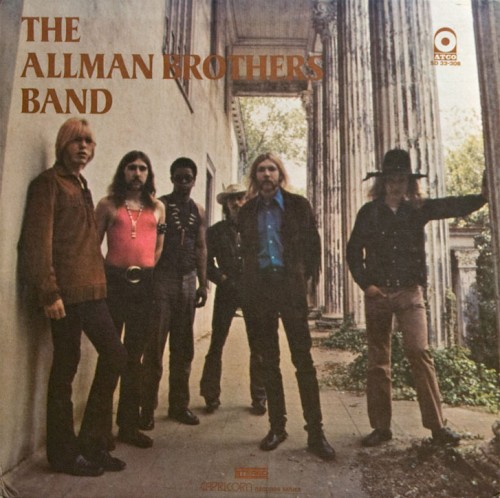
Whipping Post (1969)
介绍
这个词条没有中文维基百科条目,下面是英文维基百科的原文。
"Whipping Post" is a song by the Allman Brothers Band. Written by Gregg Allman, the five-minute studio version first appeared on their 1969 debut album The Allman Brothers Band. The song was regularly played live and was the basis for much longer and more intense performances. This was captured in the Allman Brothers' 1971 double live album At Fillmore East, where a 22-minute, 40-second rendition of the song takes up the entire final side. It was this recording that garnered "Whipping Post" spots on both the Rock and Roll Hall of Fame's 500 Songs that Shaped Rock and Roll list and Rolling Stone's list of "The 500 Greatest Songs of All Time", which wrote, "the song is best appreciated in the twenty-three-minute incarnation on At Fillmore East."
Composition and studio version
Gregg Allman was 21 years old when the song was first recorded. Its writing dates back to late March 1969, when the Allman Brothers Band was first formed. Gregg had failed to make a name for himself as a musician during a late-1960s stint in Los Angeles, and was on the verge of quitting music altogether when his brother Duane Allman called and said his new band needed a vocalist. Gregg showed the band 22 songs he had written, but only "Dreams" and "It's Not My Cross to Bear" were deemed usable. Gregg, the group's only songwriter at the time, was commissioned to create additional songs that would fit into the context of the new band, and in the next five days he wrote several, including "Whipping Post".
Gregg's travails in the music business would provide some of the thematic inspiration for the new song, but Allman has also said he is not sure where the lyrics came from. The song's metrical pattern and lyrics were written quickly on an ironing board cover, by Allman's telling in the middle of the night using the charcoal from extinguished kitchen matches. He later said: "It came so fast. I didn't even have a chance to get the paper out. That's the way the good songs come—they just hit you like a ton of bricks."
The blues rock song's lyrics center on a metaphorical whipping post, an evil woman and futile existential sorrow. Writer Jean-Charles Costa described the studio version's musical structure as a "solid framework of song that lends itself to thousands of possibilities in terms of solo expansion. ... building to a series of shrieking lead guitar statements, and reaching full strength in the chorus supported by super dual-lead guitar." The result was called by Rolling Stone an "enduring anthem ... rife with tormented blues-ballad imagery".
Musically, the composition was immediately noticeable for its use of a time signature in the introduction that has been variously described as 114 (by Duane Allman, as related by Gregg Allman, and later by Gregg Allman himself, as well as by Dickey Betts); or 118 (by some other music sources); or simply as "a lick in 11" or "elevens" (by band drummer Butch Trucks). As Gregg Allman later said:
I didn't know the intro was in 11/4 time. I just saw it as three sets of three, and then two to jump on the next three sets with: it was like 1,2,3—1,2,3—1,2,3—1,2. I didn't count it as 1,2,3,4,5,6,7,8,9,10,11. It was one beat short, but it didn't feel one short, because to get back to the triad, you had two steps to go up. You'd really hit those two hard, to accent them, so that would separate the threes. ... [Duane] said, "That's good man, I didn't know that you understood 11/4." Of course I said something intelligent like, "What's 11/4?" Duane just said, "Okay, dumbass, I'll try to draw it up on paper for you."
The actual part that played the introduction was devised by bassist Berry Oakley; it gave the song a more menacing feel than the melancholy blues that Allman had originally written.
The time signature for the balance of the song has been variously described as "modified 34" (by Jean-Charles Costa) or as 128 (by some other music sources).
The original "Whipping Post" was recorded for The Allman Brothers Band album on August 7, 1969, at Atlantic Recording Studios in New York City. Adrian Barber was the producer, and the band spent the entire full-day session getting the song's performance to their liking. The album was released on November 4, 1969, but sold poorly, barely reaching the bottom rungs of the U.S. albums chart. "Whipping Post" was placed last on the album's running order, in what writer Randy Poe described as "the classic tradition of leaving the listener wanting more".
正文摘自英文维基百科「Whipping Post (song)」,按 CC BY-SA 4.0 使用;删去了参考文献、外部链接、表格和图片;篇幅所限只节选了前面一部分,全文见原条目。
资料卡
- 作品性质
- 音乐作品/乐曲
- 表演者
- 欧曼兄弟乐团
- 发行日期
- 1969 年 11 月 4 日
- 收录于 / 属于
- The Allman Brothers Band
- 流派
- 蓝调摇滚
- 语言
- 英语
- 来自
- 美国
- 唱片公司
- 摩羯座唱片
- 作曲
- 克雷格·欧曼
- 作词
- 克雷格·欧曼
- 制作人
- 汤姆·铎德
资料来自 Wikidata Q7993733(CC0)。
制作名单
- 录音室
- 录音:Atlantic Studios(Midtown Manhattan)
- ISRC
- USPR36930032
制作
- 制作人
- Adrian Barber
- 录音
- Adrian Barber
演奏与演唱
- 原声吉他
- 杜安·奥尔曼
- 滑棒吉他
- 杜安·奥尔曼
- 风琴
- 克雷格·欧曼
- 钢琴
- 克雷格·欧曼
- 鼓
- Jai Johanny Johanson、Butch Trucks
- 打击乐
- Jai Johanny Johanson、Butch Trucks
- 贝斯
- Berry Oakley
- 演唱
- 克雷格·欧曼
词曲与编曲
- 编曲
- 欧曼兄弟乐团
- 作曲
- 克雷格·欧曼
- 作词
- 克雷格·欧曼
名单来自 MusicBrainz(CC0)这条录音的关系数据,由志愿者录入,不一定齐全。
更多资料
在哪听
欧曼兄弟乐团 的专辑
艺人页 ›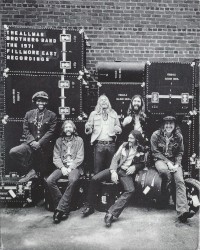
风格、年代相近的歌
- Tumbling Dice滚石乐队 · 1972
- Whole Lotta Love齐柏林飞船 · 1969
- You Are the Sunshine of My Life史提夫·汪达 · 1973
- Superstition史提夫·汪达 · 1972
- I'll Take You There史黛波歌手家族 · 1972
- Sail Away兰迪·纽曼 · 1972
- Into the Mystic范·莫里森 · 1970
- I Heard It Through the Grapevine马文·盖伊 · 1968
- Chain of Fools艾瑞莎·弗兰克林 · 1967
- 在午夜时分威尔逊·皮科特 · 1965
- 我的女孩诱惑组合 · 1964
- 在街上跳舞玛莎与范德拉 · 1964