 乐单
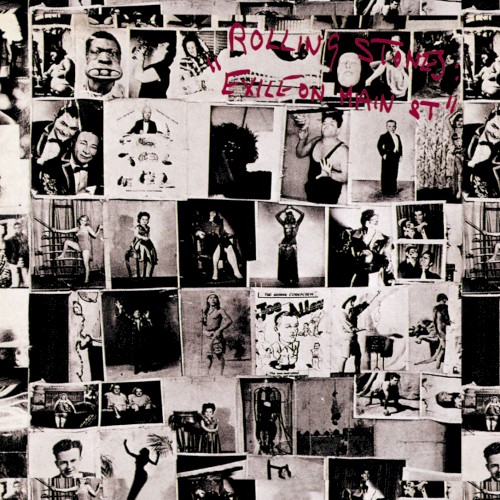
Tumbling Dice (1972)
介绍
这个词条没有中文维基百科条目,下面是英文维基百科的原文。
"Tumbling Dice" is a song by the English rock band the Rolling Stones. It was released worldwide as the lead single from the band's 1972 double album Exile on Main St. on 14 April 1972 by Rolling Stones Records. A product of Mick Jagger and Keith Richards' songwriting partnership, the song contains a blues and boogie-woogie-influenced rhythm that scholars and musicians have noted for its unusual tempo and groove. The lyrics are about a gambler who cannot remain faithful to any woman.
"Tumbling Dice" spent eight weeks on the UK Singles Chart, peaking at number five. In the US, the single peaked at number seven on the Billboard Hot 100 chart. The song entered the top 10 in the Netherlands, Norway and Spain. "Tumbling Dice" received acclaim from contemporary music critics, who praised its musicianship and lyrical prowess. "Tumbling Dice" featured on many "best of" lists, including those by Vulture and Rolling Stone.
Jimmy Miller produced "Tumbling Dice". The Stones have performed the song during many of their concerts since its release in 1972. Several artists have covered "Tumbling Dice", including Linda Ronstadt, whose version – sung from a female perspective – appears on her 1977 album Simple Dreams. Ronstadt's version was a Top 40 hit the following year and is included on the soundtrack of the film FM (1978).
Background and development
The Rolling Stones recorded "Tumbling Dice" at a pivotal stage in their history. While recording Exile on Main St. in 1971, the band became UK tax exiles and moved to southern France to avoid paying a 93 per cent supertax imposed by Prime Minister Harold Wilson's Labour government on the country's top earners. Recording schedules were erratic and happened at odd hours. According to drummer Charlie Watts, "a lot of Exile was done how Keith [Richards] works", which meant playing songs dozens of times, letting them "marinade" [sic] and repeating the cycle.
The band recorded an early iteration of "Tumbling Dice", called "Good Time Women", at Stargroves using the Rolling Stones Mobile Studio sometime between March and May 1970 during the sessions for their 1971 studio album Sticky Fingers. It shared a similar blues, boogie-woogie rhythm with "Tumbling Dice" but heavily emphasised Ian Stewart's piano work, had different lyrics and was incomplete. This song formed the basis for "Tumbling Dice", which the band developed the following year.
Writing and recording
Jagger and Richards initially composed "Tumbling Dice" using filler lyrics consisting of a few simple phrases. Sound engineers Andy Johns, Glyn Johns, Joe Zagarino and Jeremy Gee recorded the song played in the basement of the Villa Nellcôte, near Villefranche-sur-Mer France, between 7 June and October 1971 using the Rolling Stones Mobile Studio. The song's basic track was recorded on 3 August 1971. That recording featured Mick Taylor playing bass because of Bill Wyman's unexplained absence with Jagger playing rhythm guitar. In the liner notes to Jump Back: The Best of The Rolling Stones, Richards stated, "I remember writing the riff upstairs in the very elegant front room, and we took it downstairs the same evening and we cut it." In addition to playing with a capo on the fourth fret, Richards employed five-string open G tuning – dubbed "Keef-chord" tuning after he used it on several Exile On Main St. tracks.
The song was completed at Sunset Sound Studios in Los Angeles between November 1971 and March 1972. Jagger had finished the lyrics after speaking with a housekeeper about gambling in Los Angeles. He explained, "she liked to play dice and I really didn't know much about it. But I got it off of her and managed to make the song out of that." According to music journalist Bill Janovitz, it was "not pure kismet" that Jagger thought to speak to the housekeeper, saying he was "consciously turning over rocks, looking for something specific". Janovitz believes Jagger may already have had the idea for the "well-worn lover/gambler/rambler trope, but needed the particulars to come up with something like, 'I'm all sixes and sevens and nines'."
Discussing "Tumbling Dice", recording engineer Andy Johns said that recording the song was "like pulling teeth" because of the time it took to get a satisfactory take. Johns has claimed there were between thirty and one hundred reels of tape of the song's base track, and some have said it may have taken as many as 150 takes to complete it. Mixing the album was also difficult; Jagger has never liked the final mix of the song, saying in an interview with Melody Maker, "I think they used the wrong mix for that one. I know they did." Rolling Stone associate editor Robert Greenfield, who was present at the mixing sessions, later recalled Jagger telling producer Jimmy Miller that he was okay with either mix.
正文摘自英文维基百科「Tumbling Dice」,按 CC BY-SA 4.0 使用;删去了参考文献、外部链接、表格和图片;篇幅所限只节选了前面一部分,全文见原条目。
资料卡
- 作品性质
- 音乐作品/乐曲
- 表演者
- 滚石乐队
- 发行日期
- 1972 年 4 月 14 日
- 收录于 / 属于
- Exile on Main St.
- 流派
- 蓝调摇滚
- 语言
- 英语
- 作曲
- 米克·贾格尔、基思·理查兹
- 作词
- 米克·贾格尔、基思·理查兹
- 制作人
- 吉米·米勒
资料来自 Wikidata Q1812815(CC0)。
制作名单
- ISRC
- GBCJN0500014、GBCJN7200005
制作
- 制作人
- Jimmy Miller
演奏与演唱
- 吉他
- 米克·贾格尔
- 鼓
- Jimmy Miller
- 贝斯
- 米克·泰勒
- 和声
- [unknown]、Venetta Fields、Clydie King
词曲与编曲
- 词曲
- 米克·贾格尔、基思·理查兹
名单来自 MusicBrainz(CC0)这条录音的关系数据,由志愿者录入,不一定齐全。
更多资料
在哪听
滚石乐队 的专辑
艺人页 ›





滚石乐队 的其他歌(本站收录)
- 给我庇护滚石乐队 · 1969
- (I Can't Get No) Satisfaction滚石乐队 · 1965
- 同情恶魔滚石乐队 · 1968
- 东西战争滚石乐队 · 1968
- 野马滚石乐队 · 1971
- Paint It Black滚石乐队 · 1966
风格、年代相近的歌
- Whole Lotta Love齐柏林飞船 · 1969
- Whipping Post欧曼兄弟乐团 · 1969
- You Are the Sunshine of My Life史提夫·汪达 · 1973
- Superstition史提夫·汪达 · 1972
- I'll Take You There史黛波歌手家族 · 1972
- Sail Away兰迪·纽曼 · 1972
- Into the Mystic范·莫里森 · 1970
- I Heard It Through the Grapevine马文·盖伊 · 1968
- Chain of Fools艾瑞莎·弗兰克林 · 1967
- Shout埃兹利兄弟乐队 · 1959
- 日升之屋动物乐队
- Rolling in the Deep阿黛尔 · 2010