 乐单
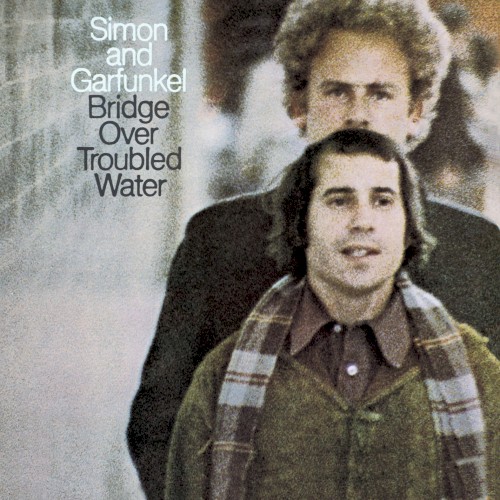
忧愁河上的金桥 (1969)
滚石 500 首歌 #66格莱美奖 · 年度制作(录音) 1971格莱美奖 · 年度歌曲 1971
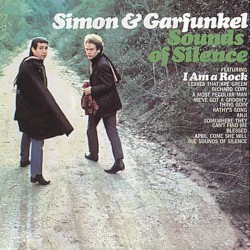
封面是收录这首歌的专辑封面。
介绍
这个词条没有中文维基百科条目,下面是英文维基百科的原文。
"Bridge over Troubled Water" is a song by the American folk rock duo Simon & Garfunkel, released in January 1970 as the second single from their fifth and final studio album, Bridge over Troubled Water (1970). It was written by Paul Simon and produced by Simon, Art Garfunkel and Roy Halee.
"Bridge over Troubled Water" features lead vocals by Art Garfunkel and a piano accompaniment influenced by gospel music, with a "Wall of Sound"-style production. It was the last song recorded for the album, but the first completed. The instrumentation, provided by the Wrecking Crew, was recorded in California, while Simon and Garfunkel's vocals were recorded in New York. Simon felt Garfunkel should sing solo, an invitation Garfunkel initially declined. Session musician Larry Knechtel performs piano, with Joe Osborn playing bass guitar and Hal Blaine on drums.
The song won five awards at the 13th Annual Grammy Awards in 1971, including Grammy Award for Record of the Year and Song of the Year. It is Simon & Garfunkel's most successful single, topping the US Billboard Hot 100 singles chart for six consecutive weeks, and was the No. 1 song on the Billboard Year-End Hot 100 singles of 1970. It also hit number one in the United Kingdom, Canada, France and New Zealand. It reached the top five in eight other countries, eventually selling over six million copies worldwide. It became one of the most performed songs of the 20th century, covered by over 50 artists, including Elvis Presley, Aretha Franklin and Johnny Cash. It is ranked number 66 on Rolling Stone's 500 Greatest Songs of All Time. American politician George McGovern used it as the theme song for his 1972 presidential campaign.
Background
"Bridge over Troubled Water" was written by Paul Simon in early 1969; the song came to him very quickly, so much so that he asked himself: "Where did that come from? It doesn't seem like me." The title concept was inspired by Claude Jeter's line "I'll be your bridge over deep water if you trust in my name", which Jeter sang with his group, the Swan Silvertones, in the 1959 song "Mary Don't You Weep". According to gospel producer and historian Anthony Heilbut, Simon acknowledged his debt to Jeter in person, and handed Jeter a check. Simon named Johann Sebastian Bach's "O Sacred Head, Now Wounded" as inspiration for parts of the melody. Simon wrote the song initially on guitar but used the piano to reflect the gospel influence and suit Garfunkel's voice.
Simon told his partner, Art Garfunkel, that Garfunkel should sing it alone, the "white choirboy way", though Simon adds harmony on the final verse. Garfunkel felt it was not right for him; he liked Simon's falsetto on the demo and suggested that Simon sing. At the suggestion of Garfunkel and producer Roy Halee, Simon wrote an extra verse and a "bigger" ending, though he felt it was less cohesive with the earlier verses. The final verse was written about Simon's then-wife Peggy Harper, who had noticed her first gray hairs ("Sail on, silvergirl"). It does not refer to a drug abuser's hypodermic needle, as is sometimes claimed. The verse was Garfunkel's idea, but Simon reportedly did not like it.
"Bridge over Troubled Water" was the final track recorded for the album but the first completed, with an additional two weeks of post-production. Simon initially wrote the song in G major, but arranger and composer Jimmie Haskell transposed the song to E-flat major to suit Garfunkel's voice. The song's instrumental parts were recorded in August 1969 in California, to make it easier for Garfunkel to go to Mexico to film Catch-22. Simon wanted a gospel piano sound, and hired session musician Larry Knechtel. Joe Osborn played two separate bass tracks, one high and the other low. A string section entering in the third verse completed the arrangement. The drums were played by Hal Blaine in an echo chamber to achieve a hall effect and Los Angeles session percussionist Gary Coleman played the Vibraphone. Haskell misheard the demo's chorus, writing "Like a Pitcher of Water" on the title page of his sheet music: Simon later framed it.
Simon and Garfunkel returned to New York in November 1969 to record the vocals. The vocal style in "Bridge over Troubled Water" was inspired by Phil Spector's technique in "Old Man River" by The Righteous Brothers. Simon said it sounded like the Beatles' "Let It Be", stating in a Rolling Stone interview: "They are very similar songs, certainly in instrumentation."
As their relations frayed preceding their 1970 breakup, Simon began to experience regret for allowing Garfunkel to sing it solo:
He felt I should have done it, and many times on a stage, though, when I'd be sitting off to the side and Larry Knechtel would be playing the piano and Artie would be singing "Bridge", people would stomp and cheer when it was over, and I would think, "That's my song, man..."
Personnel
- Art Garfunkel – lead vocals
- Paul Simon – backing vocals
- Larry Knechtel – piano
- Joe Osborn – bass guitar
- Hal Blaine – drums and percussion
正文摘自英文维基百科「Bridge over Troubled Water (song)」,按 CC BY-SA 4.0 使用;删去了参考文献、外部链接、表格和图片;篇幅所限只节选了前面一部分,全文见原条目。
资料卡
- 作品性质
- 音乐作品/乐曲
- 表演者
- 西蒙和加芬克尔
- 发行日期
- 1969 年
- 收录于 / 属于
- 忧愁河上的大桥
- 流派
- 流行音乐
- 语言
- 英语
- 作曲
- 保罗·西蒙
- 作词
- 保罗·西蒙
资料来自 Wikidata Q913700(CC0)。
制作名单
- ISRC
- USSM10103868、USSM10403915、USSM16900183
制作
- 工程师
- Roy Halee
- 制作人
- 阿特·加芬克尔、Roy Halee、保罗·西蒙
- 录音
- Ted Brosnan
演奏与演唱
- 鼓
- Hal Blaine
- 吉他
- Fred Carter, Jr.、保罗·西蒙
- 弦乐
- Ernie Freeman、Jimmie Haskell
- 键盘
- Larry Knechtel
- 贝斯
- Joe Osborn
- 演唱
- 阿特·加芬克尔、保罗·西蒙
词曲与编曲
- 作曲
- 保罗·西蒙
- 作词
- 保罗·西蒙
名单来自 MusicBrainz(CC0)这条录音的关系数据,由志愿者录入,不一定齐全。
更多资料
在哪听
西蒙和加芬克尔 的专辑
艺人页 ›
西蒙和加芬克尔 的其他歌(本站收录)
- 寂静之声西蒙和加芬克尔 · 1965
- Mrs. Robinson西蒙和加芬克尔 · 1968
风格、年代相近的歌
- Killing Me Softly with His Song萝贝塔·弗莱克 · 1973
- Bad Guy比莉·艾利什 · 2019
- Rolling in the Deep阿黛尔 · 2010
- What's Love Got to Do with It蒂娜·特纳 · 1984
- What a Fool Believes杜比兄弟合唱团 · 1979
- 贝蒂·戴维斯之眼金·卡恩斯 · 1974
- It's Too Late卡洛尔·金 · 1971
- Up, Up and Away第五次元合唱团 · 1967