乐单
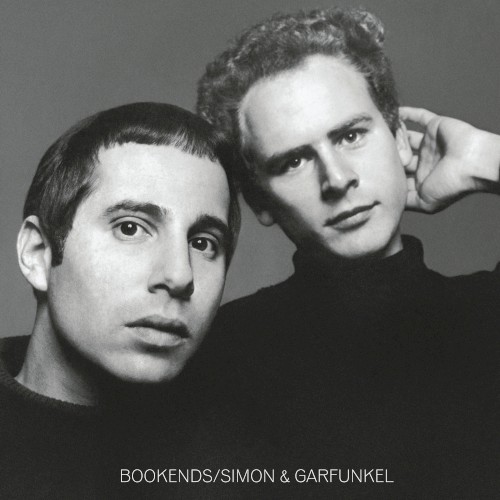
曲目
- 1Bookends Theme (instrumental)0:33
- 2Save the Life of My Child2:49
- 3America3:35
- 4Overs2:19
- 5Voices of Old People2:07
- 6Old Friends2:35
- 7Bookends Theme1:24
- 8Fakin’ It3:19
- 9Punky’s Dilemma2:17
- 10Mrs. Robinson4:06
- 11A Hazy Shade of Winter2:17
- 12At the Zoo2:22
12 首 · 约 30 分钟 · 依据 1968 US 发行的版本,在 MusicBrainz 看这个版本。
介绍
这个词条没有中文维基百科条目,下面是英文维基百科的原文。
Bookends is the fourth studio album by the American folk rock duo Simon & Garfunkel. Produced by Paul Simon, Art Garfunkel and Roy Halee, the album was released on April 3, 1968, in the United States by Columbia Records. The duo had risen to fame two years prior with the albums Sounds of Silence and Parsley, Sage, Rosemary and Thyme and the soundtrack album for the 1967 film The Graduate.
Bookends is a concept album that explores a life journey from childhood to old age. Side one of the album marks successive stages in life, the theme serving as bookends to the life cycle. Side two largely consists of previously released singles and of unused material for The Graduate soundtrack. Simon's lyrics concern youth, disillusionment, relationships, old age, and mortality. Much of the material was crafted alongside producer John Simon (no relation), who joined the recording when Paul Simon suffered from writer's block. The album was recorded gradually over the period of a year, with production speeding up around the later months of 1967.
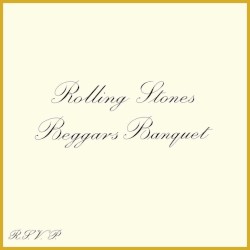
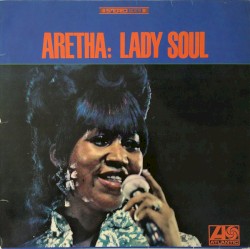
Initial sales for Bookends were substantial in the US, and the album produced the number-one single "Mrs. Robinson". The album sold well in the US and in the United Kingdom, where it peaked at number one. Bookends was considered a breakthrough for the duo, placing them on the same level as artists such as Aretha Franklin, The Beatles, Bob Dylan, and The Rolling Stones at the forefront of the countercultural movement in the 1960s. The album has continued to receive critical acclaim and is often debated by critics as to whether it or Bridge Over Troubled Water is Simon & Garfunkel's best album.
Background
Simon & Garfunkel first became prominent on American radio in 1965 with their record "The Sound of Silence", which became a hit during a period in which the duo had broken up due to the failure of their debut album, Wednesday Morning, 3 A.M. (1964). Following another release, Sounds of Silence (1965), the duo recorded and released Parsley, Sage, Rosemary and Thyme (1966), which brought new critical and commercial success to the duo. Simon, then 25, felt he had finally "made it" into an upper echelon of rock and roll, while most importantly retaining artistic integrity ("making him spiritually closer to Bob Dylan than to, say, Bobby Darin", wrote biographer Marc Eliot). The duo chose William Morris as their booking agency after a recommendation from Wally Amos, a mutual friend through their producer, Tom Wilson.
During the sessions for Parsley, the duo cut "A Hazy Shade of Winter" and decided to release it as a single then, where it peaked at number 13 on the national charts. Similarly, they recorded "At the Zoo" for single release in early 1967 (it charted lower, at number 16). Simon began work for Bookends around this time, noting to a writer at High Fidelity that "I'm not interested in singles anymore". He had hit a dry spell in his writing, which led to no Simon & Garfunkel album on the horizon for 1967. Artists at the time were expected to release two, perhaps three albums each year and the lack of productivity from the duo worried executives at Columbia Records. Amid concerns for Simon's idleness, Columbia Records chairman Clive Davis arranged for up-and-coming record producer John Simon to kick-start the recording. Simon was distrustful of "suits" at the label; on one occasion, he and Garfunkel brought a tape recorder into a meeting with Davis, who was giving a "fatherly talk" on speeding up production, in order to laugh at it later.
Meanwhile, director Mike Nichols, then filming The Graduate, had become fascinated with the duo's past two efforts, listening to them nonstop before and after filming. After two weeks of this obsession, he met with Clive Davis to ask for permission to license Simon & Garfunkel music for his film. Davis viewed it as a perfect fit and envisioned a best-selling soundtrack album. Simon was not as immediately receptive, viewing movies akin to "selling out", creating a damper on his artistic integrity. However, after meeting Nichols and becoming impressed by his wit and the script, he agreed to write at least one or two new songs for the film. Leonard Hirshan, a powerful agent at William Morris, negotiated a deal that paid Simon $25,000 (US$231,459 in 2025 dollars) to submit three songs to Nichols and producer Lawrence Turman. Several weeks later, Simon re-emerged with two new tracks, "Punky's Dilemma" and "Overs", neither of which Nichols was particularly taken with. The duo offered another new song, which later became "Mrs. Robinson", that was not as developed. Nichols loved it.
正文摘自英文维基百科「Bookends (album)」,按 CC BY-SA 4.0 使用;删去了参考文献、外部链接、表格和图片;篇幅所限只节选了前面一部分,全文见原条目。
资料卡
- 作品性质
- 音乐专辑
- 表演者
- 西蒙和加芬克尔
- 发行日期
- 1968 年 4 月 3 日
- 时长
- 29 分 51 秒
- 流派
- 民谣摇滚
- 语言
- 英语
- 唱片公司
- 哥伦比亚唱片
- 制作人
- 西蒙和加芬克尔、罗伊·黑立
- 封面设计
- 理查德·阿维顿
资料来自 Wikidata Q796762(CC0)。
制作名单
- 厂牌
- Columbia(目录号 KCL 2729)
- 录音室
- 录音:Columbia (CBS) Studio ‘A’(Manhattan)
制作
- 制作人
- 阿特·加芬克尔(第 2 首)、Roy Halee(第 2 首)、保罗·西蒙(第 2 首)
- 助理制作人
- John Simon(第 2 首)
- 录音
- 阿特·加芬克尔(第 5 首)
演奏与演唱
- 穆格合成器
- John Simon(第 2 首)
词曲与编曲
- 作曲
- 保罗·西蒙(其中 11 首)
- 作词
- 保罗·西蒙(其中 11 首)
- 编曲
- 阿特·加芬克尔(第 5 首)
名单来自 MusicBrainz(CC0)这一发行版本的关系数据,由志愿者录入,不一定齐全。
更多资料与乐评
在哪听
西蒙和加芬克尔 的其他专辑
艺人页 ›
相似的专辑
同在 1968 年发行