乐单
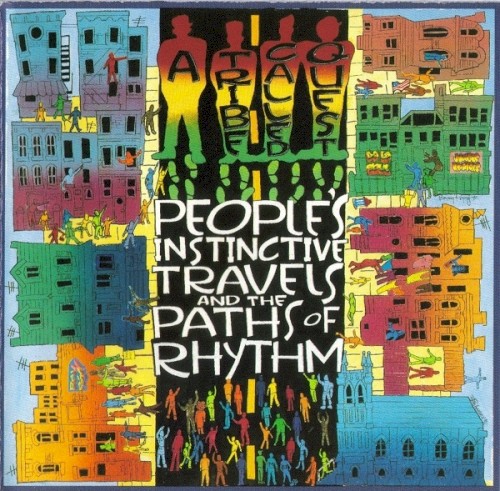
People's Instinctive Travels and the Paths of Rhythm (1990)
- 艺人
- 探索一族合唱团
- 发行
- 1990-04-17
- 类型
- 专辑
- 国家/地区
- 美国
- 唱片公司
- Jive Records、RCA唱片
- 制作人
- 探索一族合唱团
- 版本
- MusicBrainz 上有 19 个发行版本
曲目
- 1Push It Along7:42
- 2Luck of Lucien4:35
- 3After Hours4:39
- 4Footprints4:03
- 5I Left My Wallet in El Segundo4:09
- 6Pubic Enemy3:49
- 7Bonita Applebum3:50
- 8Can I Kick It?4:13
- 9Youthful Expression4:56
- 10Rhythm (Devoted to the Art of Moving Butts)4:02
- 11Mr. Muhammad3:35
- 12Ham ’n’ Eggs5:30
- 13Go Ahead in the Rain3:58
- 14Description of a Fool5:42
14 首 · 约 65 分钟 · 依据 1990 US 发行的版本,在 MusicBrainz 看这个版本。
介绍
这个词条没有中文维基百科条目,下面是英文维基百科的原文。
People's Instinctive Travels and the Paths of Rhythm is the debut studio album by American hip-hop group A Tribe Called Quest, released on April 17, 1990, by Jive Records. After forming the Native Tongues collective and collaborating on several projects, A Tribe Called Quest began recording sessions for People's Instinctive Travels in late 1989 at Calliope Studios with completion reached in early 1990. The album's laid back production encompassed a diverse range of samples that functioned as a template for the group's unorthodox lyrics.
People's Instinctive Travels and the Paths of Rhythm was met with acclaim from professional music critics and the hip hop community on release, and was eventually certified Gold in the United States on January 19, 1996. Its recognition has extended over the years as it is widely regarded as one of the greatest albums of the 1990s and a central album in alternative hip-hop with its unconventional production and lyricism. It is also credited for influencing many artists in both hip-hop and R&B. In a commemorative article for XXL, Michael Blair wrote that the album "was immensely groundbreaking, and will eternally maintain its relevance within the culture and construction of hip-hop".
Background
A Tribe Called Quest formed in Queens, New York, in 1985. After establishing a friendship with hip-hop act Jungle Brothers, both groups formed a collective dubbed Native Tongues, which also included De La Soul.
Several years prior to recording People's Instinctive Travels and the Paths of Rhythm, group member Q-Tip created much of the album's production on pause tapes when he was in the 10th grade. He would have his first studio experience while recording with Jungle Brothers on their debut album Straight out the Jungle (1988). Although this was a learning experience, he acquired more recording and producing knowledge being present at all of De La Soul's 3 Feet High and Rising (1989) sessions. Recording engineer Shane Faber taught Q-Tip how to use equipment such as the E-mu SP-1200 and Akai S950 samplers, and soon-after, renowned producer Large Professor taught him how to use other equipment, for which he would expand upon on People's Instinctive Travels.
Initially, record labels would not sign A Tribe Called Quest due to their unconventional image and sound, but took interest after the success of 3 Feet High and Rising, which featured appearances from Q-Tip. The group hired Kool DJ Red Alert as their manager, and after shopping their demo to several major labels, they signed a contract with Jive Records in 1989.
Recording
Recording for the album began in late 1989, and finished three months later in early 1990, with "Pubic Enemy" and "Bonita Applebum" as the first tracks recorded.
The group chose Calliope Studios as their primary studio, as it was known for allowing artistic freedom. Jungle Brothers, Queen Latifah and Prince Paul with De La Soul and Stetsasonic, were all recording new music in separate rooms while A Tribe Called Quest recorded People's Instinctive Travels. Q-Tip later commented, "It was exciting. We were kinda left to our own devices. It was just a great environment, conductive for creating. We didn't have cell phones, we didn't have the internet, we didn't have a bunch of things to tear at us. When we got to the studio, the specific job was to make music. There was no TV in there. It was all instruments and speakers. It was just music."
Q-Tip and Ali Shaheed Muhammad would listen to records several seconds at a time, and re-work them in relationship with other records that would fit. Ali played all live instruments, DJ scratches and programming, while Q-Tip handled everything else with production, including sampling and mixing.
Although claiming that "we all helped put the album together", Q-Tip was the only group member present at every recording session. Group member Phife Dawg later admitted, "I was being ignorant on that first album, that's why I was only on a couple of tracks. I was hardly around. I would have rather hung out with my boys on the street and got my hustle on rather than gone in the studio. I wasn't even on the contract for the first album. I was thinking me and Jarobi were more like back-ups for Tip and Ali, but Tip and Ali really wanted me to come through and do my thing".
Music and lyrics
People's Instinctive Travels and the Paths of Rhythm has been described as "a celebration of bohemia, psychedelia and vagabondia", as well as "laid back". Los Angeles Times critic Dennis Hunt described the album as consisting of "mostly happy hip-hop, featuring gently humorous, casual, conversational raps". Michael Blair from XXL wrote that "the innovative production on this album created an optimal platform for the group's wildly inventive relationship with their words. From a lyrical standpoint, Tribe was both sophisticated and playful in the same breath".
正文摘自英文维基百科「People's Instinctive Travels and the Paths of Rhythm」,按 CC BY-SA 4.0 使用;删去了参考文献、外部链接、表格和图片;篇幅所限只节选了前面一部分,全文见原条目。
资料卡
- 作品性质
- 音乐专辑
- 表演者
- 探索一族合唱团
- 发行日期
- 1990 年 3 月 12 日
- 流派
- 爵士说唱、golden age hip-hop、东海岸嘻哈、另类嘻哈、实验嘻哈
- 语言
- 英语
- 来自
- 美国
- 唱片公司
- Jive Records、RCA唱片
- 制作人
- 探索一族合唱团
- 下一部
- The Low End Theory
资料来自 Wikidata Q1041284(CC0)。
制作名单
- 厂牌
- BMG(目录号 J2 1331)、Jive(目录号 J2 1331)、RCA(目录号 J2 1331)、BMG(目录号 J2-1331)
演奏与演唱
- 演出
- Lucien Papalu(第 2 首)、Red Alert(第 6 首)
词曲与编曲
- 作曲
- 探索一族合唱团(其中 9 首)、卢·里德(第 8 首)
- 词曲
- 卡马尔·法里德(第 2、5、7、14 首)、Ali Shaheed Muhammad(第 5、7、14 首)、罗伊·艾尔斯(第 7、14 首)、Edwin Birdsong(第 7、14 首)、Billy Brooks(第 2 首)、Raymond Jackson(第 2 首)、William Allen(第 7 首)、Walter Booker(第 7 首)、Charles Stepney(第 7 首)
- 作词
- Ali Shaheed Muhammad(第 8 首)、卡马尔·法里德(第 8 首)、卢·里德(第 8 首)
名单来自 MusicBrainz(CC0)这一发行版本的关系数据,由志愿者录入,不一定齐全。
更多资料与乐评
在哪听
探索一族合唱团 的其他专辑
艺人页 ›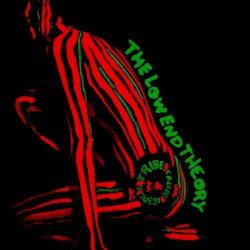
相似的专辑


同在 1990 年发行