乐单
曲目
- 1Dirty Boots5:29
- 2Tunic (Song for Karen)6:19
- 3Mary-Christ3:11
- 4Kool Thing4:06
- 5Mote7:36
- 6My Friend Goo2:19
- 7Disappearer5:08
- 8Mildred Pierce2:12
- 9Cinderella's Big Score5:55
- 10Scooter and Jinx1:05
- 11Titanium Expose6:26
11 首 · 约 50 分钟 · 依据 1990-06-26 XW 发行的版本,在 MusicBrainz 看这个版本。
介绍
这个词条没有中文维基百科条目,下面是英文维基百科的原文。
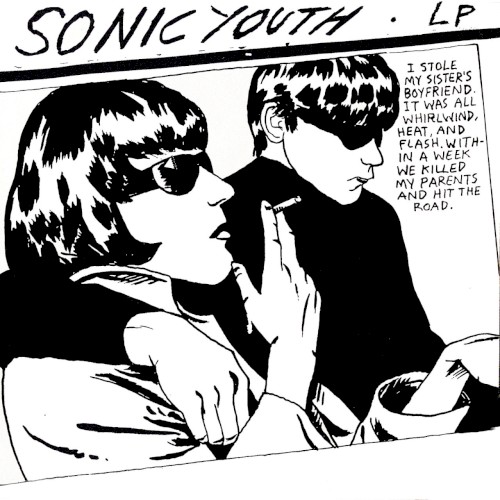
Goo is the sixth full-length studio album by American alternative rock band Sonic Youth, released on June 26, 1990, by DGC Records. The album was the band's major label debut, originally signing with Geffen Records before they were given to DGC, a smaller subsidiary of the label. Coming off the success of Daydream Nation, Nick Sansano returned to engineer Goo, but veteran producer Ron Saint Germain was chosen by Sonic Youth to finish mixing the album following Sansano's dismissal.
Featuring feminist and pop culture-concerned lyrics, the band sought to expand upon its trademark alternating guitar arrangements and the layered sound of their previous album Daydream Nation, with bassist Kim Gordon's role as a vocalist and songwriter expanding in relation to previous albums.
Goo was a critical and commercial success upon its release, peaking at number 96 on the US Billboard 200, their highest chart position to date. Although it lacked significant radio airplay, its lead single "Kool Thing", a collaborative effort with Public Enemy's Chuck D, reached number seven on the Billboard Modern Rock Tracks chart. Since then, Goo has been viewed as one of alternative rock's most important albums, and is considered musically and artistically significant. In 2020, the album was ranked at number 358 on Rolling Stone's 500 greatest albums of all time list.
Background
In 1989, nearly a year after the release of the band's breakthrough album Daydream Nation, Sonic Youth announced that it had signed a recording contract with Geffen Records, the group's first major label deal. Sonic Youth decided to sever relations with its former label, Enigma Records, as a result of the band's displeasure with Enigma's indecisive marketing and distribution of Daydream Nation, as well as "Teen Age Riot"—the album's accompanying single. Another factor that contributed to the group's departure from the label was Enigma's handling of The Whitey Album, an experimental album of sound manipulation and hip-hop influences released under the name Ciccone Youth. Not only did Enigma reject the band's proposal to simultaneously release the album with Daydream Nation, the label's publicity branch also attempted to withdraw its cover art—an enlarged photo of Madonna's face—even though Madonna reportedly gave Sonic Youth her permission to use it.
By mid-1989, Sonic Youth's relationship with its British and American label head Paul Smith, who the band's legal counsel, Richard Grebal, termed "a trusted advisor but never a manager", was growing increasingly strained. Tensions between Smith and the group had begun in 1986 when Smith arranged the release of live recordings by the band on the album Walls Have Ears without their input. Mindful about their work and image, Sonic Youth was irritated by the decision, especially when the album was distributed before EVOL. The situation was compounded further when Smith took a bold negotiating stance with major record labels during the Daydream Nation tour and took long intervals to communicate information to the band. His stance, which had the potential to scare away record executives, represented the final straw for the band. On June 2, 1989, Sonic Youth went to Smith's apartment, ostensibly to discuss another music video for Daydream Nation, to announce an end to their partnership.
Having entertained offers from A&M Records, Atlantic Records, and Mute Records, Sonic Youth signed a five-album deal worth $300,000 with a clause which secured the band's complete control of its creative output. The group, however, was somewhat dissatisfied that the album would not be released by Geffen but rather a new and unestablished subsidiary label, DGC Records.
Recording
In November 1989, Sonic Youth, accompanied by producers Don Fleming and J Mascis, recorded demos of eight songs at the Waterworks, a studio run by Jim Waters in the meat-packing district of New York City. Lee Ranaldo recalled Kim Gordon and Thurston Moore were keen on inviting Fleming and Mascis "both as extended family and as people to have an opinion"; both Ranaldo and Steve Shelley were uncomfortable about their presence "because we'd never made records before where there were other people involved". The original working title for the album was Blowjob?, mostly to test the humor of their new label, but ultimately the band was convinced to drop the name in favor of Goo, a title inspired by one of the album's tracks, "My Friend Goo". Because the results of these sessions were later heavily bootlegged, Moore officially released them on the album Goo Demos in 1991.
正文摘自英文维基百科「Goo (album)」,按 CC BY-SA 4.0 使用;删去了参考文献、外部链接、表格和图片;篇幅所限只节选了前面一部分,全文见原条目。
资料卡
- 作品性质
- 音乐专辑
- 表演者
- 音速青年
- 发行日期
- 1991 年 6 月 26 日
- 时长
- 49 分 23 秒
- 流派
- 另类摇滚、实验摇滚
- 语言
- 英语
- 唱片公司
- DGC唱片公司
- 制作人
- 音速青年
- 封面设计
- Raymond Pettibon
资料来自 Wikidata Q1011916(CC0)。
制作名单
- 厂牌
- Geffen
制作
- 混音
- Ron Saint Germain
- 制作人
- Ron Saint Germain、Nick Sansano、音速青年
- 录音
- Nick Sansano
演奏与演唱
- 主唱
- 金·戈登(第 2、4、6、11 首)、瑟斯顿·摩尔(第 3、11 首)、查克·迪(第 4 首)
- 和声
- J·马西斯(第 2、5、6 首)、Don Fleming(第 1、7 首)
词曲与编曲
- 作曲
- 金·戈登、瑟斯顿·摩尔、李·拉纳尔多、Steve Shelley
- 作词
- 瑟斯顿·摩尔(第 1、3、7、8、11 首)、金·戈登(第 2、4、6、9、11 首)、李·拉纳尔多(第 5 首)
名单来自 MusicBrainz(CC0)这一发行版本的关系数据,由志愿者录入,不一定齐全。
更多资料与乐评
在哪听
音速青年 的其他专辑
艺人页 ›




相似的专辑



同在 1990 年发行