乐单
曲目
- 1 1Search and Destroy3:29
- 1 2Gimme Danger3:32
- 1 3Your Pretty Face Is Going to Hell4:54
- 1 4Penetration3:40
- 2 1Raw Power4:22
- 2 2I Need Somebody4:56
- 2 3Shake Appeal3:03
- 2 4Death Trip5:51
8 首 · 约 34 分钟 · 依据 1973-02-07 US 发行的版本,在 MusicBrainz 看这个版本。
介绍
这个词条没有中文维基百科条目,下面是英文维基百科的原文。
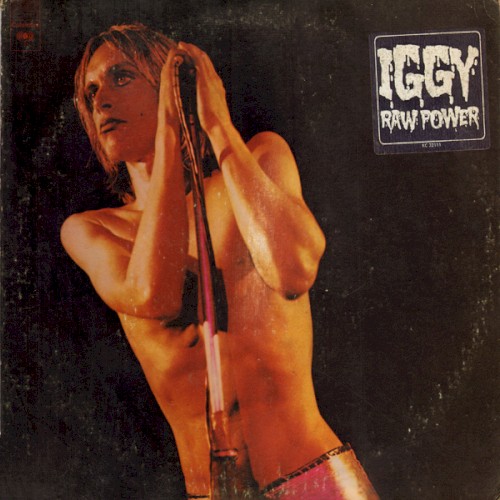
Raw Power is the third studio album by American rock band the Stooges (credited as Iggy and the Stooges), released on February 7, 1973, by Columbia Records. The album departed from the "groove-ridden, feel-based songs" of the band's first two records in favor of a more anthemic hard rock approach inspired by new guitarist James Williamson, who co-wrote the album's eight songs with singer Iggy Pop.
Pop produced the recording sessions himself with David Bowie assisting in post-production work, though the team were allotted only one day to mix the album and the resulting fidelity was poor. Later reissues have attempted to either correct or enhance the original mix, most notably Pop's 1997 remix, which became notorious for its extreme volume and compression.
Though not initially commercially successful, Raw Power gained a cult following in the years following its release and is considered a forerunner of punk rock alongside its predecessors, The Stooges (1969) and Fun House (1970). The Guardian wrote that "it has since been acknowledged as one of the most influential records in rock history". Williamson's raw guitar sound deeply influenced acts of different music genres such as the Sex Pistols, Johnny Marr of the Smiths, and Kurt Cobain of Nirvana.
Background
After their first two albums The Stooges (1969) and Fun House (1970) were released to little commercial success, the Stooges were in disarray: the band had officially broken up, bassist Dave Alexander was fighting alcoholism, and singer Iggy Pop's heroin addiction was escalating prior to the intervention of David Bowie. Pop later recalled, "Very few people recognized the quality of the Stooges' songwriting, it was really meticulous. And to his credit, the only person I'd ever known of in print to notice it, among my peers of professional musicians, was Bowie. He noticed it right off." Having signed on as a solo artist to Columbia Records, Pop relocated to London, where he was to write and record an album with James Williamson, who served as the Stooges' second guitarist from November 1970 until the band's initial dissolution in July 1971. When they failed to find a suitable English rhythm section, Williamson suggested that former Stooges Ron Asheton and Scott Asheton fly over and participate in the recording sessions, leading to the band's reformation under the new name of "Iggy and the Stooges". Although he was the band's founding guitarist, the elder Asheton reluctantly agreed to switch to electric bass.
Recording
Initial demo sessions were held at RG Jones Recording Studios in Wimbledon with sound engineer Gerry Kitchingham and at Olympic Studios in Barnes with sound engineer Keith Harwood, with most of the songs rejected by the band's management. Pop said that Columbia executives insisted on two ballads, one for each side of the album: "Gimme Danger" and "I Need Somebody". The album itself was recorded at CBS Studios in London with staff engineer Mike Ross-Trevor from September 10 to October 6, 1972. Pop produced and mixed the album by himself; unfortunately, his botched first attempt mixed most of the instruments into one stereo channel and the vocals into the other, with little regard for balance or tone quality. Tony Defries, the head of Bowie's management company MainMan, informed Pop that the album would be remixed by Bowie. Pop agreed to this, saying that "the other choice was I wasn't going to get my album out. I think Defries told me that CBS refused to release it like that, I don't know", but insisted that his own mix for "Search and Destroy" be retained. Due to budgetary constraints, Bowie remixed the other seven songs in a single day at Los Angeles' Western Sound Recorders in October 1972. Pop said of the production:
To the best of my recollection it was done in a day. I don't think it was two days. On a very, very old board, I mean this board was old! An Elvis type of board, old-tech, low-tech, in a poorly lit, cheap old studio with very little time. To David's credit, he listened with his ear to each thing and talked it out with me, I gave him what I thought it should have, he put that in its perspective, added some touches. He's always liked the most recent technology, so there was something called a Time Cube you could feed a signal into -- it looked like a bong, a big plastic tube with a couple of bends in it -- and when the sound came out the other end, it sort of shot at you like an echo effect. He used that on the guitar in "Gimme Danger", a beautiful guitar echo overload that's absolutely beautiful; and on the drums in "Your Pretty Face Is Going To Hell". His concept was, "You're so primitive, your drummer should sound like he's beating a log!" It's not a bad job that he did...I'm very proud of the eccentric, odd little record that came out.
Bowie later recalled:
正文摘自英文维基百科「Raw Power」,按 CC BY-SA 4.0 使用;删去了参考文献、外部链接、表格和图片;篇幅所限只节选了前面一部分,全文见原条目。
资料卡
- 作品性质
- 音乐专辑
- 表演者
- 丑角合唱团
- 发行日期
- 1973 年 2 月 7 日
- 时长
- 34 分 00 秒
- 流派
- 前朋克、硬式摇滚、朋克摇滚
- 语言
- 英语
- 唱片公司
- 哥伦比亚唱片
- 制作人
- 伊基·波普
资料来自 Wikidata Q918613(CC0)。
制作名单
- 厂牌
- Columbia(目录号 KC 32111)
- 录音室
- 混音:Western Recorders(Los Angeles);录音:CBS Studios(London)
制作
- 混音
- 大卫·鲍伊、伊基·波普
- 制作人
- 伊基·波普
演奏与演唱
- 贝斯
- Ron Asheton
- 鼓
- Scott Asheton
- 主唱
- 伊基·波普
- 电吉他
- James Williamson(其中 7 首)
- 吉他
- James Williamson(第 1 2 首)
词曲与编曲
- 词曲
- 伊基·波普、James Williamson
- 作曲
- 伊基·波普(其中 7 首)、James Williamson(其中 7 首)
名单来自 MusicBrainz(CC0)这一发行版本的关系数据,由志愿者录入,不一定齐全。
更多资料与乐评
在哪听
丑角合唱团 的其他专辑
艺人页 ›
相似的专辑
同在 1973 年发行