乐单
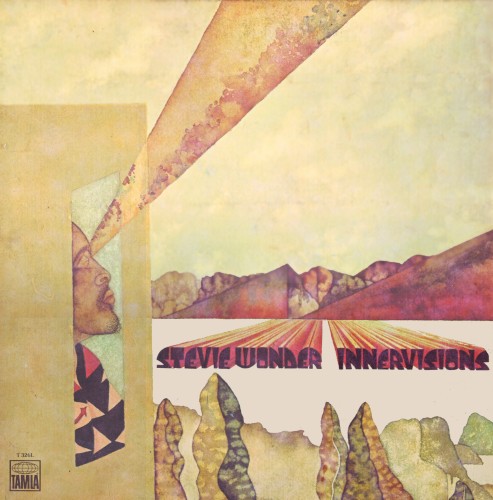
Innervisions (1973)
滚石 500(2020) #34滚石 500(2003) #231001 张专辑格莱美奖 · 年度专辑 1974
- 艺人
- 史提夫·汪达
- 发行
- 1973-08-03
- 类型
- 专辑
- 唱片公司
- Tamla
- 制作人
- 马尔科姆·塞西尔
- 版本
- MusicBrainz 上有 37 个发行版本
曲目
- A1Too High4:36
- A2Visions5:23
- A3Living for the City7:23
- A4Golden Lady4:58
- B1Higher Ground3:43
- B2Jesus Children of America4:10
- B3All in Love Is Fair3:42
- B4Don't You Worry 'bout a Thing4:45
- B5He's Misstra Know-It-All5:35
9 首 · 约 44 分钟 · 依据 1973 US 发行的版本,在 MusicBrainz 看这个版本。
介绍
这个词条没有中文维基百科条目,下面是英文维基百科的原文。
Innervisions is the sixteenth studio album by American singer, songwriter, and musician Stevie Wonder, released on August 3, 1973, by Tamla, a subsidiary of Motown Records. A landmark recording of Wonder's "classic period", the album has been regarded as completing his transition from the "Little Stevie Wonder" known for romantic ballads into a more musically mature, conscious, and grown-up artist.
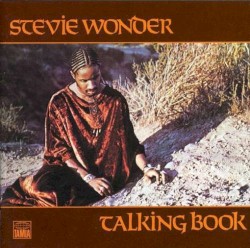
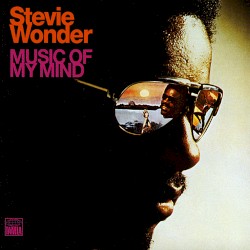
On Innervisions, Wonder continued to experiment with the revolutionary T.O.N.T.O. (The Original New Timbral Orchestra) synthesizer system developed by Malcolm Cecil and Robert Margouleff. Wonder's previous two albums, 1972’s Music of My Mind and Talking Book, boosted his standing in the music industry, transforming him from a reliable hitmaker into a "master" of the new album format. Ahead of Innervisions, Cecil and Margouleff were pushing Wonder to shift his lyrical themes, allowing for political and metaphysical issues to be discussed in his music instead of primarily singing about romance. The album's second single, “Living for the City” is considered its centerpiece.
Innervisions peaked at number four on the Billboard Top LPs & Tape chart and number one on the Billboard Soul LPs chart. At the 16th Grammy Awards, it won Album of the Year and Best Engineered Non-Classical Recording, while "Living for the City" won Best R&B Song. The album is widely considered by fans, critics, and colleagues to be one of Wonder's finest works and one of the greatest albums of all time. It was ranked number 34 on Rolling Stone's list of "The 500 Greatest Albums of All Time" in 2020 and was inducted into the Grammy Hall of Fame in 1999. The album became hugely influential on the future sound of commercial soul and black music.
Recording
As with many of Wonder's albums, the lyrics, composition, and production of Innervisions are almost entirely his own work, and he also played all, or virtually all, the instruments on many of the album's tracks. He made prominent use of synthesizers throughout the album.
The nine tracks of Innervisions encompass a wide range of themes and issues: from drug abuse in "Too High", through inequality and systemic racism in "Living for the City", to love in the ballads "All in Love Is Fair" and "Golden Lady". The album's closer, "He's Misstra Know-It-All", is thought by some to be a scathing attack on then-US President Richard Nixon, similar to Wonder's song "You Haven't Done Nothin'" from the following year. "Living for the City" was one of the first soul music songs to deal explicitly with systemic racism and to incorporate everyday sounds of the street, such as traffic, voices, and sirens, in with music recorded in the studio.
For Wonder's vocal on the final verse of "Living for the City", associate producers Margouleff and Cecil deliberately provoked him, repeatedly interrupting his takes, to draw out a gruff, angry vocal performance matching the song's narrative; Margouleff later said Wonder grew hoarse and upset with them, but that the tactic produced the take they wanted.
Post-release car crash
On August 6, 1973, three days after the commercial release of Innervisions, Wonder played a concert in Greenville, South Carolina. Afterward, he fell asleep in the front seat of the car of his friend John Harris, who was snaking along a road just outside Durham, North Carolina behind a truck loaded high with logs. Suddenly, the trucker jammed on his brakes, and the two vehicles collided. Logs went flying, and one smashed through the windshield of Wonder's car and hit him in the forehead. He was bloodied and unconscious when he was pulled from the wrecked car, and lay in a coma caused by severe brain contusion for ten days.
It was Wonder's friend and tour director Ira Tucker who first elicited some response from him:
I remember when I got to the hospital in Winston-Salem...man, I couldn't even recognize him. His head was swollen up about five times normal size. And nobody could get through to him. I knew that he likes to listen to music really loud and I thought maybe if I shouted in his ear it might reach him. The doctor told me to go ahead and try, it couldn't hurt him. The first time I didn't get any response, but the next day I went back and I got right down in his ear and sang Higher Ground. His hand was resting on my arm and after awhile his fingers started going in time with the song. I said yeah! Yeeeeaaah! This dude is going to make it!
When Wonder regained consciousness, he discovered that he had lost his sense of smell (which he later largely recovered), and he was deeply afraid that he might have lost his musical abilities, too. Tucker said:
We brought one of his instruments—I think it was the clavinet—to the hospital. For a while, Stevie just looked at it, or didn't do anything with it. You could see he was afraid to touch it, because he didn't know if he still had it in him—he didn't know if he could still play. And then, when he finally did touch it—man, you could just see the happiness spreading all over him. I'll never forget that.
正文摘自英文维基百科「Innervisions」,按 CC BY-SA 4.0 使用;删去了参考文献、外部链接、表格和图片;篇幅所限只节选了前面一部分,全文见原条目。
资料卡
- 作品性质
- 音乐专辑
- 表演者
- 史提夫·汪达
- 发行日期
- 1973 年 8 月 3 日
- 时长
- 44 分 12 秒
- 流派
- 灵魂乐、放克、软式摇滚、摇滚乐、爵士乐
- 语言
- 英语
- 唱片公司
- Tamla
- 制作人
- 马尔科姆·塞西尔
- 获奖
- 格莱美年度专辑奖(1973)、葛莱美奖最佳非古典专辑策划(1973)、格莱美名人堂(1998)
资料来自 Wikidata Q1049169(CC0)。
制作名单
制作
- 制作人
- 史提夫·汪达、Malcolm Cecil(第 A3 首)、Robert Margouleff(第 A3 首)
演奏与演唱
- 和声
- Jim Gilstrap(第 A1 首)、Lani Groves(第 A1 首)、Tasha Thomas(第 A1 首)
- 贝斯
- Malcolm Cecil(第 A2 首)、Scott Edwards(第 B3 首)、Willie Weeks(第 B5 首)
- 原声吉他
- Dean Parks(第 A2 首)、Ralph Hammer(第 A4 首)
- 电吉他
- David T. Walker(第 A2 首)
- 主唱
- 史提夫·汪达(第 A3 首)
- 风琴
- Clarence Bell(第 A4 首)
- 康加鼓
- Larry Latimer(第 A4 首)
- 穆格合成器
- 史提夫·汪达(第 A4 首)
- 罗兹电钢琴
- 史提夫·汪达(第 A4 首)
- 鼓
- 史提夫·汪达(第 A4 首)
- 钢琴
- 史提夫·汪达(第 B3 首)
- 沙锤
- Yusuf Roahman(第 B4 首)
- 邦戈鼓
- Sheila Wilkerson(第 B4 首)
词曲与编曲
- 编曲
- 史提夫·汪达
- 作曲
- 史提夫·汪达
- 作词
- 史提夫·汪达(第 A1、A2、A3、B1、B2、B3 首)
名单来自 MusicBrainz(CC0)这一发行版本的关系数据,由志愿者录入,不一定齐全。
更多资料与乐评
在哪听
史提夫·汪达 的其他专辑
艺人页 ›


相似的专辑

同在 1973 年发行