乐单
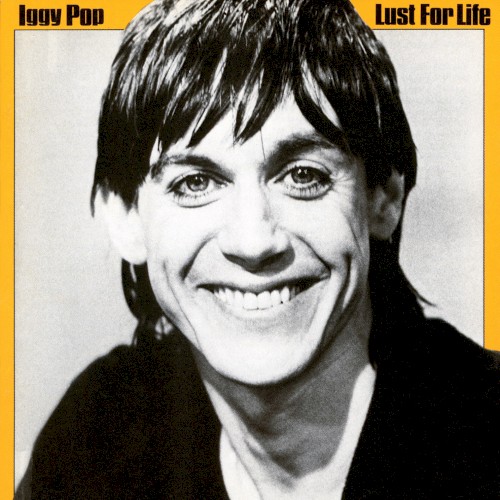
Lust for Life (1977)
曲目
- A1Lust for Life5:14
- A2Sixteen2:26
- A3Some Weird Sin3:42
- A4The Passenger4:44
- A5Tonight3:40
- B1Success4:26
- B2Turn Blue6:57
- B3Neighborhood Threat3:26
- B4Fall in Love With Me6:31
9 首 · 约 41 分钟 · 依据 1977-08-29 US 发行的版本,在 MusicBrainz 看这个版本。
介绍
这个词条没有中文维基百科条目,下面是英文维基百科的原文。
Lust for Life is the second solo studio album by the American musician Iggy Pop, released on September 9, 1977, through RCA Records. It was his second collaboration with David Bowie after The Idiot, released in March the same year. Shortly after Bowie released his own album Low in January, Pop went on a tour to support The Idiot with Bowie as his keyboardist. At the tour's conclusion, Pop and Bowie regrouped in Berlin to record Pop's next solo album.
Lust for Life was recorded at Hansa Studio by the Wall in West Berlin from May to June 1977, with production being handled by Bowie, Pop, and the engineer Colin Thurston. The touring band of Pop, Bowie, the guitarist Ricky Gardiner, and brothers Tony Fox and Hunt Sales on bass and drums, respectively, comprised the primary lineup for the album. After The Idiot was mostly composed by Bowie, Pop was adamant about having more control over Lust for Life, often composing his own arrangements, including for "Sixteen". This resulted in a hard rock and proto-punk sound more akin to his older style with the band the Stooges. Pop used Bowie's arrangements for some songs, including the well-known title track.
Upon release, Lust for Life received little promotion from RCA but nevertheless peaked at number 28 on the UK Albums Chart and remained Pop's highest-charting album there until 2016's Post Pop Depression. It also peaked at number 8 in the Netherlands and number 120 on the US Billboard Top LPs & Tape chart. Critically, Lust for Life was well-received, with many praising Pop's energetic performance throughout and his greater role compared to The Idiot; Lust for Life later became regarded as one of his best works and has appeared on several best album lists. It was Pop and Bowie's final collaboration until the mid-1980s.
Background
After a period of drug addiction, Iggy Pop joined his friend David Bowie on his 1976 Isolar Tour and afterwards, moved to Europe with him in hopes of getting sober. After moving into the Château d'Hérouville in Hérouville, France, Bowie decided to produce Pop's first solo album. Recorded from June to August 1976, The Idiot was Pop's first release since the breakup of his former band the Stooges in 1974. The majority of the music was composed by Bowie, while Pop wrote most of the lyrics, often in response to the music being composed. Due to Bowie's major influence on its creation, The Idiot marked a departure from the proto-punk sound of the Stooges, in favor of a style more akin to art rock. After the album's completion, Bowie recorded his own album, Low, in a style reminiscent of The Idiot. Bowie's label RCA Records released Low in January 1977 and due to its unexpected commercial success, Bowie persuaded RCA to release The Idiot in March. The album became the biggest commercial success involving Pop up to that point, reaching the top 40 in the UK charts and the top 75 in the US charts.
Bowie declined to promote Low, opting instead to support Pop on a tour of his own. With himself on keyboards, Bowie assembled a band that included Ricky Gardiner on guitar, with brothers Tony Fox and Hunt Sales on bass and drums, respectively. Rehearsals began in mid-February 1977, and the tour began at the start of March.
Songs played included popular Stooges numbers, a couple of tracks from The Idiot, and tracks that appeared on Lust for Life, including "Tonight", "Some Weird Sin", and "Turn Blue". Bowie was adamant about not taking the spotlight away from Pop, often staying behind his keyboard and not addressing the audience. The tour ended on April 16. The success of The Idiot and the tour earned Pop fame and success greater than he ever achieved with the Stooges. However, during interviews, he was often asked about Bowie more than his own work. This frustrated Pop, and he realized that for their next collaboration, he had to take more control.
Recording
At the end of the tour, Pop and Bowie returned to Berlin to start writing. To further achieve his own identity, Pop moved out of the apartment he was sharing with Bowie and his assistant Coco Schwab, relocating to his own place in the same building. The two continued writing for a few weeks before Gardiner joined them in May 1977, who recalled that "quite a few ideas were already present". The trio spent a small number of weeks writing, devising tracks such as "The Passenger" and "Lust for Life". At the end of May, they moved to the Hansa Studio by the Wall to begin recording. The rhythm section of Hunt and Tony Sales on drums and bass, respectively, returned from the tour, along with guitarist Carlos Alomar, who was brought in by Bowie as a musical director. Bowie reduced his role significantly from The Idiot, solely contributing keyboards like the tour. Gardiner recalled that because they were already a "tour-hardened band", there was a more "live" feel to the tracks than The Idiot. For the impromptu "Fall in Love with Me", the band swapped instruments: Hunt played bass, Tony Fox played guitar, and Gardiner played drums.
正文摘自英文维基百科「Lust for Life (Iggy Pop album)」,按 CC BY-SA 4.0 使用;删去了参考文献、外部链接、表格和图片;篇幅所限只节选了前面一部分,全文见原条目。
资料卡
- 作品性质
- 音乐专辑
- 表演者
- 伊基·波普
- 发行日期
- 1977 年 8 月 29 日
- 录音地点
- 汉莎录音室
- 时长
- 41 分 53 秒
- 流派
- 硬式摇滚、朋克摇滚
- 语言
- 英语
- 唱片公司
- RCA唱片
- 制作人
- 大卫·鲍伊
资料来自 Wikidata Q587585(CC0)。
制作名单
- 厂牌
- RCA(目录号 AFL1-2488)
- 录音室
- 录音:Hansa Studio III(Berlin)
制作
- 制作人
- 大卫·鲍伊(第 A2、B2、B3、B4 首)、Bewlay Bros.(第 A1、A3、A4、A5、B1 首)、伊基·波普(第 A2、B2、B3、B4 首)、Colin Thurston(第 A2、B2、B3、B4 首)
- 录音
- 大卫·鲍伊
- 工程师
- Eduard Meyer、Colin Thurston
演奏与演唱
- 贝斯
- Tony Sales(第 A1、A2、A3、A4、A5、B1 首)、Hunt Sales(第 B4 首)
- 钢琴
- 大卫·鲍伊(第 A1、A2、A4、A5、B3 首)
- 吉他类
- Carlos Alomar、Ricky Gardiner
- 鼓类乐器
- Hunt Sales
- 主唱
- 伊基·波普
- 吉他
- Carlos Alomar(其中 8 首)、Ricky Gardiner(其中 8 首)、Tony Sales(第 B4 首)
- 和声
- Hunt Sales(其中 8 首)、Tony Sales(其中 8 首)、大卫·鲍伊(第 A2、A3、A4、A5、B2、B3 首)
- 鼓
- Hunt Sales(第 A2、A5、B1、B2、B3 首)、Ricky Gardiner(第 B4 首)
- 风琴
- 大卫·鲍伊(第 A3、B2、B4 首)
- 铃鼓
- Hunt Sales(第 A2、B3 首)
- 电钢琴
- 大卫·鲍伊(第 B1、B4 首)
- 沙锤
- Hunt Sales(第 A1 首)
- 电子琴
- 大卫·鲍伊(第 A2 首)
- 牛铃
- Hunt Sales(第 A2 首)
- 模拟合成器
- 大卫·鲍伊(第 B3 首)
词曲与编曲
- 作词
- 伊基·波普、Walter Lacey(第 B2 首)
- 作曲
- 大卫·鲍伊(其中 7 首)、Ricky Gardiner(第 A4、B1、B3 首)、伊基·波普(第 A1、A2 首)、Warren Peace(第 B2 首)、Hunt Sales(第 B4 首)、Tony Sales(第 B4 首)
名单来自 MusicBrainz(CC0)这一发行版本的关系数据,由志愿者录入,不一定齐全。
更多资料与乐评
在哪听
伊基·波普 的其他专辑
艺人页 ›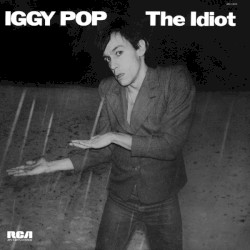

同在 1977 年发行