乐单
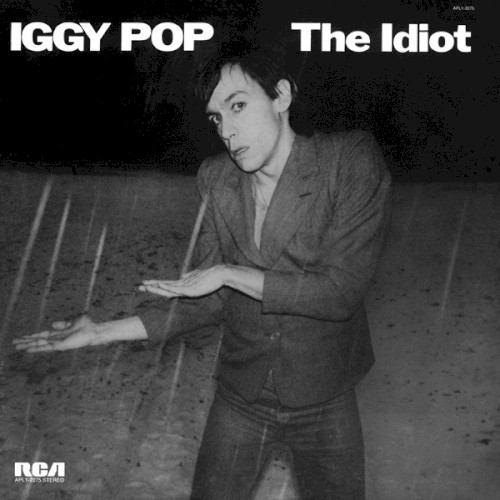
白痴 (1977)
曲目
- A1Sister Midnight4:20
- A2Nightclubbing4:15
- A3Funtime2:55
- A4Baby3:25
- A5China Girl5:08
- B1Dum Dum Boys7:12
- B2Tiny Girls3:00
- B3Mass Production8:24
8 首 · 约 39 分钟 · 依据 1977-03-18 US 发行的版本,在 MusicBrainz 看这个版本。
介绍
这个词条没有中文维基百科条目,下面是英文维基百科的原文。
The Idiot is the debut solo studio album by the American musician Iggy Pop, released on March 18, 1977, through RCA Records. It was produced by David Bowie and primarily recorded at the Château d'Hérouville in Hérouville, France. The album followed the break-up of Pop's band the Stooges in 1974 and a period of drug addiction for both Pop and Bowie, after which the two moved to Europe in an effort to kick their addictions.
Described by Pop as "a cross between James Brown and Kraftwerk", The Idiot marks a departure from the proto-punk of the Stooges to a more subdued, mechanical sound with electronic overtones. Recording for it began at the château in June 1976 and continued into July. Further sessions took place at Musicland Studios in Munich in August. Bowie composed most of the music and contributed a major portion of the instrumentation. Pop wrote most of the lyrics in response to the music Bowie was creating. The album's title was taken from Fyodor Dostoevsky's novel of the same name, while Erich Heckel's painting Roquairol inspired its artwork.
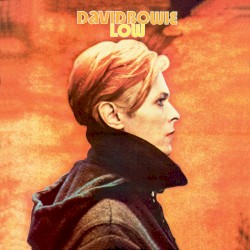
After the album was completed, Bowie began recording his next album Low, which features a sound similar to The Idiot. Low was released in January 1977 and was a commercial success, compelling RCA Records to release The Idiot two months later. Upon its release, the album received divided, albeit largely positive reviews from music critics, many of whom noted a change in musical tone from Pop's earlier work with the Stooges. It charted in the US, the UK, and Australia. It was accompanied by the release of two singles, "Sister Midnight" and "China Girl", in February and May 1977, respectively; Bowie later issued his own version of "China Girl" as a single in 1983.
Pop supported The Idiot with a tour in March and April 1977, with Bowie as his keyboardist. Afterward, the two collaborated again on Pop's second studio album, Lust for Life (1977). Retrospectively, The Idiot has continued to be received positively, with many noting Pop's artistic evolution. However, because Bowie largely created it, fans do not generally consider the album as being representative of Pop's output. It has influenced post-punk, industrial, and gothic acts, including Joy Division.
Background
From the late 1960s to the early 1970s, Iggy Pop was the frontman of the proto-punk band the Stooges. He became known for his wild on-stage behavior and helped garner a cult following for the band. During their tenure, the band had little commercial success and almost all members, including Pop, suffered from drug addictions. In 1971, Pop met musician David Bowie and the two became friends. Bowie was hired to mix the band's 1973 album Raw Power. Soon after its release, the band broke up in 1974 because of infighting, lack of major label support, and Pop's drug addiction, causing Pop and Bowie to stop collaborating. After the break-up, Pop recorded tracks with fellow Stooges member James Williamson, but these were not released until 1977 (as Kill City, credited jointly to Pop and Williamson). Pop tried to establish himself as a solo artist and auditioned to join other bands such as the Doors and Kiss, but these ventures were unsuccessful. Realizing his heroin addiction was destroying him, Pop checked himself into the Neuropsychiatric Institute at the University of California in Los Angeles for help to get sober; Bowie was one of Pop's few visitors during his stay. Pop recalled: "Nobody else came ... not even my so-called friends in LA. But David came." Pop and Bowie reunited in mid-1975 and attempted to record a few tracks, but both men were deep into their drug addictions, so the sessions were mostly unproductive. Bowie commented, "He'll never make it to the recording studios in time. Iggy's doomed."
Pop's stints in rehab in 1974 and 1976 were unsuccessful, and Bowie's biographer, Thomas Jerome Seabrook, described Pop as reaching his "lowest point" in 1976. Knowing he had to become sober, Pop accepted an invitation to join Bowie on his 1976 Isolar Tour. By this point, Bowie also wanted to rid himself of his drug addiction. During the tour, Pop was impressed with Bowie's work ethic, later stating that he learned all of his self-help techniques through Bowie on the tour. There were further talks of Pop recording a solo album with Bowie as producer. Bowie and the guitarist Carlos Alomar had written a new song, "Sister Midnight", and offered it to Pop; Bowie occasionally performed it live on the tour. Toward the end of the tour, both Bowie and Pop knew they wanted to avoid the drug culture of Los Angeles, and decided to move to Europe. At its conclusion, Bowie was initially keen to produce "Sister Midnight" in Munich, Germany, for release as a single. After visiting the Château d'Hérouville in Hérouville, France, the same place Bowie recorded his 1973 album Pin Ups, he instead decided to produce an entire album for Pop there. Bowie booked two months of studio time at the château for later in the summer of 1976.
正文摘自英文维基百科「The Idiot (album)」,按 CC BY-SA 4.0 使用;删去了参考文献、外部链接、表格和图片;篇幅所限只节选了前面一部分,全文见原条目。
资料卡
- 作品性质
- 音乐专辑
- 表演者
- 伊基·波普
- 发行日期
- 1977 年 3 月 18 日
- 时长
- 38 分 49 秒
- 流派
- 后朋克、艺术摇滚、哥德摇滚、工业摇滚
- 语言
- 英语
- 唱片公司
- RCA唱片
- 制作人
- 大卫·鲍伊
资料来自 Wikidata Q970795(CC0)。
制作名单
- 厂牌
- RCA(目录号 APL1-2275)
- 录音室
- 混音:Hansa Tonstudio I(Berlin);录音:Château d'Hérouville(Hérouville);录音:Musicland Studios(München);录音:Hansa Tonstudio I(Berlin)
制作
- 制作人
- Tony Visconti、大卫·鲍伊
- 工程师
- Laurent Thibault
演奏与演唱
- 主唱
- 伊基·波普
- 吉他
- Phil Palmer(其中 7 首)、Carlos Alomar(第 A1 首)、大卫·鲍伊(第 A1 首)
- 和声
- 大卫·鲍伊(其中 7 首)、伊基·波普(第 A3、A4 首)、Phil Palmer(第 A3 首)
- 钢琴
- 大卫·鲍伊(第 A4、B1、B2、B3 首)
- 鼓
- Michel Santangeli(第 A3、A4、B2 首)、Dennis Davis(第 A1 首)
- 合成器
- 大卫·鲍伊(第 A4、B1、B3 首)
- 贝斯
- Laurent Thibault(第 A4、A5、B2 首)、George Murray(第 A1 首)
- 电钢琴
- 大卫·鲍伊(第 A1 首)
- 铃鼓
- Dennis Davis(第 A1 首)、Michel Santangeli(第 A5 首)
- 鼓机
- 大卫·鲍伊(第 A2 首)
- 演奏
- Dennis Davis(第 A2 首)
- 中音萨克斯
- 大卫·鲍伊(第 A5 首)
- 玩具钢琴
- 大卫·鲍伊(第 A5 首)
- 风琴
- 大卫·鲍伊(第 B2 首)
- 次中音萨克斯
- 大卫·鲍伊(第 B2 首)
词曲与编曲
- 词曲
- 大卫·鲍伊(第 A2、A3、A4、A5、B1、B3 首)、伊基·波普(第 A2、A3、A4、A5、B1、B3 首)
- 作曲
- 大卫·鲍伊(第 A1、B2 首)、伊基·波普(第 A1、B2 首)、Carlos Alomar(第 A1 首)
- 作词
- 大卫·鲍伊(第 A1、B2 首)、伊基·波普(第 A1、B2 首)、Carlos Alomar(第 A1 首)
名单来自 MusicBrainz(CC0)这一发行版本的关系数据,由志愿者录入,不一定齐全。
更多资料与乐评
在哪听
伊基·波普 的其他专辑
艺人页 ›





相似的专辑
同在 1977 年发行