乐单
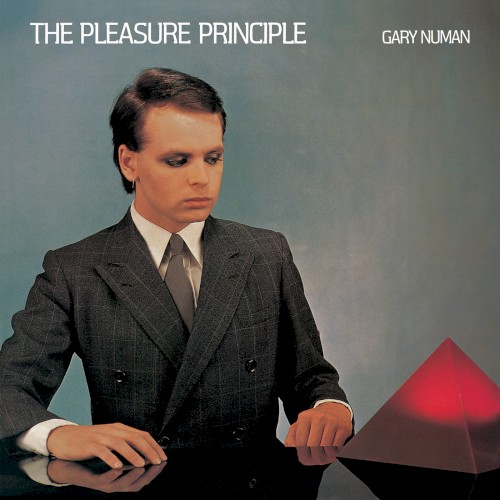
The Pleasure Principle (1979)
曲目
- A1Airlane3:19
- A2Metal3:34
- A3Complex3:12
- A4Films4:11
- A5M.E.5:37
- B1Tracks2:52
- B2Observer2:54
- B3Conversation7:40
- B4Cars4:01
- B5Engineers4:03
10 首 · 约 41 分钟 · 依据 1979-12 US 发行的版本,在 MusicBrainz 看这个版本。
介绍
这个词条没有中文维基百科条目,下面是英文维基百科的原文。
The Pleasure Principle is the debut solo studio album by the English new wave musician Gary Numan, released on 7 September 1979 by Beggars Banquet Records. The album came about six months after Replicas (1979), his second and final studio album with the band Tubeway Army. The Pleasure Principle peaked at No. 1 on the UK Albums Chart.
The album features his biggest hit, "Cars".
Recording
Following Replicas, Numan recruited a permanent drummer and a keyboard player and demoed an album's worth of new material in April 1979. This was before the single "Are "Friends" Electric?" from the previous album had been released. A second session that yielded four further songs followed some weeks later. The day after "Are "Friends" Electric?" reached number one on the UK Singles Chart, Numan and his band recorded four of the new songs in a session for John Peel, credited to Gary Numan and dropping the group name Tubeway Army. By the time Replicas reached number one on the albums chart The Pleasure Principle was being recorded at Marcus Music Studio, London.
Composition and release
The Pleasure Principle has been described as featuring synth-pop, electropop, new wave, and electronica throughout. Numan completely abandoned electric guitar on the album. This change, coupled with frequent use of synthetic percussion, produced the most purely electronic and robotic sound of his career. In addition to the Minimoog synthesizer employed on his previous album, Numan made liberal use of the Polymoog keyboard, particularly its distinctive "Vox Humana" preset. Other production tricks included copious amounts of flanging, phasing and reverb, plus the unusual move of including solo viola and violin parts in the arrangements.
Lyrically, the album continued the science fiction-themes of the previous album. While not a theme album the way Replicas was, Numan has described the songs as "more of a collection of thoughts I'd had about the way technology was evolving and where it would take us."
Notable tracks included "Airlane", the lead-off instrumental; "Metal", sung from the perspective of an android longing to be human; "M.E.", standing for "Mechanical Engineering" and told from the perspective of the last machine on Earth, the electronic ballad "Complex", a UK No. 6 single; and "Cars", a worldwide synth-pop hit which reached No. 9 in the U.S. and No. 1 in Canada, helping make The Pleasure Principle Numan's strongest North American showing, but lack of a strong commercial follow-up resulted in him being tagged as a one-hit wonder there.
"Complex", featuring an arrangement including piano, violin (played by Ultravox's Billy Currie) and viola, was chosen as the second single from the album, released in November 1979. Despite its commercial success, peaking at No. 6 in the UK during a nine-week chart run, Numan later regretted the choice of it as a single and that "Metal" should have been released instead.
Title and cover image
The title of the album was taken from the surrealist painting The Pleasure Principle by René Magritte. Subtitled (A portrait of Edward James), it depicts a seated figure whose arms rest on a wooden table upon which lies a small stone, and a ball of light obliterating the figure's head. The cover image of Numan's album is an adaptation of the painting with Numan seated in the same position dressed in a similar suit, but replacing the natural materials (wood and stone) with shiny and glowing artificial objects and futuristic shapes. According to Numan it was "a clear nod towards technology. Where Magritte had a rock on a desk, for example, I had a glowing purple Perspex pyramid."
Tour
Numan toured throughout the world in support of the album with a huge stage set including banks of neon lights and twin pyramids which moved across the stage via radio control. The live show was captured on record as Living Ornaments '79 (1981) and on video as The Touring Principle. The support act on the UK leg of the tour was Orchestral Manoeuvres in the Dark. An expanded version of Living Ornaments '79 was issued on CD in 2005, and the final show of The Touring Principle was captured on the CD Engineers (released exclusively through Numan's official website) in 2008.
Numan performed a 16-date mini-tour dedicated to the album across the UK and Ireland during November and December 2009, similar to his previous tours for Replicas (1979) and Telekon (1980), performing the album in its entirety. Numan had been scheduled to play the 2010 Coachella Festival in Indio, California but was forced to cancel, due to the Icelandic volcano eruption that disrupted air travel. To make up for this, he embarked upon another 16-date mini-tour of the U.S. that August, again performing The Pleasure Principle in its entirety.
正文摘自英文维基百科「The Pleasure Principle (album)」,按 CC BY-SA 4.0 使用;删去了参考文献、外部链接、表格和图片;篇幅所限只节选了前面一部分,全文见原条目。
资料卡
- 作品性质
- 音乐专辑
- 表演者
- 盖瑞·纽曼
- 发行日期
- 1979 年 9 月 7 日
- 流派
- 新浪潮
- 语言
- 英语
- 唱片公司
- 乞丐宴会唱片、阿特科
资料来自 Wikidata Q941491(CC0)。
制作名单
- 厂牌
- ATCO Records(目录号 SD 38-120)
- 录音室
- 录音:Marcus Studio(London)
制作
- 工程师
- Rikki Sylvan、Harvey Webb
- 混音
- Rikki Sylvan、Harvey Webb
- 制作人
- 盖瑞·纽曼
演奏与演唱
- 贝斯
- Paul Gardiner
- 键盘
- 盖瑞·纽曼、Chris Payne
- 打击乐
- 盖瑞·纽曼、Cedric Sharpley
- 鼓
- Cedric Sharpley
- 主唱
- 盖瑞·纽曼(其中 9 首)
- 小提琴
- Billy Currie(第 B1、B3 首)
- 中提琴
- Chris Payne(第 A3 首)
- 和声
- Garry Robson(第 B3 首)
- 铃鼓
- Cedric Sharpley(第 B4 首)
词曲与编曲
- 作曲
- 盖瑞·纽曼
- 词曲
- 盖瑞·纽曼、Nick Hemming(第 B4 首)
- 作词
- 盖瑞·纽曼(其中 9 首)
名单来自 MusicBrainz(CC0)这一发行版本的关系数据,由志愿者录入,不一定齐全。
更多资料与乐评
在哪听
盖瑞·纽曼 的其他专辑
艺人页 ›
相似的专辑
同在 1979 年发行