乐单
曲目
- A1Beauty and the Beast3:36
- A2Joe the Lion3:07
- A3“Heroes”6:10
- A4Sons of the Silent Age3:19
- A5Blackout3:49
- B1V‐2 Schneider3:11
- B2Sense of Doubt3:58
- B3Moss Garden5:05
- B4Neuköln4:35
- B5The Secret Life of Arabia3:47
10 首 · 约 41 分钟 · 依据 1977 US 发行的版本,在 MusicBrainz 看这个版本。
介绍
《“英雄”》(英语:"Heroes" )是英国歌手兼词曲作家大卫·鲍伊的第12张录音室专辑,1977年10月14日由RCA唱片发行。这也是他与制作人布莱恩·伊诺和托尼·维斯康蒂合作的“柏林三部曲”中的第二部,也是其中唯一一张全部在柏林录制的专辑。《“英雄”》继承了前张专辑中实验性的氛围音乐风格,但流行元素更多,歌词更富激情。
《“英雄”》在柏林三部曲中所受乐评家的好评最多。商业上它也获得了成功,在英国专辑排行榜取得第3的成绩。而专辑同名曲也成为鲍伊最著名和最受好评的歌曲之一。
制作和风格
《“英雄”》录制于西柏林的汉莎录音室。这张专辑反映了柏林这座分裂的城市所代表的冷战的时代精神。联合制作人托尼·维斯康蒂认为,“这是我在专辑制作生涯中最冒险的经历之一。录音室离柏林墙仅约460米,东德卫兵可以用望远镜看到我们的控制室里面。”
受到德国泡菜摇滚影响的鲍伊在这张专辑中表达了自己的敬意:专辑的名字是对德国乐队Neu!的专辑《Neu! '75》 中的歌曲《英雄》("Hero")的致敬,Neu!的吉他手迈克尔·罗瑟也曾被邀请参加专辑的制作。而专辑中歌曲《V-2 施耐德》的灵感则来自发电站乐队的成员弗洛里安·施耐德。
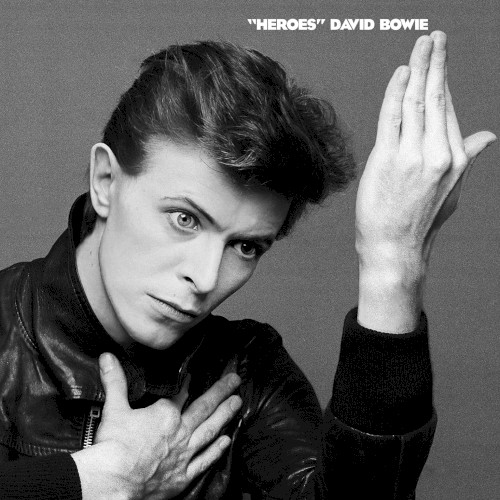
正如伊基·波普与鲍伊合作的专辑《白痴》的封面,《“英雄”》的专辑封面受到了德国艺术家埃里希·赫克尔的画作《罗奎洛》(Roquairol)的启发,并由日本摄影师锄田正义所拍摄。而专辑名字中的引号,是对“英雄”一词,或是对英雄主义概念的讽刺。
尽管《“英雄”》延续了鲍伊音乐创作中的的电子音乐和环境音乐风格,在曲目例如《怀疑感》和《新克尔恩》中加入了许多风格阴暗或有氛围感的器乐。但这张专辑仍被认为是富有激情、积极向上的作品,尤其是与之前风格较为忧郁的专辑《低》相比。
在专辑录制期间,布莱恩·伊诺使用了他的迂回策略来帮助创作。
发行和影响
RCA唱片用“有旧浪潮。有新浪潮。还有大卫·鲍伊...”(There's Old Wave. There's New Wave. And there's David Bowie ...)的标语来宣传《“英雄”》 。专辑在1977年底发行后广受好评,并被《新音乐快递》和《旋律制造者》评为“年度专辑”。专辑在英国专辑排行榜取得第3的成绩,并连续26周上榜,但在美国却没有那么成功,最高排名只达第35名。
这张专辑产生的影响深远,例子之一便是约翰·列侬在1980年制作专辑《双重幻想》时说,他的目标是“做出和《“英雄”》一样出色的作品”。《滚石》则强调了伊诺在专辑制作中所起到的作用。
制作人员
- 大卫·鲍伊:人声、键盘、吉他、萨克斯风、日本筝、铃鼓、和声、制作人
- 布莱恩·伊诺:合成器、键盘、吉他处理
- 罗伯特·弗里普:主音吉他
- 卡洛斯·阿洛玛:节奏吉他
- 乔治·穆雷:贝斯
- 丹尼斯·戴维斯:鼓,打击乐器
- 托尼·维斯康蒂:打击乐器、和声、制作人
- 安东尼娅·马斯(Antonia Maass):和声
- 科林·瑟斯顿:音频工程师
正文摘自中文维基百科「“英雄”」,按 CC BY-SA 4.0 使用;已转为简体,删去了参考文献、外部链接、表格和图片。
英文维基百科上的更多内容(英文原文,约 3,200 字符)
"Heroes" is the twelfth studio album by the English musician David Bowie, released on 14 October 1977 through RCA Records. Recorded in collaboration with the musician Brian Eno and the producer Tony Visconti, it was the second release of his Berlin Trilogy, following Low, released in January the same year, and the only one wholly recorded in Berlin. Sessions took place in mid-1977 after Bowie completed work on Iggy Pop's second solo album Lust for Life. Much of the same personnel from Low returned for "Heroes", augmented by guitarist Robert Fripp.
The majority of the tracks were composed on the spot in the studio, the lyrics not being written until Bowie stood in front of the microphone. The music builds upon its predecessor's electronic and ambient approaches, albeit with more positive tones, atmospheres and passionate performances. The album also follows the same structure as its predecessor, side one featuring more conventional rock tracks and side two featuring mostly instrumental tracks.
The cover photo, like Iggy Pop's The Idiot, is a nod to the painting Roquairol by the German artist Erich Heckel. Upon release, "Heroes" was a commercial success, peaking at number 3 in the UK and number 35 in the US. It was the best-received work of the Berlin Trilogy on release; NME and Melody Maker each named it their respective album of the year. Bowie promoted the album extensively with television appearances and interviews. He supported Low and "Heroes" on the Isolar II world tour throughout 1978, live performances from which appear on multiple live albums.
"Heroes" has received enduring praise, particularly recognised for Fripp's contributions and the album's place within Bowie's longterm artistic development. Though critical opinion has viewed Low as the more groundbreaking record, "Heroes" is regarded as one of Bowie's best, most influential works. The title track, initially unsuccessful as a single, has remained one of his best-known and most-acclaimed songs. An altered and obscured version of the cover artwork was later used for the cover of The Next Day (2013). "Heroes" has been reissued several times and was remastered in 2017 as part of the box set A New Career in a New Town (1977–1982).
Background
In the second half of 1976, David Bowie and his friend Iggy Pop relocated to the Château d'Hérouville in Hérouville, France, to escape from the drug culture of Los Angeles. There, Bowie produced Pop's debut studio album The Idiot (1977) and recorded his own, Low, in collaboration with the musician Brian Eno and the producer Tony Visconti; the album was the first in what came to be known as Bowie's Berlin Trilogy.
Low was released in January 1977, receiving little to no promotion from both RCA Records and Bowie himself, who instead opted to tour as Pop's keyboardist. After the tour's completion, Bowie and Pop returned to Hansa Tonstudio in West Berlin, where they recorded Pop's next solo album Lust for Life from May to June 1977. By the time he finished Lust for Life, Bowie was ready to begin work on his next record. He and Eno spent a few weeks devising concepts and ideas for the new album before they were joined by Visconti, who was busy with other commitments.
这部分摘自英文维基百科「"Heroes" (album)」,按 CC BY-SA 4.0 使用;删去了参考文献、外部链接、表格和图片;篇幅所限只节选了前面一部分,全文见原条目。
资料卡
- 作品性质
- 音乐专辑
- 表演者
- 大卫·鲍伊
- 发行日期
- 1977 年 10 月 14 日
- 录音地点
- 汉莎录音室
- 时长
- 40 分 00 秒
- 流派
- 艺术摇滚、实验摇滚、电子音乐、艺术流行、氛围音乐
- 语言
- 英语
- 唱片公司
- RCA Victor
- 制作人
- 托尼·维斯康蒂
资料来自 Wikidata Q595352(CC0)。
制作名单
- 厂牌
- RCA(目录号 AFL1-2522)
- 录音室
- 混音:Mountain Studios(Montreux);录音:Hansa Studios(Berlin)
制作
- 助理工程师
- Eugene Chaplin、David Richards
- 工程师
- Colin Thurston、Tony Visconti
- 制作人
- 大卫·鲍伊、Tony Visconti
- 编程
- 布莱恩·伊诺(第 A1、A2、A3、A4、A5、B5 首)、Tony Visconti(第 A2 首)
演奏与演唱
- 模拟合成器
- 布莱恩·伊诺
- 电贝斯
- George Murray(其中 8 首)
- 吉他
- Carlos Alomar(其中 7 首)、罗伯特·弗里普(第 A1、A2、A3、A5 首)
- 和声
- 大卫·鲍伊(第 A1、A2、A3、A4、A5、B5 首)、Tony Visconti(第 A1、A2、A3、A4 首)、Antonia Maass(第 A1、B5 首)
- 主唱
- 大卫·鲍伊(第 A1、A2、A3、A4、A5、B5 首)
- 钢琴
- 大卫·鲍伊(第 A1、A2、A5、B5 首)
- 鼓
- Dennis Davis(第 A1、A2、A3、B1 首)
- 张伯伦键盘
- 大卫·鲍伊(第 A3 首)
- 弦乐合成器
- 大卫·鲍伊(第 A3 首)
- 打击乐
- Tony Visconti(第 A3 首)、Dennis Davis(第 A5 首)
- 次中音萨克斯
- 大卫·鲍伊(第 A4 首)
- 铃鼓
- Dennis Davis(第 A4 首)
- 合成器
- 大卫·鲍伊(第 B1 首)
- 演唱
- 大卫·鲍伊(第 B1 首)
- 筝(日本)
- 大卫·鲍伊(第 B3 首)
- 康加鼓
- Dennis Davis(第 B5 首)
词曲与编曲
- 作曲
- 大卫·鲍伊、布莱恩·伊诺(第 A3、B3、B4、B5 首)、Carlos Alomar(第 B5 首)
- 作词
- 大卫·鲍伊(其中 7 首)
名单来自 MusicBrainz(CC0)这一发行版本的关系数据,由志愿者录入,不一定齐全。
更多资料与乐评
在哪听
大卫·鲍伊 的其他专辑
艺人页 ›


相似的专辑



同在 1977 年发行