乐单
曲目
- 1Next to You2:55
- 2So Lonely4:52
- 3Roxanne3:15
- 4Hole in My Life4:55
- 5Peanuts4:02
- 6Can’t Stand Losing You3:05
- 7Truth Hits Everybody2:55
- 8Born in the 50’s3:44
- 9Be My Girl‐Sally3:24
- 10Masoko Tanga5:42
10 首 · 约 39 分钟 · 依据 1978-11-02 GB 发行的版本,在 MusicBrainz 看这个版本。
介绍
这个词条没有中文维基百科条目,下面是英文维基百科的原文。
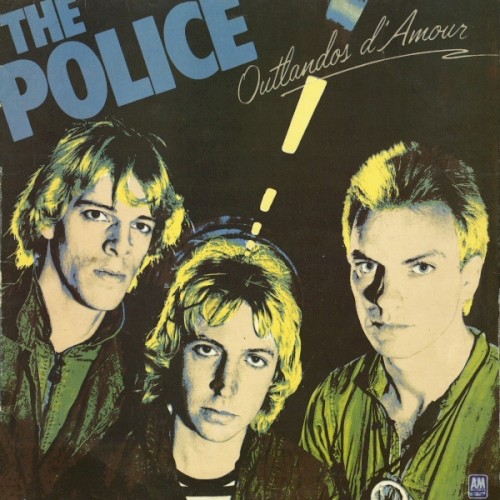
Outlandos d'Amour is the debut studio album by the English rock band the Police, released on 17 November 1978 by A&M Records. Elevated by the success of its lead single, "Roxanne", Outlandos d'Amour peaked at No. 6 on the UK Albums Chart and at No. 23 on the Billboard 200. The album spawned two additional hit singles: "Can't Stand Losing You" and "So Lonely".
Although Outlandos d'Amour received mixed reviews upon its release, it has since been regarded as one of the strongest debut albums ever. Rolling Stone ranked it as the 38th best debut album of all time and the 428th greatest album of all time.
Background and recording
On a budget of £1,500 (£9,000 in 2024) borrowed from their manager, Miles Copeland (brother of drummer Stewart), the Police recorded Outlandos d'Amour at Surrey Sound Studios in an intermittent fashion over six months, with the band recording whenever the studio had free time or another band's sessions were cancelled. Miles Copeland had promised to pay Surrey Sound £2,000 upon completion of the recording, but did not give them the full amount until much later.
Miles occasionally visited the studio during recording, and he reacted to what he heard from the band with vehement derision. However, upon hearing "Roxanne" he had the opposite reaction and took the recording to A&M Records the following day, where he persuaded the record label to release it as a one-off single. Although the single failed to chart, A&M agreed to give the band a second chance with "Can't Stand Losing You". At first, A&M proposed the band create an improved mix of the song, but after five attempts admitted that it could not improve upon the band's mix, and released the original mix for the single. When it became the band's first hit, the label quickly approved the release of the by-then finished album.
Miles had originally wanted to name the album Police Brutality. However, after hearing "Roxanne" and then envisioning a more romantic image for the band, he proposed Outlandos d'Amour instead. This title is a loose French translation of "Outlaws of Love", with the first word being a combination of the words "outlaws" and "commandos", and "d'Amour" meaning "of love".
Music and lyrics
Outlandos d'Amour, while at times incorporating reggae, pop and other elements of what would eventually become the band's definitive sound, is dominated by punk influences. This is evident on the opening track "Next to You", despite it essentially being a love song. Stewart Copeland and guitarist Andy Summers initially felt the lyrics were neither aggressive nor political enough for their style at the time, but bassist and vocalist Sting was adamant about keeping the song as it was. "Next to You" includes a slide guitar solo by Summers, which Copeland initially dismissed as "old wave".
The second track is the reggae-influenced "So Lonely". Sting has said he used Bob Marley's "No Woman, No Cry" as the musical basis for the song, while the lyrics in its verses were recycled from "Fool in Love", a song he originally wrote for his earlier band Last Exit. The song itself, about someone who is lonely after suffering a broken heart, was seen as ironic by a large segment of the band's listeners. Sting disagreed with this sentiment, saying, "No, there's no irony whatsoever. From the outside it might look a bit strange, being surrounded by all this attention and yet experiencing the worst lonely feeling ... but I do. And then suddenly the attention is withdrawn a half an hour later. You're so isolated ..."
"Roxanne" was written by Sting after visiting a red-light district near the band's hotel in Paris. The Police had been staying there in October 1977 to perform at the nearby Nashville Club. The song's title comes from the name of the character in the play Cyrano de Bergerac, an old poster of which was hanging in the hotel foyer. Sting had originally conceived the song as a bossa nova, although Stewart Copeland has been credited for suggesting its final rhythmic form as a tango. During recording, Sting accidentally sat down on a piano keyboard in the studio, resulting in the atonal chord and laughter preserved at the beginning of the track. The Police were initially reluctant about the song, but Miles Copeland was immediately enthusiastic after hearing it.
The remaining two tracks on the first side of the album are "Hole in My Life", another reggae-influenced song by Sting, and "Peanuts", a composition written by Stewart Copeland and Sting about Rod Stewart. The lyrics were meant as an expression of disappointment on Sting's part towards his former idol, of whom he said: "I used to be a great fan of his but something happened to him. I hope I don't end up like that." Having since experienced the celebrity lifestyle himself, he has said he no longer identifies with the song's lyrical content and has come to view Stewart in a different light.
正文摘自英文维基百科「Outlandos d'Amour」,按 CC BY-SA 4.0 使用;删去了参考文献、外部链接、表格和图片;篇幅所限只节选了前面一部分,全文见原条目。
资料卡
- 作品性质
- 音乐专辑
- 表演者
- 警察乐队
- 发行日期
- 1978 年 11 月 2 日
- 时长
- 38 分 14 秒
- 流派
- 摇滚乐
- 语言
- 英语
- 唱片公司
- 阿伯特与莫斯唱片
- 制作人
- Nigel Gray
资料来自 Wikidata Q862386(CC0)。
制作名单
- 厂牌
- A&M Records(目录号 AMLH 68502)
- 录音室
- 录音:Surrey Sound Studios(Leatherhead)
制作
- 制作人
- 警察乐队
- 工程师
- Chris Gray、Nigel Gray
演奏与演唱
- 吉他
- 安迪·萨默斯(其中 9 首)
- 和声
- 安迪·萨默斯
- 鼓
- Stewart Copeland
- 演唱
- 斯汀
- 贝斯
- 斯汀(其中 9 首)
- 电贝斯
- 斯汀(第 2、3 首)
- 电吉他
- 安迪·萨默斯(第 2、3 首)
- 钢琴
- Joe Sinclair(第 4、10 首)、安迪·萨默斯(第 9 首)
- 口琴
- 斯汀(第 2 首)
- 念白
- 安迪·萨默斯(第 9 首)
词曲与编曲
- 编曲
- 警察乐队
- 作曲
- 斯汀、Stewart Copeland(第 5 首)、安迪·萨默斯(第 9 首)
- 作词
- 斯汀、Stewart Copeland(第 5 首)、安迪·萨默斯(第 9 首)
包装与设计
- 美术指导
- Michael Ross
- 摄影
- Janette Beckman
名单来自 MusicBrainz(CC0)这一发行版本的关系数据,由志愿者录入,不一定齐全。
更多资料与乐评
在哪听
警察乐队 的其他专辑
艺人页 ›


相似的专辑


同在 1978 年发行