乐单
曲目
- A1Stephanie Knows Who2:34
- A2Orange Skies2:54
- A3¡Que Vida!3:43
- A4Seven & Seven Is2:19
- A5The Castle3:04
- A6She Comes in Colors2:46
- BRevelation18:56
7 首 · 约 36 分钟 · 依据 1966-11 US 发行的版本,在 MusicBrainz 看这个版本。
介绍
这个词条没有中文维基百科条目,下面是英文维基百科的原文。
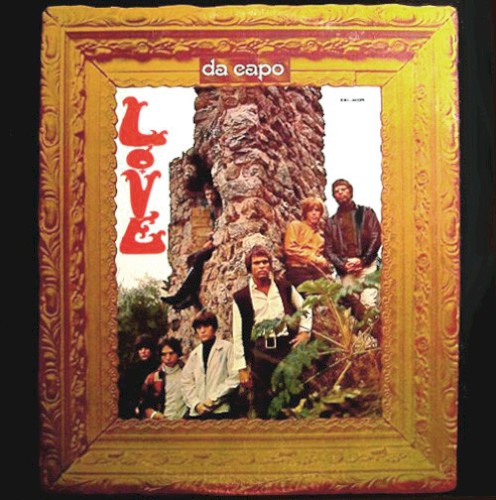
Da Capo is the second studio album by American rock band Love, released in November 1966 by Elektra Records. The album was recorded during September and October 1966 at RCA Studios in Hollywood, California, with the exception of lead single "7 and 7 Is", recorded the previous June. The single was a departure for the band and became their highest charting, reaching No. 33 on the Billboard Hot 100. Despite the success of "7 and 7 Is", a string of well received live performances at the time and contemporary critical acclaim for the album upon its release, it peaked at No. 80 on the Billboard 200.
Prior to the album's recording, the band had grown dissatisfied with Elektra and attempted to leave the label but were placated with a cash advance and an increased royalty rate. The album marked several significant changes for the band, including a new studio (RCA), engineer (Dave Hassinger) and producer (Paul A. Rothchild). Additionally, there were several lineup changes in the band, with drummer Alban "Snoopy" Pfisterer moving to keyboards and Michael Stuart recruited to take his place on drums, as well as the addition of jazz saxophonist and flautist Tjay Cantrelli. The songs were composed by frontman Arthur Lee but "rewritten and rearranged in the studio", with the band members developing their own parts.
In contrast to the band's first album, Love (1966), which had been dominated by garage rock and folk rock, Da Capo features a wide range of musical styles, including psychedelia, baroque pop, jazz, Latin music and proto-punk. The album is also regarded as one of the first examples of "jazz rock", and Lee and guitarist Johnny Echols credited jazz musicians Miles Davis and John Coltrane as having influenced the sound. Some critics have considered Da Capo to be a stylistic bridge between Love and their acclaimed third studio album, Forever Changes (1967), regarding Lee's smoother vocal tone and more autobiographical lyrics on Da Capo to be a harbinger of his work on Forever Changes and later Love albums. The album's title derives from the Italian musical term "da capo", meaning "from the beginning".
Da Capo has been included in several critics' record guides and all-time lists, including John Tobler's 100 Great Albums of the Sixties (1994), Colin Larkin's All Time Top 1000 Albums (2000), Tom Moon's 1,000 Recordings to Hear Before You Die (2008) and Robert Dimery's 1001 Albums You Must Hear Before You Die (2005).
Background
Conflict with Elektra
In March 1966, Love's self-titled debut album, along with the single "My Little Red Book", was released to moderate commercial success, reaching number 57 on the Billboard Top LPs. According to author Barney Hoskyns, the album "trumpeted the presence of a major new musical force on the LA scene". It was also a pivotal release for Elektra Records, giving them their first rock album as well as their first hit single; however, the band quickly grew dissatisfied with the label's production and promotional efforts. In an attempt to get off the label, bandleader Arthur Lee revealed that when he had signed the recording contract on January 4, 1966, he was not yet 21 years old, making the agreement void. This infuriated Elektra president Jac Holzman, who later said: "That was the point in my relationship with Arthur where he moved from being a scoundrel to being totally dishonest ... He said he wasn't making a second album, which meant [if he'd carried out this threat] that Da Capo wouldn't have happened".
An addendum to the contract was made, dated April 25, which gave the band $2,500 in cash and an increase in their royalty rate from 5 to 7 percent; however, it also required them to produce 20 more recordings for Elektra to be released on future albums. Lee later claimed that he also demanded 100% of the publishing rights, but Holzman said this was never agreed on. The contract was then notarized on May 6 to prevent further issues regarding the members' ages; Holzman also ensured that a photocopy of Lee's driver's license was stapled to the document.
"7 and 7 Is" and lineup changes
On June 17 and 20, Love recorded their second single, "7 and 7 Is". The song was a radical departure from the band's original folk rock sound; biographer John Einarson writes that it was "like nothing anyone had either conceived or heard before ... a loud, aggressive, no-holds-barred, garage-style punk song, a decade before that musical term was current." Despite being a creative success, however, the song's recording sessions, held at Sunset Sound Recorders with Holzman producing and Bruce Botnick engineering, were the last to feature the five-piece lineup of the debut album. Due to drummer Alban "Snoopy" Pfisterer's limited abilities, he and Lee took turns attempting the song's intense drum part. Pfisterer later said: "The session was a nightmare ... I had blisters on my fingers. I don't know how many times I tried to play that damn thing and it just wasn't coming out. Arthur would try it; then I'd try it. Finally I got it. He couldn't do it."
正文摘自英文维基百科「Da Capo (Love album)」,按 CC BY-SA 4.0 使用;删去了参考文献、外部链接、表格和图片;篇幅所限只节选了前面一部分,全文见原条目。
资料卡
- 作品性质
- 音乐专辑
- 表演者
- Love
- 发行日期
- 1966 年 11 月
- 时长
- 35 分 54 秒
- 流派
- 迷幻摇滚
- 语言
- 英语
- 唱片公司
- 艾丽卡唱片、犀牛娱乐公司
- 制作人
- Paul A. Rothchild
资料来自 Wikidata Q647700(CC0)。
制作名单
- 厂牌
- Elektra(目录号 EKS-74005)
制作
- 工程师
- Bruce Botnick、David Hassinger
- 制作人
- Paul A. Rothchild
词曲与编曲
- 作曲
- Arthur Lee(第 A1、A4、A6 首)、Bryan MacLean(第 A2 首)
- 作词
- Arthur Lee(第 A1、A4、A6 首)、Bryan MacLean(第 A2 首)
- 词曲
- Johnny Echols(第 B 首)、Ken Forssi(第 B 首)、Arthur Lee(第 B 首)、Bryan MacLean(第 B 首)
名单来自 MusicBrainz(CC0)这一发行版本的关系数据,由志愿者录入,不一定齐全。
更多资料与乐评
在哪听
Love 的其他专辑
艺人页 ›


同在 1966 年发行