乐单
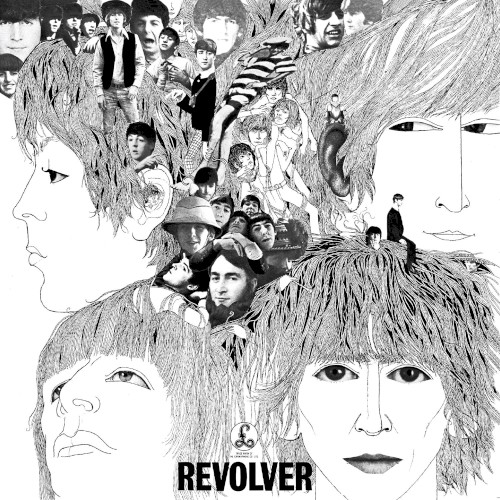
Revolver (1966)
滚石 500(2020) #11滚石 500(2003) #31001 张专辑
- 艺人
- 披头士乐队
- 发行
- 1966-08-05
- 类型
- 专辑
- 唱片公司
- Parlophone
- 制作人
- 乔治·马丁
- 版本
- MusicBrainz 上有 62 个发行版本
曲目
- A1Taxman2:36
- A2Eleanor Rigby2:11
- A3Love You To3:00
- A4Here, There and Everywhere2:29
- A5Yellow Submarine2:40
- A6She Said She Said2:39
- B1Good Day Sunshine2:08
- B2For No One2:03
- B3I Want to Tell You2:30
- B4Got to Get You Into My Life2:31
- B5Tomorrow Never Knows3:00
11 首 · 约 28 分钟 · 依据 1966 US 发行的版本,在 MusicBrainz 看这个版本。
介绍
《左轮手枪》(英语:Revolver)是英国摇滚乐团披头士的第七张录音室专辑,音乐制作人乔治·马丁。该专辑由EMI旗下Parlophone唱片于1966年8月5日在英国发行,三天之后于美国发行。这张专辑标志着乐团从1965年的《Rubber Soul》专辑更进一步,更专注于录音室音乐的创新与制作,一年后于《佩珀军士的孤独之心俱乐部乐队》专辑达到顶峰。
创新风格
《左轮手枪》发布之后,它被广泛评价为“重新定义了流行音乐”的巨作。专辑中的歌曲有不同的音效和声音,包括将磁带向后灌录的歌曲《Tomorrow Never Knows》,而《Eleanor Rigby》歌曲中则运用了弦乐八重奏作背景,《Love You To》则充满印度音乐色彩。新奇的儿童歌曲《Yellow Submarine》,再加上《Eleanor Rigby》作双主打细碟发行,成为全球热播的歌曲。
背景
1965年12月,披头士乐队的专辑《Rubber Soul》获得广泛好评 。《左轮手枪》是这样重新朔造披头士摇滚,作家罗伯特·罗德里格兹写道:“《左轮手枪》被认为是超越了之前五张节拍音乐专辑的重大突破。”1966年1月,乐队为美国巡回演唱的现场录音带进行了配音,载入他们的演唱会纪录片《The Beatles at Shea Stadium》之内。披头士的经纪人布莱恩·爱普斯坦本来打算,乐队将开始为他们的第三部电影工作,但他们未能对剧本一致赞同。后来搁置了电影拍摄,接着有三个月的空档,允许披头士前所未有的时间为新专辑做准备。
专辑名称
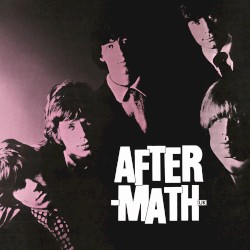
这张专辑的标题,有如《橡皮灵魂》(英语:Rubber Soul)的名称,是一个双关语,指的既是一种手枪,也是播放录音带时转动的齿轮,就像手枪上的轮盘。这个称号披头士是很难想像出来的,根据作家巴里·迈尔斯:这四名队员原本想用的名字是《胡言乱语》(英语:Abracadabra),直到他们发现,另一支乐队已经起用了这个名字。在这之后,他们意见出现分歧:列侬想称它为《永恒三角的四边》(英语:Four Sides of the Eternal Triangle),林戈则开玩笑地建议《地理学后》(英语:After Geography),因为滚石乐队最近发布了专辑《后果》(英语:Aftermath )。其他建议包括《魔术圈》、《披头士的野生动物园》,《钟摆》等,到最后一致赞成起用《左轮手枪》(英语:Revolver)作为专辑名称。这是1966年6月乐队于德国巡回演唱时的选择。
成绩
《左轮手枪》专辑停留在“英国专辑排行榜”达三十四个星期,于1966年8月13日攀上排行榜冠军位置。于北美推出的专辑只有十一首歌曲,它后来打上美国“公告牌排行榜”冠军位置达六个星期。《左轮手枪》于“滚石杂志五百大专辑”名单中排名第三位。2009年9月9日这张专辑以立体声CD形式发行。于2013年,英国唱片业协会改变了其销售奖励规则,《左轮手枪》被认证达到白金销量;它被美国唱片业协会认证有五白金的销量。
正文摘自中文维基百科「左轮手枪 (披头士专辑)」,按 CC BY-SA 4.0 使用;已转为简体,删去了参考文献、外部链接、表格和图片。
英文维基百科上的更多内容(英文原文,约 3,392 字符)
Revolver is the seventh studio album by the English rock band the Beatles. It was released on 5 August 1966, accompanied by the double A-side single "Eleanor Rigby" and "Yellow Submarine". The album was the Beatles' final recording project before their retirement as live performers and marked the group's most overt use of studio technology to date, building on the advances of their late 1965 release Rubber Soul. It has since become regarded as one of the greatest and most innovative albums in the history of popular music, with recognition centred on its range of musical styles, diverse sounds and lyrical content.
The Beatles recorded Revolver after taking a three-month break at the start of 1966, and during a period when London was feted as the era's cultural capital. Regarded by some commentators as the start of the group's psychedelic period, the songs reflect their interest in the drug LSD, Eastern philosophy and the avant-garde while addressing themes such as death and transcendence of material concerns. With no plans to reproduce their new material in concert, the band made liberal use of automatic double tracking, varispeed, reversed tapes, close audio miking, and instruments outside of their standard live set-up. Among its tracks are "Tomorrow Never Knows", incorporating heavy Indian drone and a collage of tape loops; "Eleanor Rigby", a song about loneliness featuring a string octet as its only musical backing; and "Love You To", a foray into Hindustani classical music. The sessions also produced a non-album single, "Paperback Writer", backed with "Rain".
In the United Kingdom, the album's 14 tracks were gradually distributed to radio stations in the weeks before its release. In North America, Revolver was reduced to 11 songs by Capitol Records, with the omitted three appearing on the June 1966 LP Yesterday and Today. The release there coincided with the Beatles' final concert tour and the controversy surrounding John Lennon's remark that the band had become "more popular than Jesus". The album topped the Record Retailer chart in the UK for seven weeks and the US Billboard Top LPs list for six weeks. Critical reaction was highly favourable in the UK but less so in the US amid the press's unease at the band's outspokenness on contemporary issues.
Revolver expanded the boundaries of pop music, revolutionised standard practices in studio recording, advanced principles espoused by the 1960s counterculture, and inspired the development of psychedelic rock, electronica, progressive rock and world music. The album cover, designed by Klaus Voormann, combined Aubrey Beardsley-inspired line drawing with photo collage and won the 1967 Grammy Award for Best Album Cover, Graphic Arts. Aided by the 1987 international CD release, which standardised its content to the original Parlophone version, Revolver has surpassed Sgt. Pepper's Lonely Hearts Club Band (1967) in many critics' estimation as the Beatles' best album. It was ranked first in the 1998 and 2000 editions of Colin Larkin's book All Time Top 1000 Albums and third in the 2003 and 2012 editions of Rolling Stone magazine's list of the "500 Greatest Albums of All Time". It has been certified double platinum by the British Phonographic Industry (BPI) and 5× platinum by the Recording Industry Association of America (RIAA). A remixed and expanded edition of the album was released in 2022.
这部分摘自英文维基百科「Revolver (Beatles album)」,按 CC BY-SA 4.0 使用;删去了参考文献、外部链接、表格和图片;篇幅所限只节选了前面一部分,全文见原条目。
资料卡
- 作品性质
- 音乐专辑
- 表演者
- 披头士乐队
- 发行日期
- 1966 年 8 月 5 日
- 录音地点
- 阿比路录音室
- 时长
- 34 分 40 秒
- 流派
- 摇滚乐、摇滚、迷幻摇滚、交响摇滚
- 语言
- 英语
- 唱片公司
- Parlophone
- 制作人
- 乔治·马丁
- 封面设计
- 克劳斯·福尔曼
资料来自 Wikidata Q185121(CC0)。
制作名单
- 厂牌
- Capitol Records(目录号 T 2576)、Capitol Records(目录号 T-2576)
- 录音室
- 混音:Abbey Road Studios: Studio 3(St John's Wood);录音:Abbey Road Studios: Studio 2(St John's Wood);录音:Abbey Road Studios: Studio 3(St John's Wood);混音:Abbey Road Studios: Studio 2(St John's Wood);混音:Abbey Road Studios: Studio 1(St John's Wood)
制作
- 制作人
- 乔治·马丁
- 工程师
- Geoff Emerick(其中 9 首)
- 助理工程师
- Phil McDonald(第 A1 首)
演奏与演唱
- 鼓
- 林哥·史达(其中 9 首)
- 电贝斯
- 保罗·麦卡特尼(其中 8 首)
- 电吉他
- 乔治·哈里森(第 A1、A3、A4、A6、B3、B4 首)、保罗·麦卡特尼(第 A1、A4、B5 首)、约翰·列侬(第 A6、B4 首)
- 和声
- 约翰·列侬(第 A1、A2、A4、A5、B1、B3 首)、保罗·麦卡特尼(第 A1、A3、A4、A5、B3 首)、乔治·哈里森(第 A2、A4、A5、A6、B1 首)、Neil Aspinall(第 A5 首)、Alf Bicknell(第 A5 首)、Pattie Boyd(第 A5 首)、Terry Condon(第 A5 首)、Geoff Emerick(第 A5 首)、Mal Evans(第 A5 首)、玛丽安娜·费思富尔(第 A5 首)、Brian Jones(第 A5 首)、乔治·马丁(第 A5 首)
- 铃鼓
- 林哥·史达(第 A1、A3、B2、B4、B5 首)、乔治·哈里森(第 A5、B4 首)
- 主唱
- 保罗·麦卡特尼(第 A2、A4、B1、B2、B4 首)、乔治·哈里森(第 A1、A3、B3 首)、约翰·列侬(第 A6、B5 首)、林哥·史达(第 A5 首)
- 哈蒙德风琴
- 约翰·列侬(第 A6、B5 首)
- 钢琴
- 保罗·麦卡特尼(第 B1、B3 首)
- 拍手
- 乔治·哈里森(第 B1、B3 首)、约翰·列侬(第 B1、B3 首)、保罗·麦卡特尼(第 B1、B3 首)、林哥·史达(第 B1、B3 首)
- 沙锤
- 林哥·史达(第 B2、B3 首)
- 牛铃
- 林哥·史达(第 A1 首)
- 小提琴
- Tony Gilbert(第 A2 首)、Jurgen Hess(第 A2 首)、Sidney Sax(第 A2 首)、John Sharpe(第 A2 首)
- 大提琴
- Norman Jones(第 A2 首)、Derek Simpson(第 A2 首)
- 中提琴
- Stephen Shingles(第 A2 首)、John Underwood(第 A2 首)
- 塔布拉鼓
- Anil Bhagwat(第 A3 首)
- 西塔琴
- 乔治·哈里森(第 A3 首)
- 原声吉他
- 乔治·哈里森(第 A3 首)、保罗·麦卡特尼(第 A4 首)、约翰·列侬(第 A5 首)
- 打响指
- 乔治·哈里森(第 A4 首)、约翰·列侬(第 A4 首)、保罗·麦卡特尼(第 A4 首)、林哥·史达(第 A4 首)
- 大鼓
- Mal Evans(第 A5 首)
- 其他乐器
- 乔治·哈里森(第 A5 首)、约翰·列侬(第 A5 首)
- 陶笛
- Brian Jones(第 A5 首)
- 念白
- 约翰·列侬(第 A5 首)
词曲与编曲
- 词曲
- 约翰·列侬(其中 8 首)、保罗·麦卡特尼(其中 8 首)
- 作曲
- 乔治·哈里森(第 A1、A3、B3 首)
- 作词
- 乔治·哈里森(第 A1、A3、B3 首)
名单来自 MusicBrainz(CC0)这一发行版本的关系数据,由志愿者录入,不一定齐全,人数太多只列了前面一部分。
更多资料与乐评
在哪听
披头士乐队 的其他专辑
艺人页 ›
相似的专辑
同在 1966 年发行