乐单
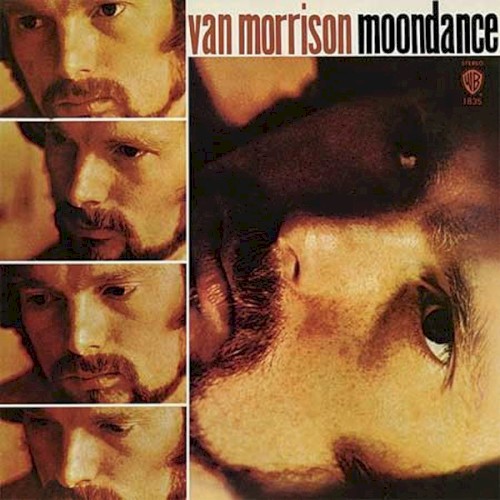
Moondance (1970)
滚石 500(2020) #120滚石 500(2003) #651001 张专辑
- 艺人
- 范·莫里森
- 发行
- 1970-03
- 类型
- 专辑
- 唱片公司
- 华纳兄弟唱片公司
- 制作人
- Lewis Merenstein
- 版本
- MusicBrainz 上有 31 个发行版本
曲目
- A1And It Stoned Me4:34
- A2Moondance4:37
- A3Crazy Love2:37
- A4Caravan5:03
- A5Into the Mystic3:30
- B1Come Running2:32
- B2These Dreams of You3:54
- B3Brand New Day5:11
- B4Everyone3:34
- B5Glad Tidings3:42
10 首 · 约 39 分钟 · 依据 1970-03 US 发行的版本,在 MusicBrainz 看这个版本。
介绍
这个词条没有中文维基百科条目,下面是英文维基百科的原文。
Moondance is the third studio album by Northern Irish singer-songwriter Van Morrison. It was released on 27 January 1970 by Warner Bros. Records. After the commercial failure of his first Warner Bros. album Astral Weeks (1968), Morrison moved to upstate New York with his wife and began writing songs for Moondance. There, he met the musicians who would record the album with him at New York City's A & R Studios in August and September 1969.
The album found Morrison abandoning the abstract folk jazz compositions of Astral Weeks in favour of more formally composed songs, which he wrote and produced entirely himself. Its lively rhythm and blues/rock music was the style he would become most known for in his career. The music incorporated soul, jazz, pop, and Irish folk sounds into songs about finding spiritual renewal and redemption in worldly matters such as nature, music, romantic love, and self-affirmation.
Moondance was an immediate critical and commercial success. It helped establish Morrison as a major artist in popular music, while several of its songs became staples on FM radio in the early 1970s. Among the most acclaimed records in pop/rock history, Moondance frequently ranks in professional listings of the greatest albums. In 2013, the album's remastered deluxe edition was released to similar acclaim.
Background
After leaving the rock band Them, Morrison met record producer Bert Berns in New York City and recorded his first solo single, "Brown Eyed Girl", in March 1967 for Berns' Bang Records. When the producer unexpectedly died later that year, Morrison was offered a record deal by Warner Bros. Records executive Joe Smith, who had seen the singer perform at Boston's Catacombs nightclub in August 1968. Smith bought out Morrison's Bang contract, and he was able to record his first album for Warner Bros., Astral Weeks, that year. Although it was later acclaimed by critics, its collection of lengthy, acoustic, revelatory folk jazz songs was not well received by consumers at the time and the album proved to be a commercial failure.
After recording Astral Weeks, Morrison moved with his wife, Janet Planet, to a home on a mountain top in the Catskills near Woodstock, a hamlet in upstate New York with an artistic community. According to Planet, he was influenced by Bob Dylan, who had just moved out of town when Morrison arrived. "Van fully intended to become Dylan's best friend", Planet recalled. "Every time we'd drive past Dylan's house ... Van would just stare wistfully out the window at the gravel road leading to Dylan's place. He thought Dylan was the only contemporary worthy of his attention."
Morrison began writing songs for Moondance in July 1969. Because of Astral Weeks's poor sales figures, the singer wanted to produce a record that would be more accessible and appealing to listeners. "I make albums primarily to sell them and if I get too far out a lot of people can't relate to it", he later said. "I had to forget about the artistic thing because it didn't make sense on a practical level. One has to live." The musicians who went on to record Moondance with Morrison were recruited from Woodstock and would continue working with him for several years, including guitarist John Platania, saxophonist Jack Schroer, bassist John Klingberg, and keyboardist Jef Labes. The singer left after the Woodstock music festival in August attracted an influx of people to the area.
Recording and production
Morrison began recording sessions for Moondance at Century Sound in New York, accompanied by most of the musicians from Astral Weeks and its engineer Brooks Arthur. Lewis Merenstein—Moondance's executive producer—had brought in Astral Weeks session musicians Richard Davis, Jay Berliner, and Warren Smith, Jr. for the first session, but Morrison—according to Platania—"sort of manipulated the situation" and "got rid of them all. For some reason he didn't want those musicians." In place of these jazz-influenced musicians were a horn section and chorus enlisted by Morrison, who Merenstein recalled had grown more confident, outspoken, and independent of the producer. Around this time, the singer made it known to Warner Bros. that he would lead production duties for all his future recordings, which forced producers recruited by the label into assisting roles. It also led to frequent enlisting and dismissal of musicians to meet Morrison's creative vision.
正文摘自英文维基百科「Moondance」,按 CC BY-SA 4.0 使用;删去了参考文献、外部链接、表格和图片;篇幅所限只节选了前面一部分,全文见原条目。
资料卡
- 作品性质
- 音乐专辑
- 表演者
- 范·莫里森
- 发行日期
- 1970 年 1 月 27 日
- 录音地点
- A & R Recording
- 时长
- 38 分 14 秒
- 流派
- 节奏布鲁斯、灵魂乐、摇滚乐、爵士乐、流行音乐、爱尔兰传统音乐
- 语言
- 英语
- 唱片公司
- 华纳兄弟唱片公司
- 制作人
- Lewis Merenstein
- 获奖
- 格莱美名人堂(1999)
资料来自 Wikidata Q1179158(CC0)。
制作名单
- 厂牌
- Warner Bros. Records(目录号 WS 1835)
- 录音室
- 混音:A & R Recording(Manhattan);录音:A&R Recording Studio(New York)
制作
- 执行制作人
- Lewis Merenstein
- 制作人
- 范·莫里森
- 工程师
- Steve Friedberg、Tony May、Elliott Schierer、Neil Schwartz、Shelly Yakus
- 混音
- Elliot Scheiner
演奏与演唱
- 贝斯
- John Klingberg
- 克拉维琴
- Jeff Labes
- 风琴
- Jeff Labes
- 钢琴
- Jeff Labes
- 鼓
- Garry Malabar
- 颤音琴
- Garry Malabar
- 康加鼓
- Guy Masson
- 吉他
- 范·莫里森、John Platania
- 铃鼓
- 范·莫里森
- 中音萨克斯
- Jack Schrorer
- 高音萨克斯
- Jack Schrorer
- 长笛
- Collin Tilton
- 次中音萨克斯
- Collin Tilton
- 主唱
- 范·莫里森(其中 9 首)
- 和声
- Judy Clay(第 A3、B3 首)、茜茜·休斯顿(第 A3、B3 首)、Jackie Verdell(第 A3、B3 首)
词曲与编曲
- 作曲
- 范·莫里森
- 作词
- 范·莫里森
包装与设计
- 设计
- Bob Cato
- 摄影
- Elliott Landy
名单来自 MusicBrainz(CC0)这一发行版本的关系数据,由志愿者录入,不一定齐全。
更多资料与乐评
在哪听
范·莫里森 的其他专辑
艺人页 ›
相似的专辑
同在 1970 年发行