乐单
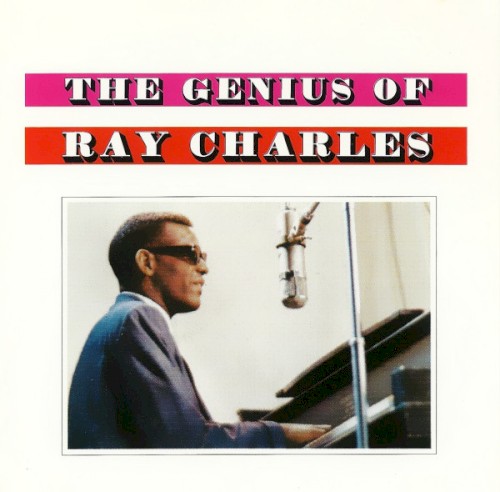
曲目
- A1Let the Good Times Roll2:54
- A2It Had to Be You2:45
- A3Alexander's Ragtime Band2:54
- A4Two Years of Torture3:26
- A5When Your Lover Has Gone2:52
- A6'Deed I Do2:28
- B1Just for a Thrill3:26
- B2You Won't Let Me Go3:22
- B3Tell Me You'll Wait for Me3:25
- B4Don't Let the Sun Catch You Cryin'3:47
- B5Am I Blue3:40
- B6Come Rain or Come Shine3:39
12 首 · 约 39 分钟 · 依据 1959 US 发行的版本,在 MusicBrainz 看这个版本。
介绍
这个词条没有中文维基百科条目,下面是英文维基百科的原文。
The Genius of Ray Charles is the sixth studio album by Ray Charles, released in October 1959 by Atlantic Records. The album consists of swinging pop with big band arrangements. It comprises a first half of big band songs and a second half of string-backed ballads. The Genius of Ray Charles sold fewer than 500,000 copies and charted at number 17 on the Billboard 200. "Let the Good Times Roll" and "Don't Let the Sun Catch You Cryin'" were released as singles in 1959.
Composition
The album showcased Charles' breakout from rhythm and blues and onto a broader musical stage. Atlantic Records gave him full support in production and arrangements. As originally presented, the A side of the album featured the Ray Charles band with David "Fathead" Newman supplemented by players from the Count Basie and Duke Ellington bands, and arrangements by Quincy Jones.
The B side of the original album consists of six ballads with arrangements by Ralph Burns and a large string orchestra. Charles's performance of "Come Rain or Come Shine", a song identified with Frank Sinatra, brought public attention to his voice alone without the "distractions" of his soulful piano and his snappy band.
Each side contains a tribute to Louis Jordan with two songs he had hits with "Let the Good Times Roll" and "Don't Let the Sun Catch You Cryin'".
Critical reception
In a contemporary review, Joe Goldberg of the American Record Guide panned the arrangements as "hopelessly banal and inadequate, saved only" by the piano playing of Charles, who "comes through beautifully", and felt that only the last three songs give the album "its importance". He called "Am I Blue?" the album's highlight and "almost unbearably poignant, with the same feeling of deep sensibility transcending limited vocal equipment that can be heard on Walter Huston's recording of 'September Song', or Adolph Green's of 'A Quiet Girl'".
In a retrospective review for AllMusic, music critic Scott Yanow wrote that "Charles' voice is heard throughout in peak form, giving soul to even the veteran standards." In a 1990 review of its CD reissue, Lloyd Sachs of the Chicago Sun-Times wrote that The Genius of Ray Charles is "one of the all-time great albums. But it is not, alas, one of all the all-time great CDs. The sound is extremely harsh, exaggerating the partially hidden flaws of the original ... Still, the glory of Charles' singing and the ace arrangements ... have a way of breaking down resistance." In 2000, Q magazine included The Genius of Ray Charles in their list of the Best Soul Albums of All Time and wrote that it "finds the great man swinging, emoting, cajoling and laughing his way through a selection of standards that he makes his own ... it exudes pure class."
It was voted number 390 in Colin Larkin's All Time Top 1000 Albums 3rd Edition (2000). In 2003, Rolling Stone ranked The Genius of Ray Charles number 263 on their list of the 500 Greatest Albums of All Time, and 265 in a 2012 revised list. In a 2004 review for the magazine, Robert Christgau praised producers Jerry Wexler and Nesuhi Ertegun for persuading "five different arrangers into the subtlest charts of Charles' career". Christgau asserted that "Charles tried many times, but except for Modern Sounds, he never again assembled such a consistent album in this mode." In The Rolling Stone Album Guide (2004), critics J. D. Considine and Michaelangelo Matos said that it is "perhaps the most important of [Charles'] albums for Atlantic", because it "introduces the musical approach he would follow for much of the '70s". They argued that, instead of pursuing the contemporary sounds of Frank Sinatra, Dean Martin, or swing era big bands, Charles played a "curious hybrid of the brassy R&B of his pop-oriented recordings and the showy shmaltz favored by the era's middle-of-the-road acts". However, they cautioned listeners that the album was "abysmally recorded, with frequent overmodulation muddying its brasher moments."
Personnel
- Side one
- Ray Charles - vocals, piano
- Clark Terry - trumpet
- Ernie Royal - trumpet
- Joe Newman - trumpet
- Snooky Young - trumpet
- Marcus Belgrave - trumpet
- John Hunt - trumpet
- Melba Liston - trombone
- Quentin Jackson - trombone
- Thomas Mitchell - trombone
- Al Grey - trombone
- Frank Wess - flute, alto saxophone and tenor saxophone
- Marshal Royal - alto saxophone
Paul Gonsalves - tenor saxophone (and solo on "Two Years of Torture")
Zoot Sims - tenor saxophone (on "Let the Good Times Roll", "Alexander's Ragtime Band" and "'Deed I Do")
Billy Mitchell - tenor saxophone (on "It had to be You", "Two Years of Torture" and "When Your Lover Has Gone")
David "Fathead" Newman - tenor saxophone (and solos on "Let the Good Times Roll", "When Your Lover Has Gone", "'Deed I Do")
- Quincy Jones – arranger, conductor on A1 and A6
- Ernie Wilkins - arrangement on A2
- Ralph Burns - arrangements on A3 and side 2
- Johnny Acea - arrangement on A4
- Al Cohn - arrangement on A5
- Side two
- Ray Charles - piano and vocals
- Allen Hanlon - guitar
- Wendell Marshall - string bass
- Ted Sommer - drums
- Bob Brookmeyer - valve trombone
正文摘自英文维基百科「The Genius of Ray Charles」,按 CC BY-SA 4.0 使用;删去了参考文献、外部链接、表格和图片;篇幅所限只节选了前面一部分,全文见原条目。
资料卡
- 作品性质
- 音乐专辑
- 表演者
- 雷·查尔斯
- 发行日期
- 1959 年 10 月
- 流派
- 传统流行乐
- 语言
- 英语
- 唱片公司
- 大西洋唱片
- 制作人
- 内苏希·艾特根
资料来自 Wikidata Q846519(CC0)。
制作名单
- 厂牌
- Atlantic(目录号 1312)
- 录音室
- 录音:6 West Recording(New York);录音:Atlantic Studios(Midtown Manhattan)
制作
- 制作人
- Nesuhi Ertegun、Jerry Wexler、Ahmet Ertegun(第 A1、B1 首)
演奏与演唱
- 钢琴
- 雷·查尔斯
- 演唱
- 雷·查尔斯
- 小号
- Marcus Belgrave(第 A1、A2、A3、A4、A5、A6 首)、Joe Newman(第 A1、A2、A3、A4、A5、A6 首)、Ernie Royal(第 A1、A2、A3、A4、A5、A6 首)、克拉克·泰瑞(第 A1、A2、A3、A4、A5、A6 首)、Snookie Young(第 A1、A2、A3、A4、A5、A6 首)
- 次中音萨克斯
- Paul Gonsalves(第 A1、A2、A3、A4、A5、A6 首)、David “Fathead” Newman(第 A1、A2、A3、A4、A5、A6 首)、Zoot Sims(第 A1、A3、A6 首)、Billy Mitchell(第 A2、A4、A5 首)
- 长号
- Quentin Jackson(第 A1、A2、A3、A4、A5、A6 首)、Melba Liston(第 A1、A2、A3、A4、A5、A6 首)
- 中音萨克斯
- Marshall Royal(第 A1、A2、A3、A4、A5、A6 首)
- 长笛
- 弗兰克·韦斯(第 A1、A2、A3、A4、A5、A6 首)
- 萨克斯
- 弗兰克·韦斯(第 A1、A2、A3、A4、A5、A6 首)
- valve trombone
- Bob Brookmeyer(第 B1、B2、B3、B4、B5、B6 首)
- 贝斯
- Wendell Marshall(第 B1、B2、B3、B4、B5、B6 首)
- 吉他
- Allen Hanlon(第 B4 首)
- 鼓
- Ted Sommer(第 B4 首)
- 和声
- [unknown](第 B4 首)
词曲与编曲
- 编曲
- 昆西·琼斯(第 A1、A2、A3、A4、A5、A6 首)、Ralph Burns(第 B1、B2、B3、B4、B5、B6 首)、Vance Thompson(第 B1 首)
- 词曲
- Fleecie Moore(第 A1 首)、Sam Theard(第 A1 首)、Percy Mayfield(第 A4 首)、Charles Morris(第 A4 首)、Bud Allen(第 B2 首)、Buddy Johnson(第 B2 首)、查尔斯·布朗(第 B3 首)、Oscar Moore(第 B3 首)
- 作曲
- Isham Jones(第 A2 首)、欧文·伯林(第 A3 首)、Einar Aaron Swan(第 A5 首)、Fred Rose(第 A6 首)、Lil Hardin Armstrong(第 B1 首)、Joe Greene(第 B4 首)、Harry Akst(第 B5 首)、哈罗德·阿兰(第 B6 首)
- 作词
- Gus Kahn(第 A2 首)、欧文·伯林(第 A3 首)、Einar Aaron Swan(第 A5 首)、Walter Hirsch(第 A6 首)、Don Raye(第 B1 首)、Joe Greene(第 B4 首)、Grant Clarke(第 B5 首)、Johnny Mercer(第 B6 首)
名单来自 MusicBrainz(CC0)这一发行版本的关系数据,由志愿者录入,不一定齐全。
更多资料与乐评
在哪听
雷·查尔斯 的其他专辑
艺人页 ›
相似的专辑


同在 1959 年发行