乐单
曲目
- A1Black Dog4:57
- A2Rock and Roll3:41
- A3The Battle of Evermore5:52
- A4Stairway to Heaven8:03
- B1Misty Mountain Hop4:39
- B2Four Sticks4:45
- B3Going to California3:32
- B4When the Levee Breaks7:08
8 首 · 约 43 分钟 · 依据 1971-11-08 US 发行的版本,在 MusicBrainz 看这个版本。
介绍
《Led Zeppelin IV》(又名"ZOSO"、"Four Symbols"、"Untitled, Runes")是英国摇滚乐团齐柏林飞船乐队发行的第四张专辑,被歌迷们誉为摇滚乐史上最杰出的专辑之一。专辑发售时并没有标题,但作为乐队的第四张专辑,后通称《Led Zeppelin IV》。专辑中著名的作品为《通往天堂的阶梯》(Stairway to Heaven),被誉为摇滚史诗。
奖项及认证
在2000年,此专辑被 Q 杂志评选为史上第26佳的英文专辑。在2002年,Spin杂志的Chuck Klosterman将此称作第二伟大的金属专辑,并说它是世上曾录制过最有名的硬摇滚专辑。在2003年,滚石杂志将其评选为500张最伟大专辑中的第69名。它也被 Pitchfork Media选为1970年代中第七伟大的专辑。
参与制作的成员
- 约翰·博纳姆 - 爵士鼓、打击乐器
- 约翰·保罗·琼斯 - 贝斯、电钢琴、直笛、EMS VCS 3;"Going to California"中担任曼陀林、"The Battle of Evermore"中担任民谣吉他
- 吉米·佩奇 - 电吉他与民谣吉他、音乐制作、音频母带调整、数位修复;"The Battle of Evermore"中担任曼陀林
- 罗伯特·普兰特 - 主唱及背景和声、铃鼓;"When the Levee Breaks"中担任口琴
- 桑迪·丹尼 - "The Battle of Evermore"中的主唱
- 艾恩·史都华 - "Rock and Roll"中担任钢琴
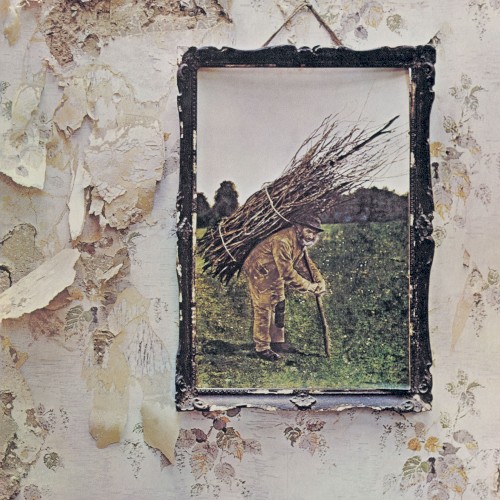
- Barrington Colby M.O.M. - 专辑封面绘制
- George Chkiantz - 混音
- 彼得·格兰特 - 音乐发行
- Graphreaks – 设计协调
- Andy Johns – 音讯工程、混音
Joe Sidore – 音频母带调整(1984年光碟版)
George Marino – 音频母带调整(1990年光碟再版)
正文摘自中文维基百科「Led Zeppelin IV」,按 CC BY-SA 4.0 使用;已转为简体,删去了参考文献、外部链接、表格和图片。
英文维基百科上的更多内容(英文原文,约 2,995 字符)
The untitled fourth studio album by the English rock band Led Zeppelin, commonly known as Led Zeppelin IV, was released on 8 November 1971, by Atlantic Records. It was produced by the band's guitarist, Jimmy Page, and recorded between December 1970 and February 1971, mostly in the country house Headley Grange. The album contains one of the band's best-known recordings, the eight-minute-long "Stairway to Heaven".
The informal recording environment inspired the band, allowing them to try different arrangements of material and create songs in various styles. After the previous album Led Zeppelin III (1970) received lukewarm reviews from critics, they decided their fourth album would officially be untitled and represented instead by four symbols – one chosen by each band member – without featuring the name or any other details on the cover. Unlike the prior two albums, the band was joined by guest musicians: singer Sandy Denny on "The Battle of Evermore", and pianist Ian Stewart on "Rock and Roll". As with prior albums, most of the material was written by the band, though there was one cover song, a hard rock re-interpretation of the Memphis Minnie blues song "When the Levee Breaks".
Led Zeppelin IV was an immediate critical and commercial success and is Led Zeppelin's best-selling album, having sold over 37 million copies worldwide. It is one of the best-selling albums in the United States and of all time, while critics have regularly placed it high on lists of the greatest albums of all time.
Writing and recording
Following the release of Led Zeppelin III in October 1970, the group took a break from live performances to concentrate on recording a follow-up. They turned down all touring offers, including a proposed New Year's Eve gig that would have been broadcast on television. They returned to Bron-Yr-Aur, a country house in Snowdonia, Wales, to write new material.
Recording sessions for the album began at Island Records' new studios on Basing Street in London on 5 December 1970, with the recording of "Black Dog". The group had considered Mick Jagger's home, Stargroves as a recording location, but decided it was too expensive. They subsequently moved the following month to Headley Grange, a country house in Hampshire, England, using the Rolling Stones Mobile Studio and engineer Andy Johns, with the Stones' Ian Stewart assisting. Johns had just worked on engineering Sticky Fingers and recommended the mobile studio. Guitarist and producer Jimmy Page later recalled: "We needed the sort of facilities where we could have a cup of tea and wander around the garden and go in and do what we had to do." This relaxed, atmospheric environment at Headley Grange also provided other advantages for the band, as they were able to capture spontaneous performances immediately, with some tracks arising from the communal jamming. Bassist and keyboardist John Paul Jones remembered there was no bar or leisure facilities, but this helped focus the group on the music without being distracted.
这部分摘自英文维基百科「Led Zeppelin IV」,按 CC BY-SA 4.0 使用;删去了参考文献、外部链接、表格和图片;篇幅所限只节选了前面一部分,全文见原条目。
资料卡
- 作品性质
- 音乐专辑
- 表演者
- 齐柏林飞船、桑迪·丹尼、伊恩·史都华
- 发行日期
- 1971 年 11 月 8 日
- 录音地点
- 奥林匹克录音室
- 时长
- 42 分 39 秒
- 流派
- 硬式摇滚、摇滚、蓝调摇滚、民谣摇滚、重金属音乐、英国摇滚乐
- 语言
- 英语
- 唱片公司
- 大西洋唱片
- 制作人
- 吉米·佩奇
- 作曲
- 吉米·佩奇、罗伯特·普兰特、约翰·保罗·琼斯、约翰·博纳姆
- 上一部
- Led Zeppelin III
- 下一部
- Houses of The Holy
资料来自 Wikidata Q201940(CC0)。
制作名单
- 厂牌
- Atlantic(目录号 SD 7208)
- 录音室
- 混音:Basing Street Studios(Notting Hill);录音:Basing Street Studios(Notting Hill);录音:Headley Grange(Hampshire);混音:Sunset Sound(Hollywood)
制作
- 工程师
- Andy Johns
- 执行制作人
- Peter Grant
- 制作人
- 吉米·佩奇
- 混音
- Andy Johns(其中 7 首)、George Chkiantz(第 A3 首)
演奏与演唱
- 主唱
- 罗伯特·普兰特(第 A1 首)、桑迪·丹尼(第 A3 首)
- 鼓类乐器
- John Bonham
- 贝斯
- 约翰·保罗·琼斯
- 键盘
- 约翰·保罗·琼斯
- 曼陀林
- 约翰·保罗·琼斯、吉米·佩奇
- 竖笛
- 约翰·保罗·琼斯
- 合成器
- 约翰·保罗·琼斯
- 原声吉他
- 吉米·佩奇
- 电吉他
- 吉米·佩奇
- 口琴
- 罗伯特·普兰特
- 鼓
- John Bonham(第 A1 首)
- 电贝斯
- 约翰·保罗·琼斯(第 A1 首)
- 和声
- 罗伯特·普兰特(第 A1 首)
词曲与编曲
- 词曲
- 吉米·佩奇、罗伯特·普兰特、约翰·保罗·琼斯(第 A1、A2、B1、B4 首)、John Bonham(第 A2、B4 首)、Memphis Minnie(第 B4 首)
名单来自 MusicBrainz(CC0)这一发行版本的关系数据,由志愿者录入,不一定齐全。
更多资料与乐评
在哪听
齐柏林飞船 的其他专辑
艺人页 ›

桑迪·丹尼 的其他专辑
艺人页 ›






相似的专辑


同在 1971 年发行