乐单
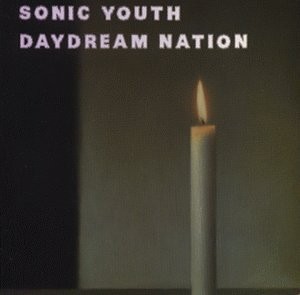
Daydream Nation (1988)
滚石 500(2020) #171滚石 500(2003) #3291001 张专辑
- 艺人
- 音速青年
- 发行
- 1988-10
- 类型
- 专辑
- 唱片公司
- Enigma Records、Blast First
- 制作人
- 音速青年、Nick Sansano
- 版本
- MusicBrainz 上有 22 个发行版本
曲目
- 1Teen Age Riot6:59
- 2Silver Rocket3:48
- 3The Sprawl7:42
- 4’Cross the Breeze7:01
- 5Eric’s Trip3:49
- 6Total Trash7:34
- 7Hey Joni4:23
- 8Providence2:42
- 9Candle4:59
- 10Rain King4:39
- 11Kissability3:09
- 12Trilogy: The Wonder / Hyperstation / Eliminator Jr.14:03
12 首 · 约 71 分钟 · 依据 1988 US 发行的版本,在 MusicBrainz 看这个版本。
介绍
这个词条没有中文维基百科条目,下面是英文维基百科的原文。
Daydream Nation is the fifth studio album by the American alternative rock band Sonic Youth, released on October 18, 1988. The band recorded the album between July and August 1988 at Greene St. Recording in New York City, and it was released by Enigma Records as a double album. It would be the band's only release on Enigma, as they would sign with DGC Records for their next album.
After the release of Sister (1987), the band had left SST Records over dissatisfaction with payments, distribution, and the label's administrative practices. Daydream Nation represented a move towards longer songs emblematic of the band's live improvisations. This, in addition to Thurston Moore writing unusually prolifically, would result in the band's first double album.
Pulling from pop culture sources such as William Gibson and Joni Mitchell, the album combines long improvisations, excursions into noise, and faster, poppier melodies, completing the band's evolution that had begun on EVOL (1986). This new direction is exemplified on the opening track, "Teen Age Riot", one of the band's most popular songs.
After Daydream Nation was released, it received widespread acclaim from critics and earned Sonic Youth a major label deal. The album was ranked high in critics' year-end lists of 1988's best records, being voted second in The Village Voice's annual Pazz & Jop poll. Daydream Nation has since been widely considered to be Sonic Youth's magnum opus, as well as one of the greatest albums of all time, specifically having a profound influence on the alternative and indie rock genres. It was chosen by the Library of Congress to be preserved in the National Recording Registry in 2005.
Background
By the release of Sonic Youth's fourth album, Sister, the band had become one of the most acclaimed acts in the American underground, with Sister and their third album, EVOL being rated highly by critics. However, despite this success with their last two albums on the label, the band would decide to leave SST Records, expressing concerns about payments and administrative practices within the label. The band decided to sign with Geffen Records instead, which was distributed by Capitol Records and partly owned by EMI.
Writing and recording
Sonic Youth's standard songwriting method involved Thurston Moore bringing in melody ideas and chord changes that the band would spend several months fashioning into full-length songs. Instead of paring the songs down as the group did with previous records, the months-long writing process for Daydream Nation resulted in long improvisations, some lasting over half an hour. Several friends of the band, including Henry Rollins, had praised the band's long live improvisations and told the group that its records never captured them. With Moore writing prolifically, the album ultimately had to be expanded to a double album.
Sonic Youth recorded Daydream Nation at Greene St. Recording in Manhattan. The studio's engineer, Nick Sansano, was accustomed to working with hip-hop artists; he did not know much about Sonic Youth, but he was aware they had an aggressive sound, so he showed the band members his work on Public Enemy's "Black Steel in the Hour of Chaos" and Rob Base & DJ E-Z Rock's "It Takes Two", which they appreciated. Sonic Youth booked three weeks of recording time at Greene Street's Studio A starting in mid-July 1988. The band paid $1,000 (equivalent to $2,722 in 2025) per day of studio time, which was the most they had paid to record an album up to that point.
Due to the amount of preparation the band put into composing, the recording process was efficient. The sessions became rushed near the end when Paul Smith, the head of the band's British label Blast First, set a mastering date of August 18. As a result of the time pressure, Kim Gordon was not happy with some of her vocal takes. The band spent a whole night creating a final mix for the three-song suite "Trilogy" so it could be mastered the following morning. The record ultimately cost $30,000 (equivalent to $81,669 in 2025), which led Moore to refer to it as "our first non-econo record".
Music and lyrics
Daydream Nation is notable for its unorthodox guitar tuning and song structure, with many songs concluding with lengthy instrumental sections. The album is especially notable for being a significant influence for later alternative and indie rock efforts and genres, including well-known grunge band Nirvana. Lyrics include topics of burnout, the music industry, and the crack epidemic of the late 1980s.
正文摘自英文维基百科「Daydream Nation」,按 CC BY-SA 4.0 使用;删去了参考文献、外部链接、表格和图片;篇幅所限只节选了前面一部分,全文见原条目。
资料卡
- 作品性质
- 音乐专辑
- 表演者
- 音速青年
- 发行日期
- 1988 年 10 月
- 时长
- 1 小时 10 分
- 流派
- 另类摇滚
- 语言
- 英语
- 唱片公司
- Enigma Records、Blast First
- 制作人
- 音速青年、Nick Sansano
资料来自 Wikidata Q902833(CC0)。
制作名单
- 厂牌
- Enigma(目录号 D2-575403)
- 录音室
- 混音:Greene St. Recording(SoHo);录音:Greene St. Recording(SoHo)
制作
- 制作人
- Nick Sansano(第 1 首)、音速青年(第 1 首)
- 母带处理
- Howie Weinberg(第 12 首)
演奏与演唱
- 贝斯
- 金·戈登(其中 11 首)
- 电吉他
- 瑟斯顿·摩尔(其中 11 首)、李·拉纳尔多(其中 11 首)
- 鼓
- Steve Shelley(其中 9 首)
- 主唱
- 瑟斯顿·摩尔(第 1、2、6、9、12 首)、金·戈登(第 3、4、11、12 首)、李·拉纳尔多(第 5、7、10 首)
- 打击乐
- Steve Shelley(第 3、12 首)
- 演唱
- 金·戈登(第 1 首)
- 钢琴
- 瑟斯顿·摩尔(第 8 首)
- 念白
- 麦克·瓦特(第 8 首)
词曲与编曲
- 词曲
- 金·戈登(其中 11 首)、瑟斯顿·摩尔(其中 11 首)、李·拉纳尔多(其中 11 首)、Steve Shelley(其中 11 首)
- 作曲
- 金·戈登(第 8 首)、瑟斯顿·摩尔(第 8 首)、李·拉纳尔多(第 8 首)、Steve Shelley(第 8 首)
名单来自 MusicBrainz(CC0)这一发行版本的关系数据,由志愿者录入,不一定齐全。
更多资料与乐评
在哪听
音速青年 的其他专辑
艺人页 ›




相似的专辑
同在 1988 年发行