乐单
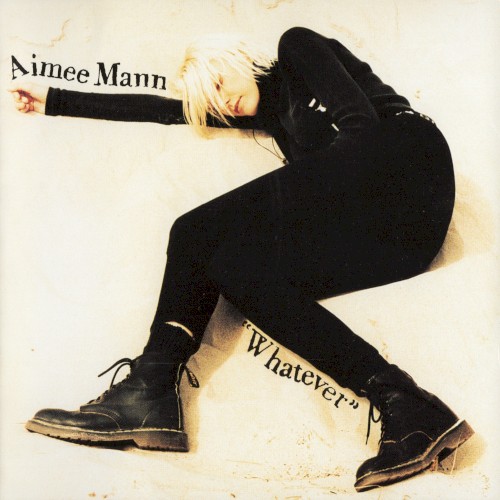
Whatever (1993)
曲目
- 1I Should’ve Known4:54
- 2Fifty Years After the Fair3:46
- 34th of July3:21
- 4Could’ve Been Anyone4:24
- 5Put Me on Top3:29
- 6Stupid Thing4:28
- 7Say Anything4:58
- 8Jacob Marley’s Chain3:02
- 9Mr. Harris4:06
- 10I Could Hurt You Now4:17
- 11I Know There’s a Word3:17
- 12I’ve Had It4:42
- 13Way Back When4:05
13 首 · 约 53 分钟 · 依据 1993-05-11 US 发行的版本,在 MusicBrainz 看这个版本。
介绍
这个词条没有中文维基百科条目,下面是英文维基百科的原文。
Whatever is the first solo album by the American singer-songwriter Aimee Mann, released in 1993. It was produced by Mann, Tony Berg, Michael Hausman and Jon Brion.
Mann recorded Whatever after her previous band, 'Til Tuesday, disbanded. It earned positive reviews but did not meet sales expectations. It was included in the book 1001 Albums You Must Hear Before You Die.
Background
In the 1980s, Mann co-founded the new wave band 'Til Tuesday. They released three albums and disbanded in 1990 when Mann left to pursue a solo career. Mann said later that her musical interests had changed and that she was more interested in "acoustic guitar music".
Michael Hausman, the 'Til Tuesday drummer and Mann's former boyfriend, became her manager. Epic Records did not release Mann from her record contract with 'Til Tuesday for three years, which prevented her from releasing new material. It was the first of several disputes Mann had with record labels, which Hausman said had a lasting effect on her attitude to the music industry.
Recording
Mann recorded Whatever with the producer Jon Brion, a member of the 'Til Tuesday touring band. Mann found working with Brion exciting and felt her songwriting improved with him. She cited English bands such as the Kinks, the Zombies and Squeeze as influences. Mann wrote "I've Had It" about her frustrations with Epic when they would not release her from her record contract, and said it was influenced by Simon & Garfunkel. In an interview in 2018, Mann said she felt "4th of July" was the album's best song.
Reception
Whatever was released in 1993 on the independent label Imago. It earned positive reviews but did not meet sales expectations. As of February 2001, Whatever had sold 170,000 copies in US.
Entertainment Weekly praised the "hooky songs" and "evocative lyrics". The Los Angeles Times wrote that Mann "mixes words like a master, catching lifetimes of ache and Angst", and the Chicago Tribune compared her to Elvis Costello. Rolling Stone cited the melodies as "sunny, surreal" and the lyrics as "razor-sharp". The Independent's Andy Gill highly recommended the album, concluding that "it's the tension between Mann's disarmingly direct, conversational lyric style and the complexity of her musical design that gives Whatever its peculiar charge". In The Village Voice, Robert Christgau cited "Mr. Harris" as a "choice cut".
In 2000, Elvis Costello included Whatever in his list of 500 greatest albums for Vanity Fair. It was included in the book 1001 Albums You Must Hear Before You Die and in Pitchfork's 2022 list of the 150 best albums of the 1990s. In 2003, the English writer Nick Hornby included "I've Had It" in Songbook, a list of songs that changed his life.
Personnel
Aimee Mann – vocals (all songs), electric guitar (1), bass (1–3, 5, 6, 10, 11), Dixie cup (1), acoustic guitar (3, 13), pump organ (4), Mellotron (5), percussion (7), lo-fi acoustic guitar (10), nylon-string guitar (12)
Michael Hausman – drums (3, 10, 13), percussion (4), orchestral percussion (8), bass drum (12), tongue drum (12), congas (12), cymbals (12)
Jim Keltner – drums (2, 5, 6)
Milt Sutton – drums (7)
Jon Brion – drums (1, 4, 11), bass (1, 4, 7, 13), electric guitar (1, 2, 5–7, 10, 12, 13), pump organ (1, 6, 8), Mellotron (1, 3, 4, 5, 7, 8, 10), Chamberlin (1, 4, 6, 8), vocals (1, 2, 4, 5, 7, 10, 13), Optigan (2, 4, 6, 12, 13), glockenspiel (2, 4, 10), tambourine (2, 10), vibraphone (3, 4), guitar (4), piano (4, 6, 7, 9, 10, 12, 13), harmonium (6, 8), acoustic guitar (7), acoustic bass (8), kazoo (8), woodwind arrangement (9), Hammond organ (10, 13), Indian harmonium (10), bass harmonica (10, 12), keyboards (11), cottage organ (12), B-3 organ (12), Wurlitzer organ (12), celesta (12), tack piano (12), piccolo flute (12), bottles (12), turtle guitar (13), toy piano (13), marimba (13), pipes (13)
Buddy Judge – vocals (1, 10–13), acoustic guitar (5, 6, 8, 11, 13), hi-fi acoustic guitar (10), bottles (12), pipes (13)
Todd Nelson – intro guitar (1)
Randy Brion – euphonium (9), trombone (13)
Mike Breaux – oboe (9), bassoon (12)
Roger McGuinn – 12-string electric guitar (2), vocals (2)
David Coleman – electric cello (10)
The Sid Sharp Strings – Sid Sharp (9, 11), Joy Lyle (9, 11), Harry Shirinian (9, 11), Harry Shultz (9, 11)
Jimmie Haskell – string arrangement (9)
正文摘自英文维基百科「Whatever (Aimee Mann album)」,按 CC BY-SA 4.0 使用;删去了参考文献、外部链接、表格和图片。
资料卡
- 作品性质
- 音乐专辑
- 表演者
- 艾美·曼
- 发行日期
- 1993 年
- 流派
- 流行音乐
- 语言
- 英语
- 唱片公司
- 格芬唱片
- 制作人
- 乔恩·布利昂
- 下一部
- I'm with Stupid
资料来自 Wikidata Q249668(CC0)。
制作名单
- 厂牌
- Geffen(目录号 DGCD-24956)
制作
- 制作人
- 乔恩·布利昂
演奏与演唱
- 演唱
- 艾美·曼、乔恩·布利昂(其中 7 首)、Buddy Judge(第 1、10、11、12、13 首)、罗杰·麦奎因(第 2 首)
- 电吉他
- 乔恩·布利昂(其中 8 首)、艾美·曼(第 1 首)
- 美乐特朗
- 乔恩·布利昂(其中 7 首)、艾美·曼(第 5 首)
- 风琴
- 乔恩·布利昂(其中 7 首)
- 贝斯
- 艾美·曼(其中 7 首)、乔恩·布利昂(第 1、4、7、13 首)
- 钢琴
- 乔恩·布利昂(其中 7 首)
- 原声吉他
- Buddy Judge(第 5、6、8、10、11、13 首)、艾美·曼(第 3、10 首)、乔恩·布利昂(第 7 首)
- 张伯伦键盘
- 乔恩·布利昂(第 1、4、6、8 首)
- 鼓
- 乔恩·布利昂(第 1、4、11 首)、Jim Keltner(第 2、5、6 首)、Michael Hausman(第 3、10、13 首)、Milt Sutton(第 7 首)
- 钟琴
- 乔恩·布利昂(第 2、4、10 首)
- 簧风琴
- 乔恩·布利昂(第 6、8、10 首)、艾美·曼(第 4 首)
- 哈蒙德风琴
- 乔恩·布利昂(第 10、12、13 首)
- 铃鼓
- 乔恩·布利昂(第 2、10 首)
- 颤音琴
- 乔恩·布利昂(第 3、4 首)
- 吉他
- 乔恩·布利昂(第 4、13 首)、Todd Nelson(第 1 首)、罗杰·麦奎因(第 4 首)
- 打击乐
- Michael Hausman(第 8、12 首)、艾美·曼(第 7 首)
- 弦乐
- The Sid Sharp Strings(第 9、11 首)
- 低音口琴
- 乔恩·布利昂(第 10、12 首)
- 其他乐器
- 乔恩·布利昂(第 12、13 首)、Buddy Judge(第 12、13 首)、艾美·曼(第 1 首)
- 十二弦吉他
- 罗杰·麦奎因(第 2 首)
- 低音提琴
- 乔恩·布利昂(第 8 首)
- 卡祖笛
- 乔恩·布利昂(第 8 首)
- 双簧管
- Mike Breaux(第 9 首)
- 次中音号
- Randy Brion(第 9 首)
- 电大提琴
- David Coleman(第 10 首)
- 键盘
- 乔恩·布利昂(第 11 首)
- 大管
- Mike Breaux(第 12 首)
- 钢片琴
- 乔恩·布利昂(第 12 首)
- 短笛
- 乔恩·布利昂(第 12 首)
- 钉锤钢琴
- 乔恩·布利昂(第 12 首)
- 沃利策电钢琴
- 乔恩·布利昂(第 12 首)
- 大鼓
- Michael Hausman(第 12 首)
词曲与编曲
- 作词
- 艾美·曼(其中 12 首)、乔恩·布利昂(第 7 首)
- 作曲
- 艾美·曼(其中 11 首)、Jules Shear(第 4 首)、Marty Willson-Piper(第 4 首)、乔恩·布利昂(第 7 首)
- 词曲
- 乔恩·布利昂(第 6 首)、艾美·曼(第 6 首)
- 编曲
- 乔恩·布利昂(第 11 首)
名单来自 MusicBrainz(CC0)这一发行版本的关系数据,由志愿者录入,不一定齐全,人数太多只列了前面一部分。
更多资料与乐评
在哪听
艾美·曼 的其他专辑
艺人页 ›



相似的专辑



同在 1993 年发行