乐单
曲目
- 1Earth Died Screaming3:39
- 2Dirt in the Ground4:09
- 3Such a Scream2:08
- 4All Stripped Down3:03
- 5Who Are You3:57
- 6The Ocean Doesn’t Want Me1:51
- 7Jesus Gonna Be Here3:22
- 8A Little Rain2:59
- 9In the Colosseum4:51
- 10Goin’ Out West3:20
- 11Murder in the Red Barn4:29
- 12Black Wings4:38
- 13Whistle Down the Wind4:36
- 14I Don’t Wanna Grow Up2:31
- 15Let Me Get Up on It0:55
- 16That Feel3:13
16 首 · 约 54 分钟 · 依据 1992-09-08 US 发行的版本,在 MusicBrainz 看这个版本。
介绍
这个词条没有中文维基百科条目,下面是英文维基百科的原文。
Bone Machine is the eleventh studio album by American singer and musician Tom Waits, released by Island Records on September 8, 1992. It won a Grammy Award for Best Alternative Music Album and features guest appearances by David Hidalgo, Les Claypool, Brain, and Keith Richards. The album marked Waits' return to studio albums, coming five years after Franks Wild Years (1987).
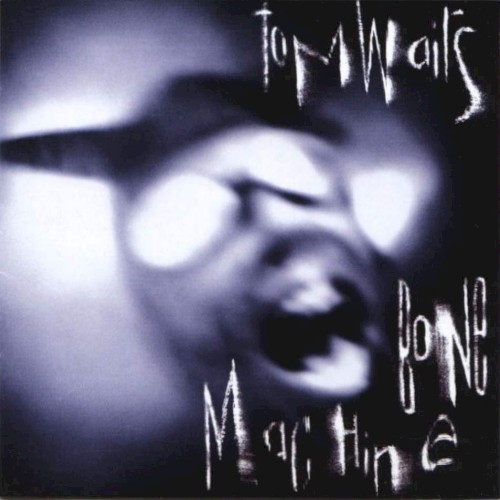
Recorded in a room in the cellar area of Prairie Sun Recording studios, described by Waits as "just a cement floor and a hot water heater", the album is often noted for its rough, stripped-down, percussion-heavy style, as well as its dark lyrical themes revolving around death and decay. The album cover—a blurry, black-and-white, close-up image of Waits screaming while wearing a horned skullcap and protective goggles—was taken by filmmaker Jesse Dylan, son of Bob Dylan. The photo is taken from a freeze frame of the Dylan and Jim Jarmusch directed video for "Goin' Out West". They also directed a video for "I Don't Wanna Grow Up".
Recording and production
Bone Machine was recorded and produced entirely at Prairie Sun Recording Studios in Cotati, California, in a room of Studio C known as "the Waits Room", located in the old cement hatchery rooms of the cellar of the buildings. Prairie Sun's studio head Mark "Mooka" Rennick said, "[Waits] gravitated toward these 'echo' rooms and created the Bone Machine aural landscape. [...] What we like about Tom is that he is a musicologist. And he has a tremendous ear. His talent is a national treasure."
Waits said of the bare-bones studio, "I found a great room to work in, it's just a cement floor and a hot water heater. Okay, we'll do it here. It's got some good echo." References to the recording environment and process were made in the field-recorded interview segments made for the promotional CD release, Bone Machine: The Operator's Manual, which threaded together full studio tracks and conversation for a pre-recorded radio show format.
Bone Machine was the first Waits album on which he played drums and percussion extensively. In 1992, Waits stated: "I like to play drums when I'm angry. At home I have a metal instrument called a conundrum with a lot of things hanging off it that I've found - metal objects - and I like playing it with a hammer. I love it. Drumming is therapeutic. I wish I'd found it when I was younger."
Critical reception
In a rave review for the Los Angeles Times, Chris Willman wrote that "Waits waxes equally fatalistic on morality and mortality" on Bone Machine, and that even "amid all this casual morbidity", the album's "low-fi, home-studio" sounds make the album "so much—in a manner of speaking—fun." "Rhythmically," said Greg Kot of the Chicago Tribune, "it's the most varied and impressive group of songs Waits has written, and damaged voice and all, the tunes are unshakable." Entertainment Weekly's Billy Altman noted that although listeners may find themselves "shocked, thrilled, or just plain unnerved by some startling image or sound" while listening to Bone Machine, "beneath his hellacious bellows ... and grotesque arrangements ... lurks a caring, humanist heart." NME writer Terry Staunton summarized the album as "scary, mournful, morbid and easily one of Tom's best."
Retrospectively, AllMusic reviewer Steve Huey deemed Bone Machine "Waits' most affecting and powerful recording, even if it isn't his most accessible", noting the album's "chilling, primal sound" and fixation with "decay and mortality, the ease with which earthly existence can be destroyed."
Bone Machine was included on several "Best Albums of the 1990s" lists, being ranked at No. 49 by Pitchfork and No. 53 by Rolling Stone. The album was also included in the book 1001 Albums You Must Hear Before You Die. Elvis Costello included it on his list of essential albums, highlighting "A Little Rain" and "I Don't Wanna Grow Up".
Personnel
Performance
Tom Waits – lead vocals (all tracks), Chamberlin (1, 6, 9), percussion (1, 3–6, 15), guitar (1, 3, 5, 12, 14, 16), sticks (1), piano (2, 13), upright bass (7), conundrum (9), drums (10–12, 16), acoustic guitar (14)
Brain – drums (3, 9)
Kathleen Brennan – sticks (1)
Ralph Carney – alto saxophone (2, 3), tenor saxophone (2, 3), bass clarinet (2)
Les Claypool – bass guitar (1)
Joe Gore – guitar (4, 10, 12)
David Hidalgo – violin (13), accordion (13)
Joe Marquez – sticks (1), banjo (11)
David Phillips – pedal steel guitar (8, 13), steel guitar (16)
Keith Richards – guitar (16), backing vocals (16)
Larry Taylor – upright bass (1, 2, 4, 5, 8–12, 14, 16), guitar (7)
Waddy Wachtel – guitar (16)
Production
- Tom Waits – producer
- Kathleen Brennan – associate producer
Biff Dawes – recording (1–7, 9–12, 14–16)
Joe Marquez– recording (8, 13)
Tchad Blake – mixing (1–15)
Biff Dawes – mixing (1–15)
Joe Marquez – mixing (1–15), second engineer
Joe Blaney – mixing (16)
- Shawn Michael Morris – third engineer
- Bob Ludwig – mastering
Frances Thumm – "musical security guard"
正文摘自英文维基百科「Bone Machine」,按 CC BY-SA 4.0 使用;删去了参考文献、外部链接、表格和图片。
资料卡
- 作品性质
- 音乐专辑
- 表演者
- 汤姆·威茨
- 发行日期
- 1992 年 9 月 8 日
- 时长
- 53 分 30 秒
- 流派
- 实验摇滚、摇滚乐、实验音乐
- 语言
- 英语
- 唱片公司
- 小岛唱片
- 制作人
- Kathleen Brennan
资料来自 Wikidata Q371310(CC0)。
制作名单
- 厂牌
- Island(目录号 314-512 580-2)
- 录音室
- 母带:Masterdisk(New York);录音:Prairie Sun Recording Studios(Cotati);混音:Studio 900(New York)
制作
- 工程师
- Shawn Morris、Joe Marquez
- 制作人
- 汤姆·威茨、Kathleen Brennan
- 录音
- Biff Dawes(其中 14 首)、Joe Marquez(第 8、13 首)
- 母带处理
- Bob Ludwig
- 混音
- Tchad Blake(其中 9 首)、Biff Dawes(第 6、7、10、14 首)、Joe Marquez(第 8、13 首)、Joe Blaney(第 16 首)
演奏与演唱
- 打击乐
- Bryan “Brain” Mantia、Kathleen Brennan(其中 8 首)、汤姆·威茨(第 3、5 首)
- 演唱
- 汤姆·威茨、基思·理查兹(第 16 首)
- 低音提琴
- Larry Taylor(其中 11 首)、汤姆·威茨(第 7 首)
- 吉他
- Joe Gore(第 4、10、12 首)、汤姆·威茨(第 3、5 首)、Larry Taylor(第 7 首)、基思·理查兹(第 16 首)、Waddy Wachtel(第 16 首)
- 钢琴
- 汤姆·威茨(第 2、13 首)
- 鼓
- Bryan “Brain” Mantia(第 3、9 首)、汤姆·威茨(第 10、11 首)
- 张伯伦键盘
- 汤姆·威茨(第 6、9 首)
- 踏板钢棒吉他
- David Phillips(第 8、13 首)
- 节奏棒
- Kathleen Brennan(第 1 首)、Joe Marquez(第 1 首)、汤姆·威茨(第 1 首)
- 电贝斯
- 莱斯·克莱普尔(第 1 首)
- 中音萨克斯
- Ralph Carney(第 2 首)
- 低音单簧管
- Ralph Carney(第 2 首)
- 次中音萨克斯
- Ralph Carney(第 2 首)
- 班卓琴
- Joe Marquez(第 11 首)
- 手风琴
- David Hidalgo(第 13 首)
- 小提琴
- David Hidalgo(第 13 首)
- 钢棒吉他
- David Phillips(第 16 首)
词曲与编曲
- 作曲
- 汤姆·威茨(其中 13 首)、Kathleen Brennan(第 5、8、9、11、12 首)、基思·理查兹(第 16 首)
- 作词
- 汤姆·威茨(其中 12 首)、Kathleen Brennan(第 5、8、9、11、12 首)、基思·理查兹(第 16 首)
- 词曲
- Kathleen Brennan(第 2、10、14 首)、汤姆·威茨(第 2、10、14 首)
包装与设计
- 摄影
- Jesse Dylan
名单来自 MusicBrainz(CC0)这一发行版本的关系数据,由志愿者录入,不一定齐全。
更多资料与乐评
在哪听
汤姆·威茨 的其他专辑
艺人页 ›







相似的专辑






同在 1992 年发行