乐单
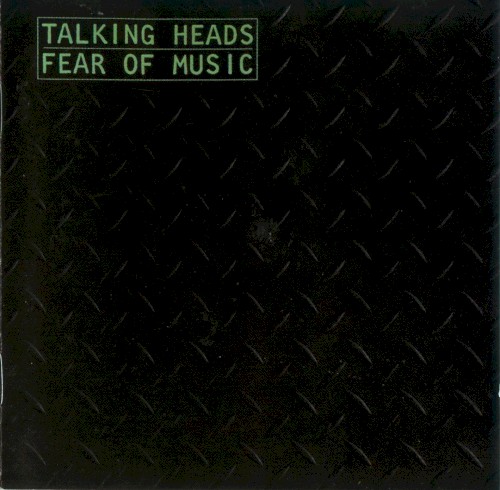
Fear of Music (1979)
- 艺人
- Talking Heads
- 发行
- 1979-08-03
- 类型
- 专辑
- 唱片公司
- Sire Records
- 制作人
- 布莱恩·伊诺
- 版本
- MusicBrainz 上有 56 个发行版本
曲目
- A1I Zimbra3:09
- A2Mind4:13
- A3Paper2:39
- A4Cities4:10
- A5Life During Wartime3:41
- A6Memories Can’t Wait3:30
- B1Air3:34
- B2Heaven4:01
- B3Animals3:30
- B4Electric Guitar3:03
- B5Drugs5:10
11 首 · 约 41 分钟 · 依据 1979-08-03 US 发行的版本,在 MusicBrainz 看这个版本。
介绍
这个词条没有中文维基百科条目,下面是英文维基百科的原文。
Fear of Music is the third studio album by the American rock band Talking Heads, released on August 3, 1979, by Sire Records. It was recorded at locations in New York City during April and May 1979 and was produced by Brian Eno and Talking Heads. The album reached No. 21 on the U.S. Billboard 200 and No. 33 on the UK Albums Chart. It spawned the singles "Life During Wartime", "I Zimbra", and "Cities".
Fear of Music received favorable reviews from critics. Praise centered on its unconventional rhythms and lead vocalist David Byrne's lyrical performances. The album is often considered one of Talking Heads' best releases and has been featured in several publications' lists of the best albums of all time.
Background
Talking Heads' second studio album More Songs About Buildings and Food, released in 1978, expanded the band's sonic palette. The record included a hit single, a cover version of Al Green's 1974 song "Take Me to the River", which gained the quartet commercial exposure. In March 1979, the band members played the song on American music and dance television program American Bandstand. In the days after the performance, they decided they did not want to be regarded simply as "a singles machine".
Talking Heads entered a New York City studio without a producer in the spring of 1979 and rehearsed demo tracks. Musically, the band wanted to expand on the "subtly disguised" disco rhythms present in More Songs About Buildings and Food by making them more prominent in the mixes of new songs. These recording plans were shelved after the quartet was not pleased with the results. A decision was then taken to rehearse in drummer Chris Frantz and bassist Tina Weymouth's loft in Long Island City, Queens, where the band members had played while unsigned in the mid-1970s. Brian Eno, who had produced More Songs About Buildings and Food, was called in to help.
Recording and production
On April 22 and May 6, 1979, a audio engineering crew in a Record Plant van parked outside Frantz's and Weymouth's apartment building and ran cables through their loft window. On these two days, Talking Heads recorded the basic tracks with Eno.
Weymouth later stated that Byrne's sense of rhythm is "insane but fantastic" and that he was key to the band's recording drive during the home sessions. As songs evolved, the performances became easier for the band members. Eno was instrumental in shaping both their sound and recording confidence, and worked on electronic treatments of tracks.
Composition
Fear of Music is largely built on an eclectic mix of disco rhythms, cinematic soundscapes, and conventional rock music elements.
Byrne credits the inspiration for the album, especially "Life During Wartime", to life on Avenue A in the East Village. Instead of incorporating characters in society, as he did on More Songs About Buildings and Food, Byrne decided to place them alone in dystopian situations. Weymouth was initially skeptical of Byrne's new compositions, but he managed to persuade her.
Album opener "I Zimbra" is influenced by Afrobeat and disco, and includes guitar work by Robert Fripp of King Crimson and background chanting from assistant audio engineer Julie Last. The nonsensical lyrics are based on the poem "Gadji beri bimba" by German Dadaist author and poet Hugo Ball. Band member Jerry Harrison has said that this song influenced what the band was to do on their next studio album, Remain in Light (1980).
"Cities" details a search for the ideal urban settlement to live in and was born out of Talking Heads' preferences for urban homes, especially in Manhattan. "Paper" compares a love affair to a simple piece of paper. In "Life During Wartime", Byrne casts himself an "unheroic urban guerrilla", who has renounced parties, survives on basic supplies like peanut butter, and hears rumors about weapons shipments and impromptu graveyards. The character's only connection is to the imminent collapse of his civilization. Byrne considered the persona "believable and plausible". "Air" is a protest song against the atmosphere, an idea Byrne does not consider "a joke". Inspired by The Threepenny Opera (1928) by Bertolt Brecht and Kurt Weill, the lyricist wanted to create a melancholic and touching track about a person who feels so depressed that even breathing feels painful.
Artwork
The LP sleeve was designed by Harrison. It is completely black and embossed with a pattern that resembles the appearance and texture of tread plate metal flooring, reflecting the album's urban subject matter. The rest of the artwork was crafted by Byrne and includes heat-sensitive photography created by Jimmy Garcia with the help of Doctor Philip Strax. The design was nominated for the 1980 Grammy Award for Best Recording Package. Harrison suggested the "ludicrous" title to the band; according to Weymouth, it was accepted because it "fit" the album's themes and the quartet's stress during the album's production.
正文摘自英文维基百科「Fear of Music」,按 CC BY-SA 4.0 使用;删去了参考文献、外部链接、表格和图片;篇幅所限只节选了前面一部分,全文见原条目。
资料卡
- 作品性质
- 音乐专辑
- 表演者
- Talking Heads
- 发行日期
- 1979 年 8 月 3 日
- 时长
- 40 分 40 秒
- 流派
- 新浪潮、朋克摇滚
- 语言
- 英语
- 唱片公司
- Sire Records
- 制作人
- 布莱恩·伊诺
资料来自 Wikidata Q934211(CC0)。
制作名单
- 厂牌
- Sire Records(目录号 SRK 6076)
- 录音室
- 母带:Sterling Sound(Chelsea);混音:Atlantic Studios(Midtown Manhattan);混音:RPM Studios(New York);混音:The Hit Factory(Manhattan);混音:The Record Plant(Midtown Manhattan);录音:Atlantic Studios(Midtown Manhattan);录音:RPM Studios(New York);录音:The Hit Factory(Manhattan)
制作
- 工程师
- Rod O’Brien、Joe Barbaria(第 A5、A6、B2 首)、Neal Teeman(第 A5、A6、B2 首)
- 制作人
- 布莱恩·伊诺、Talking Heads
- 助理工程师
- Tom Heid(第 A5、A6、B2 首)、Julie Last(第 A5、A6、B2 首)、Chris Martinez(第 A5、A6、B2 首)
演奏与演唱
- 吉他
- 大卫·拜恩(第 A1、A4、A5、A6、B2 首)、Jerry Harrison(第 A1、A4 首)、罗伯特·弗里普(第 A1 首)
- 鼓
- Chris Frantz(第 A1、A4、A5、A6、B2 首)
- 主唱
- 大卫·拜恩(第 A1、A4、A5、A6、B2 首)
- 康加鼓
- Ari Up(第 A1、A5、B1 首)、Gene Wilder(第 A1、A5、B1 首)
- 电贝斯
- Tina Weymouth(第 A1、A4、A5 首)
- 演出
- 布莱恩·伊诺(第 A5、A6、B2 首)
- 演唱
- Jerry Harrison(第 A5、A6、B2 首)
- 电子乐器
- 布莱恩·伊诺(第 A1、A4 首)
- 键盘
- Jerry Harrison(第 A1、A4 首)
- 和声
- Jerry Harrison(第 A1、A4 首)、Tina Weymouth(第 A1、A4 首)、布莱恩·伊诺(第 A1 首)、Julie Last(第 A1 首)、The Sweetbreathes(第 B1 首)
- 贝斯
- Tina Weymouth(第 A6、B2 首)
- 非洲鼓
- Abdou M’Boup(第 A1 首)
- 说话鼓
- Abdou M’Boup(第 A1 首)
- 苏尔多鼓
- Hossam Ramzy(第 A1 首)
- 打击乐
- Assane Tham(第 A1 首)
- 合成器
- Jerry Harrison(第 A5 首)
词曲与编曲
- 词曲
- 大卫·拜恩(其中 7 首)、Jerry Harrison(第 A2、A5、A6、B2、B4 首)、布莱恩·伊诺(第 A1、B5 首)、Hugo Ball(第 A1 首)、Chris Frantz(第 A5 首)、Tina Weymouth(第 A5 首)
- 作曲
- 大卫·拜恩(第 A3、A4、B1、B3 首)
- 作词
- 大卫·拜恩(第 A3、A4、B1、B3 首)
名单来自 MusicBrainz(CC0)这一发行版本的关系数据,由志愿者录入,不一定齐全。
更多资料与乐评
在哪听
Talking Heads 的其他专辑
艺人页 ›


相似的专辑
同在 1979 年发行