 乐单
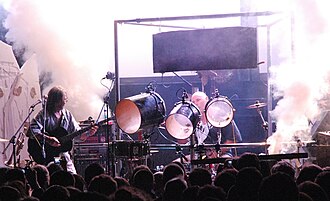
照片:jd lennon,CC BY 2.0,Wikimedia Commons
浮士德乐团
- 成立 / 解散
- 1971 –
- 国家/地区
- 德国
- 外文名
- Faust
- 流派
- 德国摇滚
- 成员
- Rudolf Sosna
介绍
这个词条没有中文维基百科条目,下面是英文维基百科的原文。
Faust (German: [faʊ̯st], English: "fist") are a German rock band from Hamburg. Formed in 1970 by producer and former music journalist Uwe Nettelbeck (1940 - 2007), the group was originally composed of Werner "Zappi" Diermaier (b.1949), Hans Joachim Irmler (b.1950), Arnulf Meifert (b.1943), Jean-Hervé Péron (b.1949), Rudolf Sosna (1946 – 1996) and Gunther Wüsthoff, working with engineer Kurt Graupner. Their work was oriented around dissonance, improvisation, and experimental electronic approaches, and would influence subsequent ambient and industrial music. They are considered a central act of West Germany's 1970s krautrock movement.
Since 1990, the band's members have reunited in various formations to tour and record as Faust, often with different versions of the band existing simultaneously. As of 2026, Diermaier, Irmler, Péron and Wüsthoff all lead separate versions of the band.
They have been cited as an influence by Radiohead, Swell Maps, Throbbing Gristle, Cabaret Voltaire, Stereolab, Simple Minds, Sonic Youth, Mark E. Smith, Nurse with Wound and Madlib.
History
1970–1975
Faust formed in 1970 under the aegis of Uwe Nettelbeck in Hamburg, where their future members played in two groups that rarely played live, Nukleus (Sosna, Péron and Wüsthoff) and Campylognatus Citelli (Diermaier, Irmler and Meifert). There is some disagreement whether the group formed first and approached Nettelbeck, who then brought in Polydor, or whether Polydor tasked Nettelbeck with finding a group for them, whereupon he brought the two groups together. Either way, they secured a recording contract with Polydor and shortly found the former schoolhouse at Wümme in which they were to live, rehearse and record for the next three years. In 1971 Polydor released their debut, Faust, which sold poorly but received critical acclaim for its innovative approach and established a devoted fan base. Meifert was sacked shortly afterwards because, as Péron wrote in 2004, "he discussed things, because he had flat buttocks and an absolutely beautiful girlfriend, because he practised every day, because he always kept his room neat and woke up every morning to first wet a cloth he'd put in front of his room to keep the dirt out, because he played such a hard 4/4th that we had to travel into the tongue, ready to drop, ding dong is handsome top."
In 1972 the band recorded its second, slightly more accessible album So Far. They also collaborated with Tony Conrad on the album Outside the Dream Syndicate. Faust became one of the premier bands in the international appreciation of the genre that would eventually be known as krautrock.
The poor sales of their first two albums led Polydor to drop them, with Faust soon having to leave Wümme, from which they stripped all the useful equipment, keeping all the recordings they had made there.
At this point they became one of the first acts to sign to Richard Branson's Virgin Records, who embarked on a marketing campaign somewhat daring for its time, aimed at introducing Faust to British record-buyers. The Faust Tapes was a cut-and-paste album, which spliced together a large number of bits and pieces from their extensive collection of private recordings made at Wümme and not originally intended for release. Virgin issued it at the then price of a single, 48 pence. The Faust Tapes reportedly sold over 100,000 copies but its low price tag rendered it ineligible for a chart placing.
Faust recorded Faust IV at Virgin's studios in England in 1973; Virgin subsequently decided to drop them, as did Nettelbeck and Graupner. In 1975, before the split from Virgin was official, Irmler suggested they should reconvene at Giorgio Moroder's Musicland Studios in Munich, where they began recording, supposedly financed by Virgin, who knew nothing about it. After a week the studio became suspicious and demanded payment; Virgin refused to pay and Faust attempted to escape; their equipment and recordings got away in one van but Sosna, Péron and Irmler were arrested and were released only when their mothers paid the studio and hotel bills; at this point Faust split up. Some of the recordings later appeared on the Munic and Elsewhere album and much later as Punkt. A few promo cassettes of the Munich material supposedly circulated within Virgin, who declined to release it.
Reissues of their recordings and various additional material through Chris Cutler's Recommended Records maintained a level of interest through the 1980s.
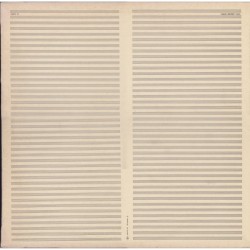
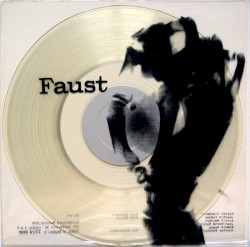
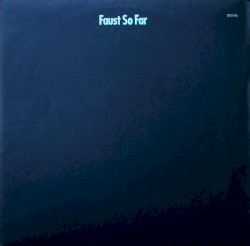
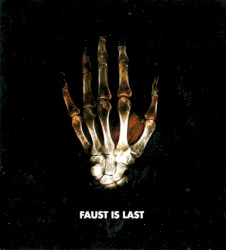
Faust experimented with the presentation of their early records. Their first album was originally released on clear vinyl, in a clear sleeve with an X-ray of a human fist silkscreened on the outer sleeve. Their second album, So Far, made extensive use of the color black, though inside the sleeve were sheets with a different illustration for each song. The Faust Tapes had a visually unsettling op art cover design by Bridget Riley, while that for Faust IV consisted of a series of blank music staves.
正文摘自英文维基百科「Faust (band)」,按 CC BY-SA 4.0 使用;删去了参考文献、外部链接、表格和图片;篇幅所限只节选了前面一部分,全文见原条目。
资料卡
- 成立
- 1971 年
- 成立于
- 汉堡
- 来自
- 德国
- 活跃起始
- 1971 年
- 流派
- 德国摇滚
- 唱片公司
- 维珍唱片、宝丽多唱片公司
- 成员
- Rudolf Sosna
- 官方网站
- faust-pages.com
资料来自 Wikidata Q679697(CC0)。
榜单和奖项里的专辑(1)
曲库里的其他专辑(8)
完整作品表见 MusicBrainz。