 乐单
Neu!
- 成立 / 解散
- 1971 –
- 国家/地区
- 德国
- 流派
- 德国摇滚
- 成员
- 迈克尔·罗瑟
介绍
这个词条没有中文维基百科条目,下面是英文维基百科的原文。
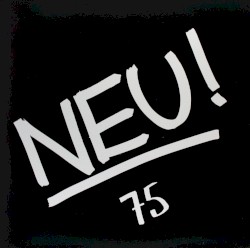
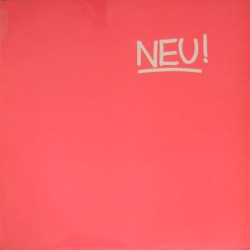
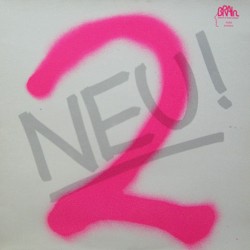
Neu! (pronounced [nɔʏ]; German for "New!"; styled in block capitals) were a West German experimental and electronic rock band formed in Düsseldorf in 1971 by Klaus Dinger and Michael Rother following their departure from Kraftwerk. The group's albums were produced by Conny Plank, who has been regarded as the group's "hidden member". They released three albums in their initial incarnation—Neu! (1972), Neu! 2 (1973), and Neu! '75 (1975)—before disbanding in 1975. They briefly reunited in the mid-1980s.
Although Neu! had minimal commercial success during their existence, the band are retrospectively considered a central act of West Germany's 1970s krautrock movement. They are known for pioneering the "motorik" beat, a minimalist 44 rhythm associated with krautrock artists. Their work has exerted a widespread influence on genres such as electronica and punk.
History
1970–1971: Pre-formation
Neu! was formed in 1971 in Düsseldorf as an offshoot from an early line-up of another seminal krautrock band, Kraftwerk, whose early works were also produced by Conny Plank. Drummer Klaus Dinger had joined Kraftwerk midway through sessions for their eponymous debut album. Guitarist Michael Rother was then recruited to the Kraftwerk line-up on completion of the album. (Rother had been playing in a local band called The Spirits of Sound, the line-up of which also included drummer Wolfgang Flür, who would himself go on to join Kraftwerk two years later.)
Kraftwerk co-founder Ralf Hütter left the band at this point to complete his studies; for six months, Kraftwerk consisted of a trio of Rother, Dinger and Florian Schneider. This line-up played sporadic gigs and made a live appearance on German television programme Beat Club. Recording sessions at Conny Plank's Windrose studio were unsuccessful (Rother later attributed the failure to "a difference of temperament"). Dinger and Rother parted company from Schneider and began Neu! with Plank. Hütter rejoined Schneider and the pair continued recording the second Kraftwerk album with Plank.
1971–1975: Main career
The band name Neu! ("new!") was inspired by the prevalence of the advertising business in Düsseldorf at the time, according to Dinger, who described it as "the strongest word in advertising" and even owned a pro forma advertising agency himself for the purpose of booking studios. The band's eponymous first album showcased a cover inspired by Andy Warhol's pop art and sold just 30,000 records. Klaus Dinger made use of the Motorik beat which had been pioneered by him and drummer Jaki Liebezeit.
Their second album, Neu! 2, features some of the earliest examples of musical remixes. The duo, excited about recording another album, decided to expand their horizons by purchasing several new instruments. With the money they had left as an advance from the record company, they could record only half an album's worth of material. The company would not increase their advance because the first album did not sell well enough and the label did not see a reason to further finance what was most likely to become a flop. To rectify the lack of material, the band filled the second side with manipulated versions of their already-released single "Neuschnee"/"Super", playing back each song at different speeds and sometimes warbling the music by messing with the tape machine or placing the record off center on the turntable. The songs "Super 16" and "Super 78" (slowed down and sped up versions of the song "Super," respectively) unwittingly became the theme songs to the 1976 martial arts cult classic Master of the Flying Guillotine by Jimmy Wang Yu. This film was later referenced by Quentin Tarantino in Kill Bill Volume 1 by also featuring the track "Super 16".
Dinger and Rother both differed in creative directions which led to their final album of the 1970s, Neu! '75. Side One was Rother's more ambient productions which were similar to the first album, albeit more keyboard-driven while Side Two was Dinger's songs.
To aid with performing on the album (and more importantly, live), Hans Lampe and brother Thomas Dinger were enlisted to help execute more music than was possible by two men. Upon its release, and arguably to this day, Neu! '75 is the most diverse record available from the krautrock scene. While this can be seen as a positive point, the differences in musical direction (as well as personal issues) not only isolated the Dinger/Rother duo, it isolated their already small fan base. Neu! broke up after the release of Neu! '75.
1975–1986: Band inactivity and reunion
In 1974, Rother had already collaborated with German electronic duo Cluster, recording as Harmonia an album titled Musik Von Harmonia. In 1975, he recorded a second Harmonia album, Deluxe, and further sessions followed with Brian Eno, which were not released until 1997 as Tracks and Traces. In 1977, Rother started recording as a solo artist. His first three albums; Flammende Herzen (1977), Sterntaler (1978), and Katzenmusik (1979) were recorded with Neu! producer Conny Plank.
正文摘自英文维基百科「Neu!」,按 CC BY-SA 4.0 使用;删去了参考文献、外部链接、表格和图片;篇幅所限只节选了前面一部分,全文见原条目。
资料卡
- 成立
- 1985 年、1971 年
- 成立于
- 杜塞尔多夫
- 来自
- 德国
- 活跃起始
- 1971 年
- 流派
- 德国摇滚
- 唱片公司
- 星沃克唱片、Brain
- 成员
- 迈克尔·罗瑟
- 官方网站
- neu2010.com
资料来自 Wikidata Q181874(CC0)。
榜单和奖项里的专辑(1)
曲库里的其他专辑(3)
完整作品表见 MusicBrainz。
有关联的艺人
- 立体声实验室英国 · 1990– · 独立摇滚
成员、所属团体、受到的影响,来自 Wikidata。