乐单
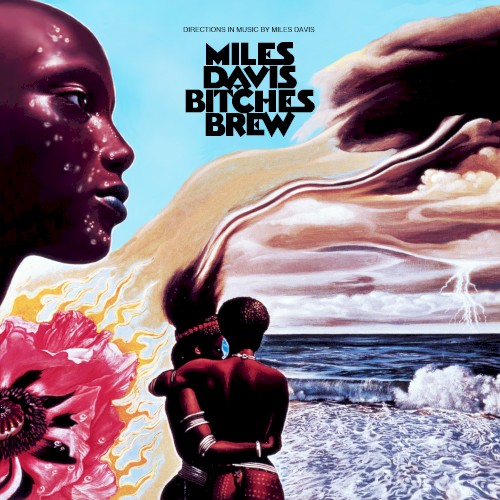
即兴精酿 (1970)
滚石 500(2020) #87滚石 500(2003) #941001 张专辑
- 艺人
- 迈尔斯·戴维斯
- 发行
- 1970
- 类型
- 专辑
- 唱片公司
- 哥伦比亚唱片、遗迹唱片
- 制作人
- 蒂奥·马塞洛
- 版本
- MusicBrainz 上有 43 个发行版本
曲目
第 1 张 · 12" Vinyl
- 1Pharaoh’s Dance20:00
- 2Bitches Brew27:00
第 2 张 · 12" Vinyl
- 1Spanish Key17:30
- 2John McLaughlin4:26
- 3Miles Runs the Voodoo Down14:05
- 4Sanctuary10:53
6 首 · 约 94 分钟 · 依据 1970 US 发行的版本,在 MusicBrainz 看这个版本。
介绍
即兴精酿(Bitches Brew)是美国爵士乐小号手迈尔士·戴维斯推出的一张录音室专辑, 1970年3月30日由哥伦比亚唱片发行。
这张专辑是迈尔士·戴维斯在美国Billboard 200上排名最高的专辑,最高排名为第35位。1971年,该专辑获得了格莱美最佳大型爵士乐团专辑奖。 1976 年,它获得美国唱片业协会金唱片认证。
正文摘自中文维基百科「即興精釀」,按 CC BY-SA 4.0 使用;已转为简体,删去了参考文献、外部链接、表格和图片。
英文维基百科上的更多内容(英文原文,约 3,336 字符)
Bitches Brew is a studio album by the American jazz trumpeter, composer, and bandleader Miles Davis. It was recorded from August 19 to 21, 1969, at Columbia's Studio B in New York City and released on March 30, 1970, by Columbia Records. It marked Davis's continuing experimentation with electric instruments that he had featured on his previous record, the critically acclaimed In a Silent Way (1969). With these instruments, such as the electric piano and guitar, Davis departed from traditional jazz rhythms in favor of loose, rock-influenced arrangements based on improvisation. The final tracks were edited and pieced together by producer Teo Macero.
The album initially received a mixed critical and commercial response, but it gained momentum and became Davis's highest-charting album on the U.S. Billboard 200, peaking at No. 35. In 1971, it won the Grammy Award for Best Large Jazz Ensemble Album. In 1976, it became Davis's first album to be certified Gold by the Recording Industry Association of America (RIAA).
In subsequent years, Bitches Brew gained recognition as one of jazz's greatest albums and a progenitor of the jazz rock genre, as well as a major influence on rock and '70s crossover musicians. In 1998, Columbia released The Complete Bitches Brew Sessions, a four-disc box set that includes the original album and previously unreleased material. In 2003, the album was certified Platinum by the RIAA, reflecting shipments of one million copies in the United States. In 2025, the album was deemed "culturally, historically, or aesthetically significant" by the Library of Congress and selected for preservation in the National Recording Registry.
Background and recording
By 1969, Davis's core working band consisted of Wayne Shorter on soprano saxophone, Dave Holland on bass, Chick Corea on electric piano, and Jack DeJohnette on drums. The group, minus DeJohnette, recorded In a Silent Way (1969), which also featured Joe Zawinul, John McLaughlin, Tony Williams, and Herbie Hancock. The album marked the beginning of Davis's "electric period", incorporating instruments such as the electric piano, guitar, and jazz fusion styles. For his next studio album, Davis wished to explore his electronic and fusion style even further. While touring with his five-piece from the spring to August 1969, he introduced new pieces for his band to play, including early versions of what became "Miles Runs the Voodoo Down", "Sanctuary", and "Spanish Key". At this point in his career Davis was influenced by contemporary rock and funk music, Zawinul's playing with Cannonball Adderley, and the work of English composer Paul Buckmaster.
In August 1969, Davis gathered his band for a rehearsal, one week prior to the booked recording sessions. As well as his five-piece, they were joined by Zawinul, McLaughlin, Larry Young, Lenny White, Don Alias, Juma Santos, and Bennie Maupin. Davis had written simple chord lines, at first for three pianos, which he expanded into a sketch of a larger scale composition. He presented the group with some "musical sketches" and told them they could play anything that came to mind as long as they used his chosen chords. Davis had not arranged each piece because he was unsure of the direction the album was to take; he wanted whatever was produced to come from an improvisational process, "not some prearranged shit."
这部分摘自英文维基百科「Bitches Brew」,按 CC BY-SA 4.0 使用;删去了参考文献、外部链接、表格和图片;篇幅所限只节选了前面一部分,全文见原条目。
资料卡
- 作品性质
- 音乐专辑
- 表演者
- 迈尔斯·戴维斯
- 发行日期
- 1970 年 3 月 30 日
- 流派
- 融合爵士乐、先锋爵士、前卫的士高、迷幻音乐
- 语言
- 没有该语言的内容
- 唱片公司
- 哥伦比亚唱片、遗迹唱片
- 制作人
- 蒂奥·马塞洛
- 封面设计
- Mati Klarwein
资料来自 Wikidata Q804096(CC0)。
制作名单
- 厂牌
- Columbia(目录号 GP 26)
- 录音室
- 录音:Columbia (CBS) Studio ‘B’(New York)
制作
- 制作人
- Teo Macero
- 录音
- Stanley Tonkell(第 1、3 首)、Frank Laico(第 2、4 首)
演奏与演唱
- 小号
- 迈尔斯·戴维斯(第 1、2、3、4 首)
- 鼓
- 杰克·德约翰内特(第 1、2、3、4 首)、兰尼·怀特(第 1、2 首)、Don Alias(第 3 首)
- 高音萨克斯
- 韦恩·肖特(第 1、2、3、4 首)
- 电钢琴
- 奇克·柯瑞亚(第 2、1、3、4 首)、乔·扎维努尔(第 2、1、4 首)、Larry Young(第 1、2、3 首)
- 康加鼓
- Don Alias(第 1、2、4 首)、Jim Riley(第 3、4 首)
- 贝斯
- Dave Holland(第 1、2、4 首)、Harvey Brooks(第 1 首)
- 低音单簧管
- 班尼·莫平(第 1、2、3 首)
- 电吉他
- 约翰·麦克劳克林(第 2、3、4 首)
- 电贝斯
- Harvey Brooks(第 2、3 首)、Dave Holland(第 3 首)
- 沙锤
- Jim Riley(第 1、4 首)
- 键盘
- 奇克·柯瑞亚(第 1 首)、Larry Young(第 1 首)、乔·扎维努尔(第 1 首)
- 吉他
- 约翰·麦克劳克林(第 1 首)
- 打击乐
- Juma Santos(第 1 首)
词曲与编曲
- 作曲
- 迈尔斯·戴维斯(第 2、1、3 首)、乔·扎维努尔(第 1 首)、韦恩·肖特(第 4 首)
包装与设计
- 设计 / 插画
- Mati Klarwein
名单来自 MusicBrainz(CC0)这一发行版本的关系数据,由志愿者录入,不一定齐全。
更多资料与乐评
在哪听
迈尔斯·戴维斯 的其他专辑
艺人页 ›
相似的专辑
同在 1970 年发行