乐单
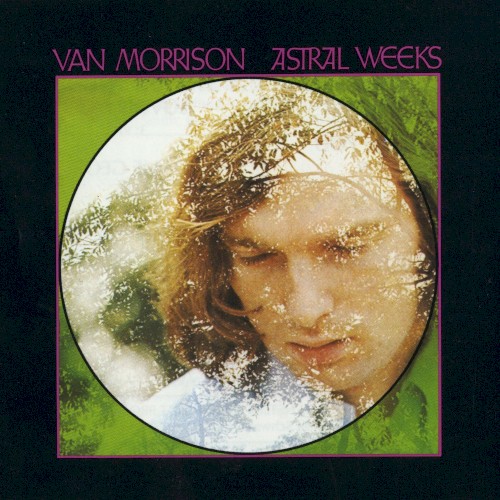
Astral Weeks (1968)
滚石 500(2020) #60滚石 500(2003) #191001 张专辑
- 艺人
- 范·莫里森
- 发行
- 1968-11
- 类型
- 专辑
- 唱片公司
- 华纳兄弟唱片公司
- 制作人
- Lewis Merenstein
- 版本
- MusicBrainz 上有 22 个发行版本
曲目
- A1Astral Weeks7:06
- A2Beside You5:17
- A3Sweet Thing4:26
- A4Cyprus Avenue7:00
- B1The Way Young Lovers Do3:18
- B2Madame George9:45
- B3Ballerina7:04
- B4Slim Slow Slider3:18
8 首 · 约 47 分钟 · 依据 1968-11 GB 发行的版本,在 MusicBrainz 看这个版本。
介绍
这个词条没有中文维基百科条目,下面是英文维基百科的原文。
Astral Weeks is the second studio album by Northern Irish singer-songwriter Van Morrison. It was recorded at Century Sound Studios in New York during September and October 1968 and released in November of the same year by Warner Bros. Records.
The album's music blends folk, blues, jazz, and classical styles, a radical departure from Morrison's previous pop hits, such as "Brown Eyed Girl" (1967). The lyrics and cover art portray the symbolism equating earthly love and heaven that would often feature in the singer's subsequent records. His lyrics have been described as impressionistic, hypnotic, and modernist, while the record has been categorized as a song cycle or concept album.
Astral Weeks did not originally receive promotion from Morrison's record label and was not an immediate success with consumers or critics. Its standing eventually improved greatly, with praise given to Morrison's singing, arrangements, and songwriting, and the album has been viewed as one of rock music's greatest and most important records (a reputation the singer himself has dismissed). It was placed on numerous widely circulated lists of the best albums of all time and has had an enduring effect on both listeners and musicians.
Forty years after the album's release, Morrison performed all eight of its songs live for the first time at two Hollywood Bowl concerts in November 2008; this performance was later released as Astral Weeks Live at the Hollywood Bowl.
Background
At the beginning of 1968, Van Morrison became involved in a contract dispute with Bang Records that kept him away from any recording activity. This occurred after the sudden death of the label's founder Bert Berns. Born with a congenital heart defect, Berns had a fatal heart attack and was discovered dead in a New York hotel room on 30 December 1967. Prior to Berns's death, he and Morrison had experienced some creative difficulties; Berns had been pushing Morrison in a more pop-oriented direction, while Morrison wanted to explore newer musical terrain. Berns's widow, Ilene Berns, held Morrison and this conflict responsible for her husband's death. Years later she would downplay this scenario, but Morrison's then girlfriend Janet (Planet) Rigsbee has since gone on record describing Ilene Berns's subsequent vindictiveness towards Morrison.
Following Bert Berns's death, Ilene Berns inherited the contracts of Bang Records. Morrison's annual option on his recording contract was also due less than a week after Berns's funeral. Legally bound to Bang Records, Morrison was not only kept out of the studio, but also found himself unable to find performing work in New York as most clubs refrained from booking him, fearing reprisals. (Bert Berns was notorious for his connections to organized crime and those connections still affected artists like Morrison and Neil Diamond trying to leave Bang Records, even after Berns's death.) Ilene Berns then discovered that her late husband had previously been remiss in filing the appropriate paperwork to keep Morrison (still a British citizen) in New York and contacted Immigration and Naturalization Service in an attempt to have Morrison deported. However, Morrison managed to stay in the U.S. when Janet Rigsbee agreed to marry him. Once married, Morrison and Rigsbee moved to Cambridge, Massachusetts, where he found work performing in local clubs. Morrison began performing with a small electric combo doing blues numbers and songs from Blowin' Your Mind! and from Morrison's Them band days. Two of the musicians soon left but Morrison retained the bassist, Tom Kielbania, a student at the Berklee School of Music. Morrison decided to try an acoustic sound and he and Kielbania began performing shows in coffee houses in the Boston area as an acoustic duo with Morrison playing guitar and Kielbania on upright bass. Before this, Morrison had primarily recorded and performed with electric musicians. The acoustic medium would provide him "greater vocal improvisation and a freer, folkier feel".
Later, Kielbania heard jazz-trained flautist John Payne for the first time while sitting in on a jam session. He invited Payne to the club where he played with Morrison, hoping Morrison would invite him to join them. After allowing Payne to sit in on one performance, Morrison extended an invitation, which Payne accepted. The trio of Payne, Kielbania and Morrison continued performing for four months. In the weeks they played at the Catacombs, they began to develop the template for Astral Weeks. It was around this time that Warner Bros. Records approached Morrison, hoping to sign him. Presumably, their interest focused on his prior success with "Brown-Eyed Girl", not on Morrison's current acoustic work. Regardless, their interest allowed Morrison to return to the recording studio.
正文摘自英文维基百科「Astral Weeks」,按 CC BY-SA 4.0 使用;删去了参考文献、外部链接、表格和图片;篇幅所限只节选了前面一部分,全文见原条目。
资料卡
- 作品性质
- 音乐专辑
- 表演者
- 范·莫里森
- 发行日期
- 1968 年 11 月
- 时长
- 46 分 05 秒
- 流派
- 民谣摇滚
- 语言
- 英语
- 唱片公司
- 华纳兄弟唱片公司
- 制作人
- Lewis Merenstein
资料来自 Wikidata Q750452(CC0)。
制作名单
- 厂牌
- Warner Bros. Records(目录号 WS 1768)
制作
- 工程师
- Brooks Arthur
- 制作人
- Lewis Merenstein
演奏与演唱
- 低音提琴
- Richard Davis
- 原声吉他
- 范·莫里森、Jay Berliner(第 B3 首)
- 主唱
- 范·莫里森
- 长笛
- John Payne(第 A1、A3、B1、B2、B3 首)
- 颤音琴
- Warren Smith(第 A1、A2、B1、B3 首)
- 鼓
- Connie Kay(第 A3、B1、B2、B3 首)
- 古典吉他
- Jay Berliner(第 A1、A2、A3 首)
- 打击乐
- Warren Smith(第 A1、B1、B4 首)
- 三角铁
- Warren Smith(第 A3 首)
- 羽管键琴
- Larry Fallon(第 A4 首)
- 吉他
- Barry Kornfeld(第 B1 首)
- 高音萨克斯
- John Payne(第 B4 首)
词曲与编曲
- 作曲
- 范·莫里森
- 作词
- 范·莫里森
- 器乐编曲
- Larry Fallon(第 A1、A3、A4、B3 首)
名单来自 MusicBrainz(CC0)这一发行版本的关系数据,由志愿者录入,不一定齐全。
更多资料与乐评
在哪听
范·莫里森 的其他专辑
艺人页 ›
相似的专辑


同在 1968 年发行