乐单
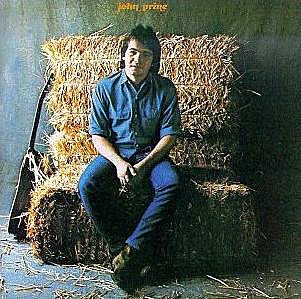
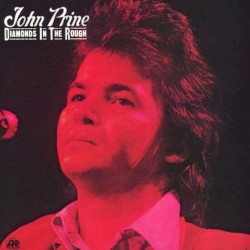
John Prine (1971)
滚石 500(2020) #149滚石 500(2003) #4581001 张专辑
- 艺人
- 约翰·普莱恩
- 发行
- 1971
- 类型
- 专辑
- 唱片公司
- 大西洋唱片
- 制作人
- 阿里夫·马丁
- 版本
- MusicBrainz 上有 13 个发行版本
曲目
- A1Illegal Smile3:13
- A2Spanish Pipedream2:41
- A3Hello in There4:30
- A4Sam Stone4:15
- A5Paradise3:13
- A6Pretty Good3:37
- B1Your Flag Decal Won’t Get You Into Heaven Anymore2:53
- B2Far From Me3:41
- B3Angel From Montgomery3:45
- B4Quiet Man2:52
- B5Donald and Lydia4:29
- B6Six O’Clock News2:51
- B7Flashback Blues2:32
13 首 · 约 45 分钟 · 依据 1971 US 发行的版本,在 MusicBrainz 看这个版本。
介绍
这个词条没有中文维基百科条目,下面是英文维基百科的原文。
John Prine is the debut album by American country/folk singer-songwriter John Prine, issued by Atlantic Records in 1971. In 2012, the album was ranked number 452 on Rolling Stone magazine's list of the 500 greatest albums of all time. It was later ranked number 149 in a revised version of the list published in 2020.
Recording
Prine was offered a recording contract by Jerry Wexler of Atlantic Records after the record executive saw the singer perform several of his own songs at a Kris Kristofferson show at the Bitter End. The song "Paradise" was recorded at A&R Studios in New York (with Prine's brother Dave and good friend Steve Goodman as sidemen) but the remaining cuts were recorded at American Sound Studios in Memphis. Produced by Arif Mardin, who had previously collaborated with the likes of Aretha Franklin and King Curtis, Prine found his new studio surroundings intimidating. In the Great Days: The John Prine Anthology liner notes he admits, "I was terrified. I went straight from playing by myself, still learning how to sing, to playing with Elvis Presley's rhythm section." Initially, the musicians at American, accustomed to playing heavily rhythmic material and funky grooves, were thrown by Prine and his songs. As recounted in Eddie Huffman's biography John Prine: In Spite of Himself, percussionist Hayward Bishop later recalled, "There was no evidence of groove whatever, and I was hungry for groove. Prine came off like a folk poet. This guy was really nasally, he didn't have any tone to his voice, and all his songs were in the same key! I thought, 'This is gonna be like milking a dag-blasted dog!'"
Composition
John Prine features some of Prine's most heralded compositions, including "Sam Stone", "Paradise" and "Hello In There".
"Sam Stone", a song about a drug-addicted veteran with a Purple Heart and his death by overdose, was originally titled "Great Society Conflict Veteran's Blues". The most familiar refrain in the song is "There's a hole in daddy's arm, where all the money goes." The song is usually interpreted as a reference to the phenomenon of heroin or morphine addiction among Vietnam War veterans (an identical surge of addiction followed the Civil War, where morphine addiction was known as 'Soldiers Disease'). The song does not mention the Vietnam War, saying only that Sam returned from "serving in the conflict overseas." There is a single explicit reference to morphine but Prine alludes to heroin on several occasions including the use of the term "habit," slang commonly associated with heroin use, and the line "he popped his last balloon," very likely referring to one of the ways in which street heroin is commonly packaged – in small rubber balloons.
Prine wrote "Paradise" for his father, recalling the devastating impact of strip mining for coal, whereby the top of the mountain is blasted off with dynamite to reach the coal seam below. The song is also about what happened to the area around the Green River in Kentucky because of the strip mining. "Paradise" references the Peabody Coal Company and is named for a now-defunct town called Paradise in Muhlenberg County, Kentucky. The song has become a bluegrass standard, with Prine telling Jasper Rees of The Arts Desk that "When bluegrass musicians gather together, whenever they're together for more than an hour, I'd say that 'Paradise' is one of those songs that one of them starts to play it and they all know it. Which is pretty neat cos it's a real close personal song. It was written for my father about where all my family's from, that doesn't exist anymore, and to think a song like that – I wasn't even going to record it because I didn't think anybody would be able to pronounce Muhlenberg."
In the Great Days anthology liner notes Prine claims that he composed "Hello In There" as a tribute to senior citizens, saying he "always had an affinity for old people. I used to help a buddy with his newspaper route, and I delivered to a Baptist old people's home where we'd have to go room-to-room. And some of the patients would kind of pretend that you were a grandchild or nephew that had come to visit, instead of the guy delivering papers. That always stuck in my head. It was all that stuff together, along with that pretty melody. I don't think I've done a show without singing 'Hello in There'. Nothing in it wears on me." In the same essay, Prine explains that the album opener "Illegal Smile" was "not about smokin' dope. It was more about how, ever since I was a child, I had this view of the world where I can find myself smiling at stuff nobody else was smiling at. But it was such a good anthem for dope smokers that I didn't want to stop every time I played it and make a disclaimer." According to Prine biographer Eddie Huffman, "Spanish Pipedream" is "a hilarious Age of Aquarius anthem, the hippie commune ideal summed up in less than four minutes."
正文摘自英文维基百科「John Prine (album)」,按 CC BY-SA 4.0 使用;删去了参考文献、外部链接、表格和图片;篇幅所限只节选了前面一部分,全文见原条目。
资料卡
- 作品性质
- 音乐专辑
- 表演者
- 约翰·普莱恩
- 发行日期
- 1971 年 11 月
- 流派
- 民俗音乐
- 语言
- 英语
- 唱片公司
- 大西洋唱片
- 制作人
- 阿里夫·马丁
资料来自 Wikidata Q1101326(CC0)。
制作名单
- 厂牌
- Atlantic(目录号 SD 8296)
- 录音室
- 录音:American Sound Studio(Memphis);录音:A&R Recording Studio(New York)
制作
- 母带处理
- George Piros
- 助理工程师
- Dale Smith
- 制作人
- Arif Mardin
- 录音
- Stan Kesler
- 重混
- Arif Mardin
演奏与演唱
- 原声吉他
- 约翰·普莱恩、Steve Goodman(第 A5、B7 首)
- 演唱
- 约翰·普莱恩(其中 12 首)
- 吉他
- John Christopher(其中 11 首)、Reggie Young(其中 11 首)
- 风琴
- Bobby Emmons(其中 11 首)
- 钢琴
- Bobby Wood(其中 11 首)
- 贝斯
- Mike Leech(第 A1、A3、B5、B7 首)、Neil Rosengarden(第 A5 首)
- 鼓
- Gene Chrisman(第 A1、A3、B5 首)、Bishop Heywood(第 B7 首)
- 打击乐
- Bishop Heywood(第 A1、A3、B5 首)
- 踏板钢棒吉他
- Leo LeBlanc(第 A1、A3、B5 首)
- 小提琴(民间)
- Dave Prine(第 A5 首)、Noel Gilbert(第 B7 首)
- 和声
- Steve Goodman(第 A5 首)
- 主唱
- 约翰·普莱恩(第 A5 首)
- 铃鼓
- Gene Chrisman(第 B7 首)
词曲与编曲
- 作曲
- 约翰·普莱恩
- 作词
- 约翰·普莱恩
名单来自 MusicBrainz(CC0)这一发行版本的关系数据,由志愿者录入,不一定齐全。
更多资料与乐评
在哪听
约翰·普莱恩 的其他专辑
艺人页 ›

相似的专辑

同在 1971 年发行