乐单
曲目
- A1Mother and Child Reunion3:10
- A2Duncan4:43
- A3Everything Put Together Falls Apart2:02
- A4Run That Body Down3:54
- A5Armistice Day3:58
- B1Me and Julio Down by the Schoolyard2:45
- B2Peace Like a River3:23
- B3Papa Hobo2:36
- B4Hobo's Blues1:21
- B5Paranoia Blues2:58
- B6Congratulations3:43
11 首 · 约 35 分钟 · 依据 1972-03 US 发行的版本,在 MusicBrainz 看这个版本。
介绍
这个词条没有中文维基百科条目,下面是英文维基百科的原文。
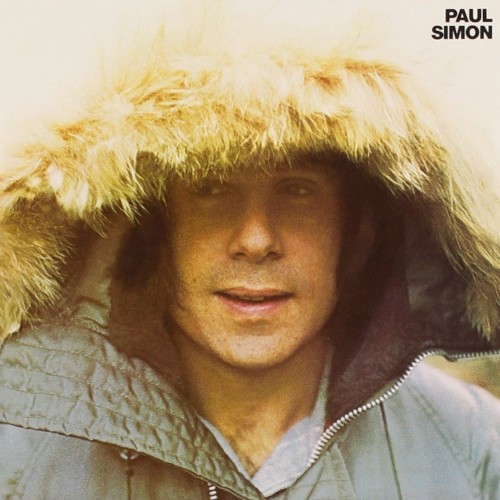
Paul Simon is the second solo studio album by American singer-songwriter Paul Simon. It was released in January 1972, nearly two years after he split up with longtime musical partner Art Garfunkel. His first solo album, recorded in England in 1965, remained unreleased in the U.S. (except for a brief period in 1969) until 1981, when it appeared in the 5-LP Collected Works boxed set. Originally released on Columbia Records, Paul Simon was later issued under the Warner Bros. label and has since returned to Columbia through Sony. The album topped the charts in the United Kingdom, Japan, and Norway and reached No. 4 on the U.S. Billboard Pop Albums. It was certified platinum in 1986.
History and composition
After Simon & Garfunkel's acrimonious breakup, Paul Simon taught songwriting classes at New York University during the summer of 1971. Among his students were two of the Roche sisters, Maggie and Terre, and singer-songwriter Melissa Manchester, who recalls that Simon was nervous, listened to the students' songs and offered suggestions and criticism, often dissecting the lyrics and drawing comparisons with his own work while offering insights into his own creative process and sources of inspiration.
In a 1972 interview with Rolling Stone magazine, Paul Simon stated that one of his primary goals during the recording of the album was to move beyond the musical style he had become associated with during the 1960s. "I didn't want to sing 'Scarborough Fair' again", he told Jon Landau. As a result, the album is characterized by a more understated production compared to his past records with Art Garfunkel, with Simon's guitar and vocals taking center stage. It also incorporates a wide variety of musical genres, including Latin music, jazz, blues, and reggae, showcasing an eclecticism that foreshadows his later exploration of world music on his acclaimed 1986 Graceland album.
This stylistic diversity resulted in contributions from several notable guest musicians, including violinist Stéphane Grappelli (featured on "Hobo's Blues", for which he is credited as a co-writer), jazz bassist Ron Carter (on "Run That Body Down"), and percussionist Airto Moreira (on "Me and Julio Down by the Schoolyard", where he plays the cuica). The album was recorded in a variety of locations, such as San Francisco, New York City, Los Angeles, Paris, and Kingston, Jamaica. The latter was where the recording of "Mother and Child Reunion", considered one of the first songs by a non-Jamaican musician to feature elements of reggae music, took place. Released as a single, it became the album's biggest hit, reaching No. 4 on the Billboard Hot 100 chart in March 1972.
The lyrics throughout the album are also marked by variety, with Paul Simon's songwriting shifting between lighthearted and solemn moods, blending humor and biting irony with melancholy and uncertainty. On one hand, songs like "Duncan", whose protagonist leaves his life in the rural Canadian Maritime Provinces in search of what Rob Sheffield describes as "a romantic Dylan/Kerouac adventure"; "Me and Julio Down by the Schoolyard", set in the multicultural New York City neighborhood of Corona, Queens; and "Papa Hobo", featuring a down-on-his-luck homeless man from Detroit, each contribute a unique character to the album's diverse cast, allowing Simon to explore themes such as youth and self-discovery, the political and social turbulence of the late 1960s and the counterculture that emerged in response, and the daily lives and struggles of disenfranchised groups within American society. On the other hand, heartbreak and bitterness over the collapse of a relationship emerge as significant themes as well, with several songs referencing, either directly ("Run That Body Down", in which "Paul" and "Peg" are mentioned by name) or indirectly ("Congratulations"), Simon's troubled marriage to Peggy Harper, which ultimately ended in divorce in 1975.
Release and reception
Released on January 24, 1972, the album arrived at a time when, following the dissolution of the duo that made him famous, Paul Simon was considered to be at a disadvantage, with many seeing him as the underdog. This sentiment was echoed by Columbia Records president Clive Davis, who told Simon, "[Simon & Garfunkel] is a household word. No matter however successful you'll be, you'll never be as successful as S&G", to which Simon responded, "Yeah, like Dean Martin and Jerry Lewis". Despite these doubts, the album became a major commercial success against all odds, peaking at number 4 on the Billboard 200 on April 1, 1972, and eventually earning a Platinum certification by the Recording Industry Association of America.
正文摘自英文维基百科「Paul Simon (album)」,按 CC BY-SA 4.0 使用;删去了参考文献、外部链接、表格和图片;篇幅所限只节选了前面一部分,全文见原条目。
资料卡
- 作品性质
- 音乐专辑
- 表演者
- 保罗·西蒙
- 发行日期
- 1972 年 1 月 14 日
- 时长
- 34 分 03 秒
- 流派
- 民谣摇滚
- 语言
- 英语
- 唱片公司
- 哥伦比亚唱片
- 制作人
- 罗伊·黑立
资料来自 Wikidata Q370482(CC0)。
制作名单
- 厂牌
- Columbia(目录号 KC 30750)
- 录音室
- 录音:Dynamic Sounds(Kingston);录音:Studio CBE(18e arrondissement de Paris);录音:Western Recorders(Los Angeles)
制作
- 制作人
- 保罗·西蒙
- 工程师
- Roy Halee(第 A2、B5 首)、Bernard Estardy(第 A2 首)、Phil Ramone(第 B1 首)、Rudy Hill(第 B5 首)
- 重混
- Roy Halee(第 B1 首)
演奏与演唱
- 吉他
- 保罗·西蒙、David Spinozza(第 A4、B1 首)、Huks Brown(第 A1 首)、Wallace Wilson(第 A1 首)、Stefan Grossman(第 B5 首)
- 演唱
- 保罗·西蒙
- 鼓
- Hal Blaine(第 A4、B5、B6 首)、Winston Grennan(第 A1 首)
- 钢琴
- Larry Knechtel(第 A1、B6 首)
- 簧风琴
- Larry Knechtel(第 A3、B3 首)
- 电吉他
- Jerry Hahn(第 A4、A5 首)
- 打击乐
- Airto Moreira(第 A5、B1 首)、Denzil Laing(第 A1 首)、Los Incas(第 A2 首)、保罗·西蒙(第 B5 首)
- 铜管
- Jack Schroer(第 A5、B5 首)、Fred Lipsius(第 A5 首)、Steve Turre(第 B5 首)
- 贝斯
- Joe Osborn(第 B2、B6 首)、Jackie Jackson(第 A1 首)、Russell George(第 B1 首)
- 风琴
- Neville Hinds(第 A1 首)、Larry Knechtel(第 B6 首)
- 和声
- 茜茜·休斯顿(第 A1 首)、Renelle Stafford(第 A1 首)、Deidre Tuck(第 A1 首)
- 长笛
- Los Incas(第 A2 首)
- 查朗戈
- Los Incas(第 A2 首)
- 电钢琴
- Larry Knechtel(第 A3 首)
- 演奏
- 罗恩·卡特(第 A4 首)
- 颤音琴
- Mike Mainieri(第 A4 首)
- 口琴
- Charlie McCoy(第 B3 首)
- 小提琴
- 斯特凡·格拉佩利(第 B4 首)
词曲与编曲
- 编曲
- 保罗·西蒙
- 作曲
- 保罗·西蒙、斯特凡·格拉佩利(第 B4 首)
- 作词
- 保罗·西蒙(其中 10 首)
名单来自 MusicBrainz(CC0)这一发行版本的关系数据,由志愿者录入,不一定齐全。
更多资料与乐评
在哪听
保罗·西蒙 的其他专辑
艺人页 ›

相似的专辑
同在 1972 年发行