乐单
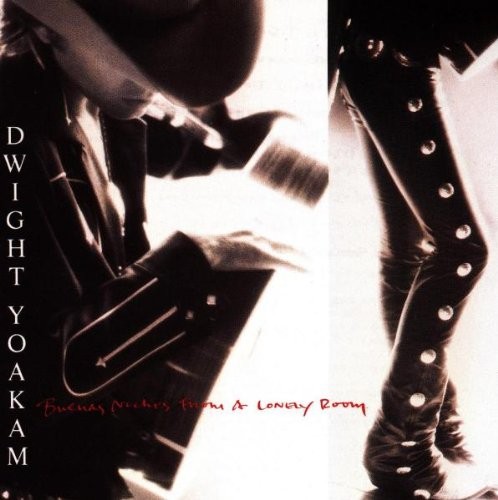
Buenas Noches from a Lonely Room (1988)
曲目
- 1I Got You3:32
- 2One More Name3:09
- 3What I Don’t Know3:50
- 4Home of the Blues2:56
- 5Buenas Noches From a Lonely Room (She Wore Red Dresses)4:34
- 6I Hear You Knockin’3:16
- 7I Sang Dixie3:51
- 8Streets of Bakersfield2:51
- 9Floyd County2:59
- 10Send Me the Pillow3:03
- 11Hold On to God3:15
11 首 · 约 37 分钟 · 依据 1988-08-02 US 发行的版本,在 MusicBrainz 看这个版本。
介绍
这个词条没有中文维基百科条目,下面是英文维基百科的原文。
Buenas Noches from a Lonely Room is the third studio album by American country music singer Dwight Yoakam, released on August 2, 1988. The album contains Yoakam's first two No. 1 Hot Country Singles singles. The first was "Streets of Bakersfield," a duet with country music veteran Buck Owens, who had originally released a version of the song in 1973. The second was an original composition of Yoakam's titled "I Sang Dixie." A third song on the album, "I Got You," also an original composition, peaked at No. 5. The title song, "Buenas Noches from a Lonely Room (She Wore Red Dresses)," also charted, but only to the No. 46 position.
Background
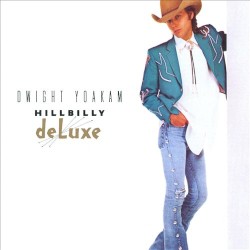
Yoakam's first two Reprise albums, 1986's Guitars, Cadillacs, Etc., Etc. and 1987's Hillbilly Deluxe, both hit #1 on the Billboard country albums chart and established him as one of the hottest stars in what was being referred to as the "New Traditionalist" movement, a shift away from the slick productions of Nashville to a more roots-based sound. Like Willie Nelson and his hero Buck Owens, Yoakam honed his craft and developed a following away from the Nashville – in his case by playing rock and punk clubs in and around Los Angeles – and his sniping at Music City in the media did not endear him to industry insiders and even some fellow musicians, such as Nashville veteran Steve Earle, who was enjoying his first taste of success around the same time. Earle later stated, "We butted heads a little bit, which was turned into this feud by some people, but there was never any personal animosity between us…He pushed my buttons that way, and I resented it. Nowadays, I sort of wonder what I was defending, because I defended that town right up to the time I left. And I don’t really anymore." Yoakam rubbed some critics the wrong way as well, with a writer from the Village Voice allowing that "he has an obnoxious, ass-twitching stage presence. Yet everything he does is hyper-calculated…all part of the pose." But Yoakam, who was born in Kentucky, composed much of his own material, and songs like "Miner’s Prayer" and "Readin’, Rightin’, Rt. 23" clearly showed a profound love and appreciation for his southern roots, and he achieved commercial success largely on his own terms.
Recording
Buenas Noches was produced by guitarist Pete Anderson, Yoakam's creative partner since meeting in Los Angeles. Armed with a Telecaster, Anderson provided some fiery treble to Yoakam's songs in much the same way that guitarist Don Rich did for Buck Owens, and along with Yoakam's nasal, high lonesome voice, created a unique sound rooted in the Bakersfield honky-tonk scene from the fifties. However, for this album the pair introduced a Tex-Mex sound by employing accordion kingpin Flaco Jimenez, who previously worked with artists like Ry Cooder and Doug Sahm. This album would also see a personnel shift in Yoakam's backing band, the Babylonian Cowboys, with bassist J.D. Foster and fiddler Brantley Kearns leaving and new bassist Taras Prodaniuk, mandolinist Scott Joss, and keyboardist Skip Edwards joining.
Composition
"Streets of Bakersfield" and "I Sang Dixie"
The album is best remembered for containing Yoakam's first two number one hit singles, "Streets of Bakersfield" and "I Sang Dixie." The former song was written by Homer Joy, who was approached in 1972 by representatives from Buck Owens' studio in Bakersfield, California, about recording a "Hank Williams Sr. soundalike-album". Joy initially refused, saying "I don't want to be like Hank, I just want to be me!" Eventually, he agreed to come in and record it, on the condition that he would also get to record some of his own songs as well. After the recording, however, the studio manager told Joy that he'd forgotten that the Buckaroos (Buck Owens' band) were practicing for an upcoming tour, and that Joy would have to wait to record his original songs. Refusing to back down, Joy would show up at the studio at 8:00 every morning, only to be told that the Buckaroos were busy and that he would still have to wait. One night, Joy decided to take a walk around downtown Bakersfield, only to have the brand-new cowboy boots he'd been wearing give him blisters all over his feet: "[I] barely made it back to the car, and on top of that, I was still upset about everything, and I went back to my hotel room and wrote "Streets of Bakersfield"". Owens liked the song and released a recording of it in 1973 on his album Ain’t It Amazing, Gracie, and while that version was not a major hit, the re-recording he did with Dwight Yoakam in 1988 (with slightly changed lyrics) reached number 1 on the Billboard Country Music charts.
正文摘自英文维基百科「Buenas Noches from a Lonely Room」,按 CC BY-SA 4.0 使用;删去了参考文献、外部链接、表格和图片;篇幅所限只节选了前面一部分,全文见原条目。
资料卡
- 作品性质
- 音乐专辑
- 表演者
- 德怀特·尤科姆
- 发行日期
- 1988 年
- 流派
- 乡村音乐
- 唱片公司
- 重复唱片
- 制作人
- Pete Anderson
资料来自 Wikidata Q851486(CC0)。
制作名单
- 厂牌
- Reprise Records(目录号 9 25749-2)
演奏与演唱
- 鼓
- Jeff Donavan
- 原声吉他
- 德怀特·尤科姆
- 主唱
- 德怀特·尤科姆
- 和声
- Brantley Kearns(第 3 首)
- 演出
- 德怀特·尤科姆(第 8 首)
- 演唱
- 巴克·欧文斯(第 8 首)、玛丽亚·麦基(第 10 首)、Jeff Rymes(第 11 首)、Randy Weeks(第 11 首)
- 曼陀林
- Pete Anderson(第 10 首)
- 贝斯
- Dusty Wakeman(第 11 首)
词曲与编曲
- 作曲
- 德怀特·尤科姆(其中 7 首)、J.D. Miller(第 6 首)、Homer Joy(第 8 首)、Hank Locklin(第 10 首)
- 作词
- 德怀特·尤科姆(其中 7 首)、J.D. Miller(第 6 首)、Homer Joy(第 8 首)、Hank Locklin(第 10 首)
- 词曲
- 约翰尼·卡什(第 4 首)、Glen Douglas(第 4 首)、Lillie McAlpin(第 4 首)
名单来自 MusicBrainz(CC0)这一发行版本的关系数据,由志愿者录入,不一定齐全。
更多资料与乐评
在哪听
德怀特·尤科姆 的其他专辑
艺人页 ›




相似的专辑


同在 1988 年发行