乐单
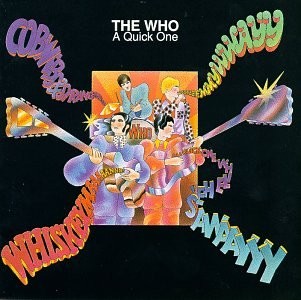
曲目
- A1Run Run Run2:41
- A2Boris the Spider2:26
- A3I Need You2:20
- A4Whiskey Man2:56
- A5Heatwave1:54
- A6Cobwebs and Strange2:29
- B1Don’t Look Away2:52
- B2See My Way1:51
- B3So Sad About Us2:57
- B4A Quick One, While He’s Away9:05
10 首 · 约 32 分钟 · 依据 1966-12-03 GB 发行的版本,在 MusicBrainz 看这个版本。
介绍
这个词条没有中文维基百科条目,下面是英文维基百科的原文。
A Quick One is the second studio album by the English rock band the Who, released on 9 December 1966. In the United States, where the song "Happy Jack" was a top 40 hit, the album was released in April 1967 under the title Happy Jack with a slightly altered track listing.
Unlike other albums by the Who, on which guitarist Pete Townshend was the primary or sole songwriter, A Quick One features significant songwriting contributions from all band members; lead vocalist Roger Daltrey contributed one song, and bassist John Entwistle and drummer Keith Moon each contributed two. The album also included a cover of the Holland–Dozier–Holland song "Heat Wave" and ends with a musical suite titled "A Quick One, While He's Away", which served as an inspiration for later rock operas for which the Who would become known.
Background
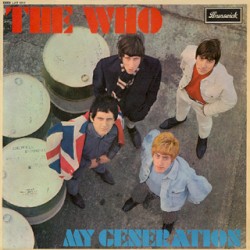
The Who's second studio album departs from the R&B emphasis of their debut, My Generation. Co-manager Chris Stamp had signed a deal with New Action Publishing which advanced £500 to each band member for contributing two songs each to the new album, though Roger Daltrey only wrote one ("See My Way"). The outcome is the Who album least dominated by Pete Townshend's songwriting; Townshend claimed that this push for equal contribution led to the exclusion of the band's recent hit singles he had written, including "I'm a Boy" and "Happy Jack". Because the other members were new to songwriting, Townshend also ended up helping them demo their songs.
Compositions and recording
A Quick One was recorded in the autumn of 1966, in London (at IBC Studios, Pye Studios, and Regent Sound), by record producer Kit Lambert, co-manager of the Who. During one of the early October sessions Chas Chandler brought Jimi Hendrix, newly arrived in London, to meet the group and seek a recommendation for amplifiers. Townshend suggested both Hiwatt and Marshall, only to regret having endorsed such "powerful weapons" to the unknown guitarist whom he had not yet seen play live.
The album's opening track "Run Run Run" had been demoed earlier in the year and first given to a band called the Cat, who released their version in May 1966. Recorded by the Who during the first week of October at IBC, it is a pounding hard rocker with a flashy, feedback-inflected guitar solo that marked an evolution in the group's sound. A longer stereo version from a Track Records sampler was later rediscovered and included on the 1995 expanded CD release.
"Boris the Spider" was written after John Entwistle had been out drinking with the Rolling Stones' bassist Bill Wyman. They were making up funny names for animals when Entwistle came up with the title for a song. The next day in the studio, Townshend asked Entwistle if he had any more material for the album; John mentioned his spider idea as if he'd already written the song, only to go home that night and hurriedly compose the music in less than ten minutes, with its recording taking place on 4 October at Pye Studios. "Boris the Spider" quickly became Entwistle's most popular song, named by Hendrix as his favorite Who number, and was still performed decades later: in later years John often wore a spider necklace, and would have a spider web design inlaid on the body of his custom-made Alembic bass guitar (the latter is pictured on the cover of Entwistle's 1981 solo studio album Too Late the Hero).
Keith Moon's "I Need You" was originally titled "I Need You (Like I Need a Hole in the Head)". Moon thought the Beatles spoke in a secret language behind his back, and this song was his way of getting back at them. Although Moon denied that a vocal part in the song was a John Lennon imitation, Entwistle said that, in fact, it was spoken by the group's Liverpudlian roadie "Lurch" for just that purpose. The line "let us come and sitar with you", complete with a raga-esque answering line, refers to George Harrison's concurrent infatuation with the Indian instrument. The break also features a recreation of a night out at the hip London club Scotch of St. James, with Lambert heard ordering a table for four among other sound effects including clinking glasses. Recorded along with "Boris the Spider" at Pye on 4 October, it is also notable for a prominent harpsichord part played by Entwistle.
John Entwistle would later cite "Whiskey Man" as the first song he ever wrote. It tells the story of a drunkard whose best friend is a man he sees only after drinking heavily. The drunkard is eventually locked in a padded room in a sanitarium, and he laments not being able to share the room with Whiskey Man or even call him. The song was cut at CBS on 3 October, with Entwistle playing french horn in addition to bass. In the first line of the song, Entwistle accidentally sings the word "friend" as "fwend"; not wanting to record an entirely new take, he instead opted to double-track the vocal and sing "flend" as a quick fix.
正文摘自英文维基百科「A Quick One」,按 CC BY-SA 4.0 使用;删去了参考文献、外部链接、表格和图片;篇幅所限只节选了前面一部分,全文见原条目。
资料卡
- 作品性质
- 音乐专辑
- 表演者
- 谁人
- 发行日期
- 1966 年 12 月 9 日
- 时长
- 31 分 48 秒
- 流派
- 迷幻摇滚
- 语言
- 英语
- 唱片公司
- 宝丽多唱片公司
- 制作人
- Kit Lambert
资料来自 Wikidata Q300531(CC0)。
制作名单
- 厂牌
- Reaction(目录号 593002)
- 录音室
- 录音:Pye Studios(London);录音:IBC Studios(London);录音:Regent Sound Studios(London)
制作
- 制作人
- Kit Lambert(其中 9 首)
- 执行制作人
- Chris Stamp(其中 9 首)
演奏与演唱
- 贝斯
- 约翰恩奎斯特
- 鼓类乐器
- Keith Moon
- 吉他
- 皮特·汤申德
- 演唱
- 罗杰·多特里、约翰恩奎斯特、皮特·汤申德
- 电贝斯
- 约翰恩奎斯特(第 A2、B1 首)
- 鼓
- Keith Moon(第 A2、B1 首)
- 电吉他
- 皮特·汤申德(第 A2、B1 首)
- 和声
- 约翰恩奎斯特(第 A2、B1 首)、Keith Moon(第 A2、B1 首)、皮特·汤申德(第 A2、B1 首)
- 主唱
- 约翰恩奎斯特(第 A2 首)、罗杰·多特里(第 B1 首)
- 长号
- 罗杰·多特里(第 A6 首)
- 小号
- 约翰恩奎斯特(第 A6 首)
- 镲
- Keith Moon(第 A6 首)
- 口哨
- 皮特·汤申德(第 A6 首)
词曲与编曲
- 作曲
- 皮特·汤申德(第 A1、B1、B3、B4 首)、约翰恩奎斯特(第 A2、A4 首)、Keith Moon(第 A3、A6 首)、Lamont Dozier(第 A5 首)、Brian Holland(第 A5 首)、Tony Crombie(第 A6 首)、罗杰·多特里(第 B2 首)
- 作词
- 皮特·汤申德(第 A1、B1、B3、B4 首)、约翰恩奎斯特(第 A2、A4 首)、Keith Moon(第 A3、A6 首)、Eddie Holland(第 A5 首)、罗杰·多特里(第 B2 首)
包装与设计
- 设计 / 插画
- Alan Aldridge
名单来自 MusicBrainz(CC0)这一发行版本的关系数据,由志愿者录入,不一定齐全。
更多资料与乐评
在哪听
谁人 的其他专辑
艺人页 ›

同在 1966 年发行