乐单
Who's Next (1971)
滚石 500(2020) #77滚石 500(2003) #281001 张专辑
- 艺人
- 谁人
- 发行
- 1971-08-14
- 类型
- 专辑
- 唱片公司
- 崔克唱片、迪卡唱片公司
- 制作人
- 格林·约翰斯
- 版本
- MusicBrainz 上有 72 个发行版本
曲目
- 1Baba O’Riley5:00
- 2Bargain5:34
- 3Love Ain’t for Keeping2:11
- 4My Wife3:36
- 5The Song Is Over6:19
- 6Getting in Tune4:49
- 7Going Mobile3:44
- 8Behind Blue Eyes3:41
- 9Won’t Get Fooled Again8:32
9 首 · 约 43 分钟 · 依据 1971-08-14 US 发行的版本,在 MusicBrainz 看这个版本。
介绍
《下一个是谁》(英语:Who's Next)是英国摇滚乐队谁人乐队的第五张录音室专辑。它发展自一个由乐队成员皮特·汤申德创作的作为乐队1969年的专辑Tommy的多媒体摇滚歌剧Lifehouse项目,由于乐队与乐队经理人Kit Lambert错综复杂的关系,该项目被取消了,但皮特·汤申德被说服录制其中一些歌曲作为通俗的专辑。
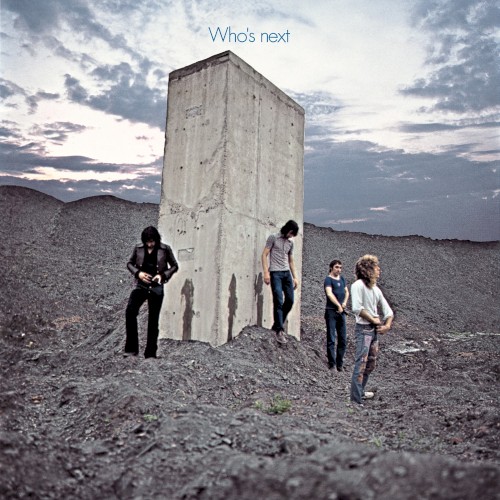
谁人乐队录制这张专辑受到录音师Glyn Johns的帮助。在滚石移动录音室录制“Won't Get Fooled Again”之后,他们搬到伦敦奥林匹克录音室录制和混合该专辑剩余的大部分歌曲。他们在该专辑中突出地使用合成器,特别是在“Won't Get Fooled Again”和“ Baba O'Riley ”之中,两首歌都是单曲发行。封面照片由Ethan Russell摄制,参考了1968年电影2001太空漫游中提到的巨石(monolith),就像该封面上乐队成员背对有小便条纹的堆渣中的突出的混凝土桩。
《下一个是谁》在1971年8月发行后立刻获得成功。许多评论家认为它是谁人乐队的最佳唱片和有史以来最伟大的专辑之一。该专辑以CD形式再版了几次,再版包含了最初用于Lifehouse的曲目。
背景
到1970年,谁人乐队既受到了显著的批评又获得了商业成功,而他们已经开始与脱离原来的观众。摩德文化已经消失,
人员
谁人乐队
- Roger Daltrey – 主唱
- Keith Moon – 鼓,敲击乐器
- John Entwistle – 贝斯,铜管乐器,主唱,“My Wife”之中的钢琴
- Pete Townshend – 吉他,VCS3,风琴,A.R.P. 合成器,主唱,“Baba O'Riley”之中的钢琴
额外音乐人
- Dave Arbus – “Baba O'Riley”之中的小提琴
- Nicky Hopkins – “The Song Is Over”和“Getting in Tune”之中的钢琴
- Al Kooper – alternate version版本的“Behind Blue Eyes”之中的风琴
- Leslie West – “Baby, Don't You Do It”之中的主吉他
制作
- The Who – 制作
- Glyn Johns – 助理制作,录制,混音
- Doug Sax – 母带制作
- Kit Lambert – 执行制作
- Chris Stamp – 执行制作
- Pete Kameron – 执行制作
- John Kosh – 专辑设计
- Ethan Russell – 拍摄
正文摘自中文维基百科「下一個是誰」,按 CC BY-SA 4.0 使用;已转为简体,删去了参考文献、外部链接、表格和图片。
英文维基百科上的更多内容(英文原文,约 2,829 字符)
Who's Next is the fifth studio album by the English rock band the Who, released on 2 August 1971, by Track Records in the United Kingdom and by Decca Records in the United States. It developed from the aborted Lifehouse project, a multi-media rock opera conceived by the group's guitarist Pete Townshend as a follow-up to the band's 1969 album Tommy. The project was cancelled owing to its complexity and to conflicts with Kit Lambert, the band's manager, but the group salvaged some of the songs, without the connecting story elements, to release as their next album. Eight of the nine songs on Who's Next were from Lifehouse, with the lone exception being the John Entwistle-penned "My Wife". Ultimately, the remaining Lifehouse tracks would all be released on other albums or as standalone singles throughout the next decade.
The Who recorded Who's Next with assistance from recording engineer Glyn Johns. After producing the song "Won't Get Fooled Again" in the Rolling Stones Mobile Studio, they relocated to Olympic Studios to record and mix most of the album's remaining songs. They made prominent use of synthesisers on the album, particularly on "Won't Get Fooled Again" and "Baba O'Riley", which were both released as singles. The cover photo was shot by Ethan Russell; it made reference to the monolith in the 1968 film 2001: A Space Odyssey, as it featured the band standing by a concrete pillar protruding from a slag heap, apparently having urinated against it.
The album was an immediate critical and commercial success and has since been viewed by many critics as the Who's best album, as well as one of the greatest albums of all time. It has been reissued on CD several times, often with additional songs originally intended for Lifehouse included as bonus tracks. In 2020, Who's Next was ranked number 77 on Rolling Stone's list of the "500 Greatest Albums of All Time".
Background
By 1970, the Who had obtained significant critical and commercial success, but they had started to become detached from their original audience. The mod movement had vanished, and the original followers from Shepherd's Bush had grown up and acquired jobs and families. The group had started to drift apart from manager Kit Lambert, owing to his preoccupation with his label, Track Records. They had been touring since the release of Tommy the previous May, with a set that contained most of that album, but realised that millions had now seen their live performances, and Pete Townshend in particular recognised that they needed to do something new. A single, "The Seeker", and a live album, Live at Leeds, were released in 1970, and an EP of new material ("Water", "Naked Eye", "I Don't Even Know Myself", "Postcard", and "Now I'm a Farmer") was recorded, but not released, as the band felt it would not be a satisfactory follow-up to Tommy.
这部分摘自英文维基百科「Who's Next」,按 CC BY-SA 4.0 使用;删去了参考文献、外部链接、表格和图片;篇幅所限只节选了前面一部分,全文见原条目。
资料卡
- 作品性质
- 音乐专辑
- 表演者
- 谁人
- 发行日期
- 1971 年 8 月 25 日、1971 年 8 月 14 日
- 流派
- 硬式摇滚
- 语言
- 英语
- 唱片公司
- 崔克唱片、迪卡唱片公司
- 制作人
- 格林·约翰斯
资料来自 Wikidata Q729387(CC0)。
制作名单
- 厂牌
- Decca Records(目录号 79182)
- 录音室
- pressed at:All Disc Records(Roselle Park);录音:Olympic Studios(Barnes);混音:Basing Street Studios(Notting Hill);录音:Rolling Stones Mobile Studio(United Kingdom)
制作
- 执行制作人
- Pete Kameron、Kit Lambert、Chris Stamp
- 制作人
- 谁人、Glyn Johns、Keith Moon(第 1 首)
- 混音
- Glyn Johns
- 录音
- Glyn Johns、皮特·汤申德(第 9 首)
- 工程师
- Glyn Johns(第 1、2、4、5、6、7 首)
演奏与演唱
- 演唱
- 约翰恩奎斯特(其中 8 首)、皮特·汤申德(其中 7 首)、罗杰·多特里
- 鼓
- Keith Moon(第 1、2、4、5、6 首)
- 打击乐
- Keith Moon(第 1、2、4、5、6 首)
- 贝斯
- 约翰恩奎斯特(第 1、2、5、6 首)
- 铜管
- 约翰恩奎斯特(第 1、2、5、6 首)
- 吉他
- 皮特·汤申德(第 2、4、5、6 首)
- 风琴
- 皮特·汤申德(第 2、4、5、6 首)
- 合成器
- 皮特·汤申德(第 2、4、5、6 首)
- 主唱
- 罗杰·多特里(其中 8 首)、皮特·汤申德(第 1 首)、约翰恩奎斯特(第 4 首)
- 钢琴
- 尼基·霍普金斯(第 5、6 首)、皮特·汤申德(第 1 首)、约翰恩奎斯特(第 4 首)
- 小提琴
- Dave Arbus(第 1 首)
- 原声吉他
- 皮特·汤申德(第 9 首)
- 电吉他
- 皮特·汤申德(第 9 首)
词曲与编曲
- 作曲
- 皮特·汤申德(其中 8 首)、约翰恩奎斯特(第 4 首)
- 作词
- 皮特·汤申德(其中 8 首)、约翰恩奎斯特(第 4 首)
包装与设计
- 设计 / 插画
- John Kosh
- 摄影
- Ethan Russell
名单来自 MusicBrainz(CC0)这一发行版本的关系数据,由志愿者录入,不一定齐全。
更多资料与乐评
在哪听
谁人 的其他专辑
艺人页 ›



相似的专辑

同在 1971 年发行